
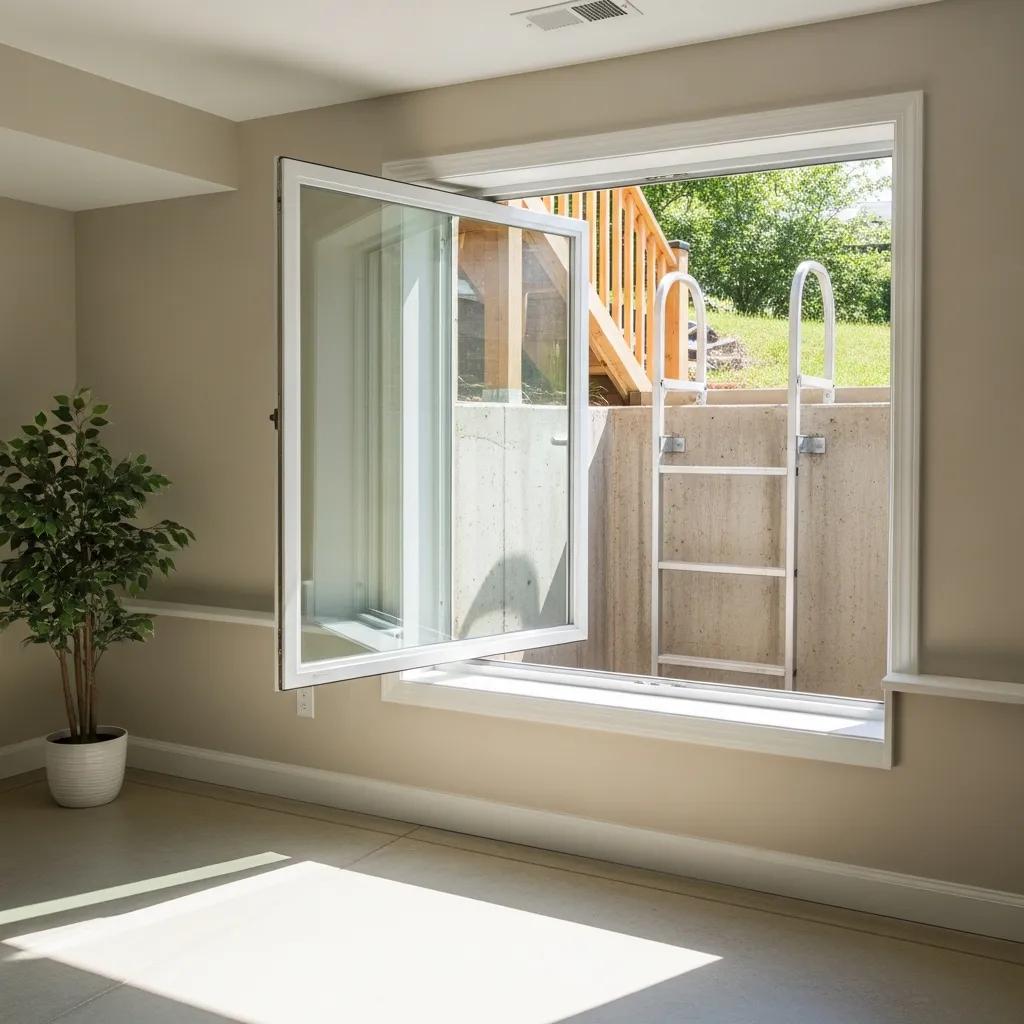
Emergency Egress System Design & Fire Safety Concepts
Among the most important concepts in fire safety in buildings is to manage those potentially exposed to the fire and its effects, either by protecting them in place or by moving them to a place of safety. Protected spaces and paths of travel needed to accomplish this are the egress components, systems and procedures that are discussed in this chapter. The chapter presents an overview of considerations, concepts, methods, and strategies utilized globally for emergency egress system design.
Egress concepts and design approaches, 2016
Essential Requirements
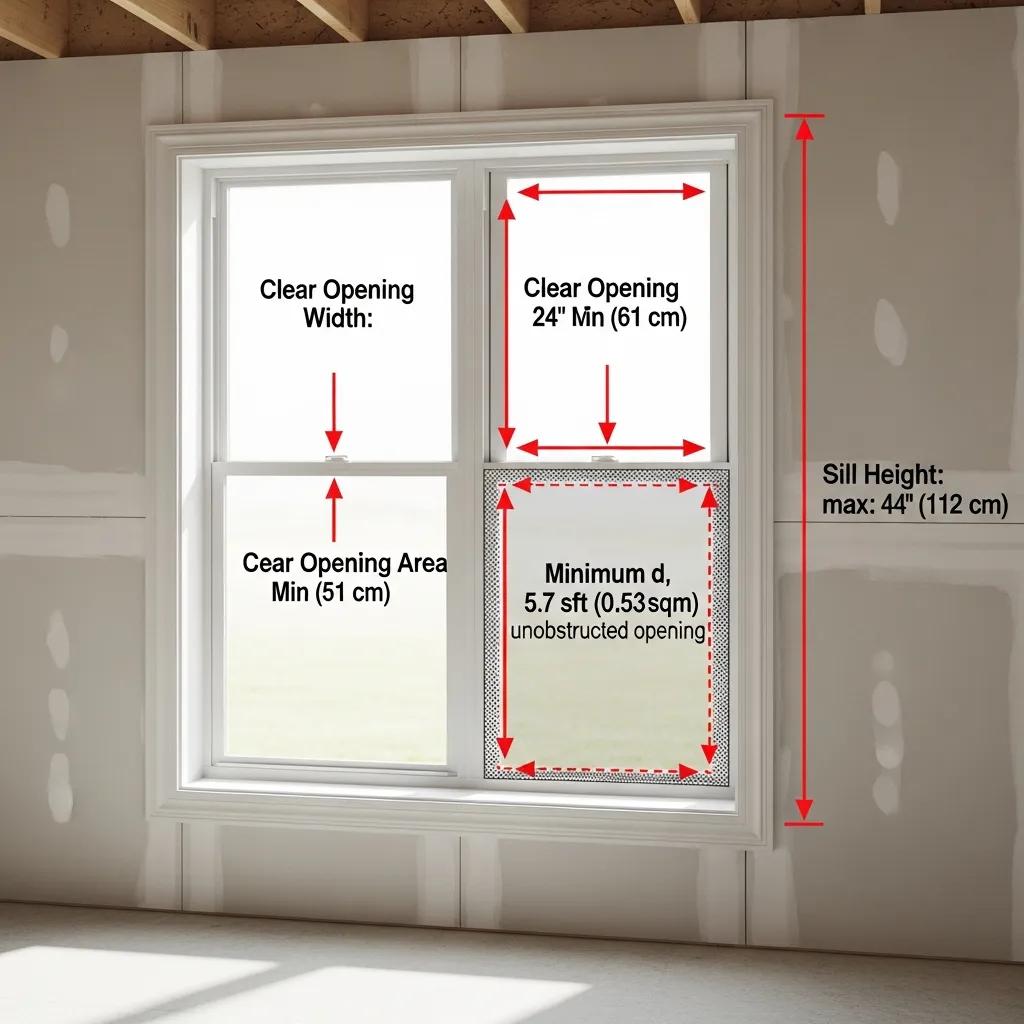
- Minimum net clear opening size: The window must provide a minimum net clear opening of 5.7 square feet (5.0 square feet for grade-level exits in certain conditions) to allow for safe escape.
- Height and width requirements: The minimum opening height must be 24 inches, and the minimum opening width must be 20 inches to ensure adequate space for exit.
- Accessibility standards: The sill height of the window must not exceed 44 inches from the floor, making it accessible for individuals of varying heights.
Installation Guidelines

- Assessment and planning: Evaluate the basement layout and determine the best location for the egress window, considering factors such as natural light and accessibility.
- Excavation and cutting: Excavate the area outside the proposed window location and cut through the foundation wall to create the opening.
- Window well installation: Install a window well to provide additional space for the window and ensure proper drainage away from the foundation.
What Are the Step-by-Step Procedures for Installing Basement Egress Windows?
- Assessment of the basement: Begin by assessing the basement's layout and identifying the most suitable location for the egress window.
- Excavation requirements: Excavate the area outside the window opening to create a window well, ensuring it is deep enough to accommodate the window and allow for drainage.
- Final installation checks: After installing the window, conduct final checks to ensure it meets all safety and compliance standards, including proper sealing and insulation.
Wisconsin Code Requirements for Basement Egress Windows
- Proper installation: Egress windows must be installed according to the manufacturer's specifications and local building codes to ensure they function correctly.
- Regular maintenance: Homeowners should regularly inspect egress windows to ensure they remain unobstructed and in good working condition.
Effective Solutions for Compliance
- Professional installation benefits: Hiring professionals for egress window installation can ensure that all local codes and regulations are met, reducing the risk of non-compliance.
- Drainage solutions: Implementing proper drainage systems around the window well can prevent water accumulation and potential damage to the foundation.
- Regular maintenance: Establishing a routine maintenance schedule for egress windows can help identify and address any issues before they become significant problems.