Foundation Stabilization & Helical Piers in Southeastern Wisconsin
Support Your Home From the Ground Down.
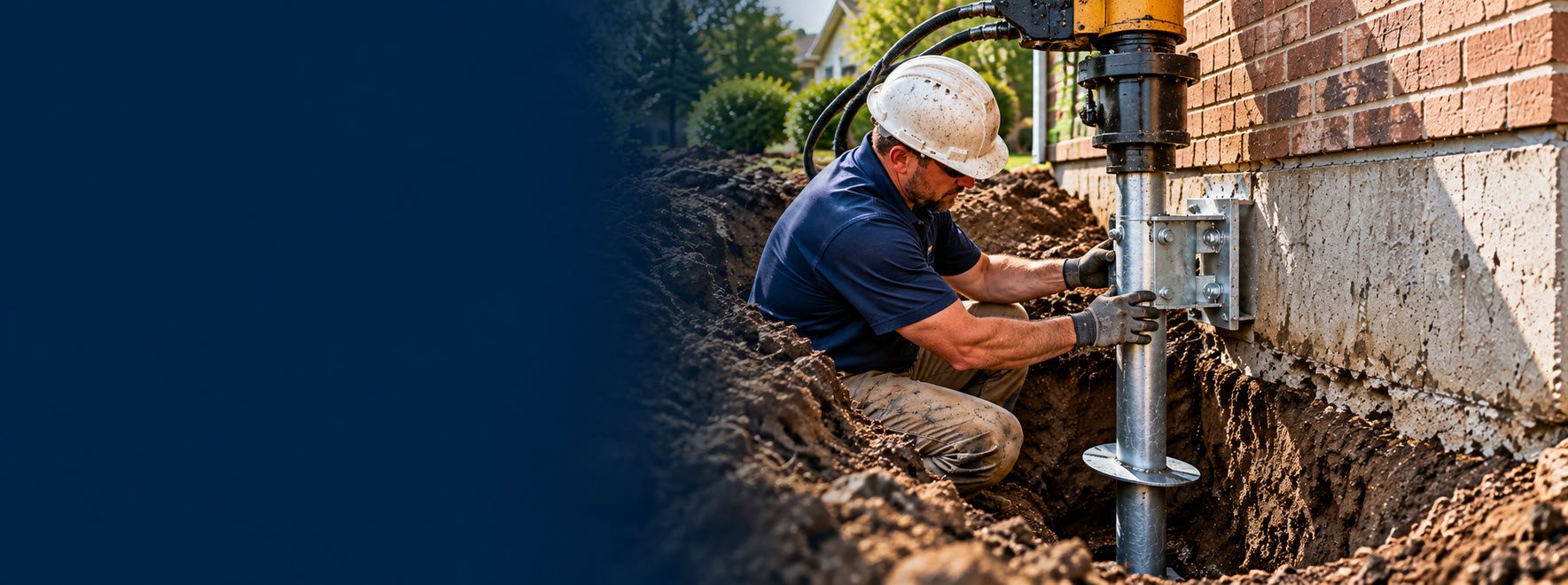
When the soil under your foundation can't carry the weight of your home, settling and cracking follow. American Foundation Specialists uses helical piers to transfer that weight to stronger soil deep underground, stabilizing the foundation and stopping the movement.
- Free inspections
- Written estimates
- Family owned for 80 years
- Since 194780 Years of Experience
- Family Owned& Operated
- Warranty BackedUp to 20-Year Warranty
- Licensed & BondedFully Insured
- BBB A+ RatingBetter Business Bureau

Experienced Foundation Repair Specialists
When Surface Soil Can't Hold Your Home
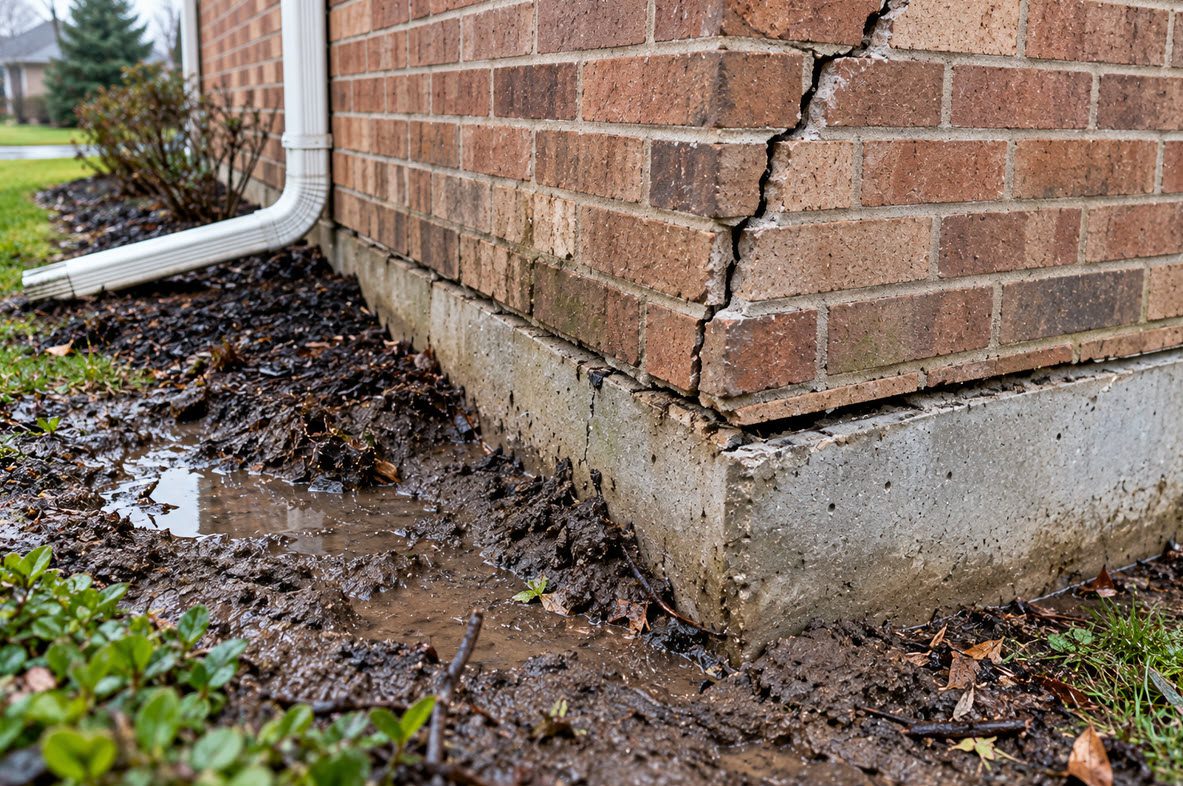
Most foundations rest on the soil just a few feet below grade. That's fine as long as the soil stays firm and stable, but in Southeastern Wisconsin, it often doesn't. Clay that swells and shrinks with moisture, loose fill on leveled lots and soil softened or washed away by poor drainage can all lose their ability to support a footing, and part of the house begins to sink.
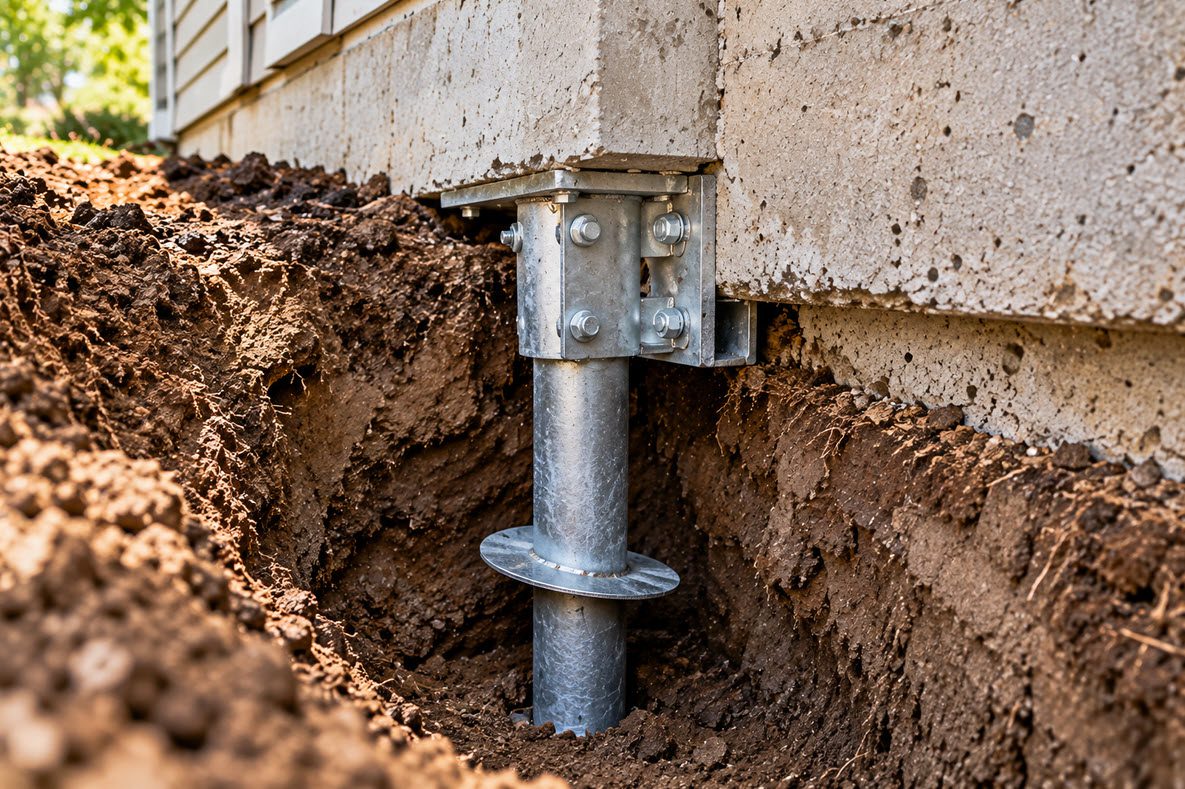
Foundation stabilization solves the problem by going around the weak soil instead of trying to fix it. Helical piers are steel shafts with screw-like plates that are turned deep into the ground until they reach soil capable of carrying the load. Steel brackets then connect them to the footing, so the weight of that part of the house rests on the piers instead of the unstable soil above.
Piers aren't the answer for every foundation problem, and we only recommend them when the conditions call for it. When they are the right fix, they're one of the most dependable ways to stop ongoing settlement for good.
How Helical Piers Work
Three Steps to a Stable Foundation
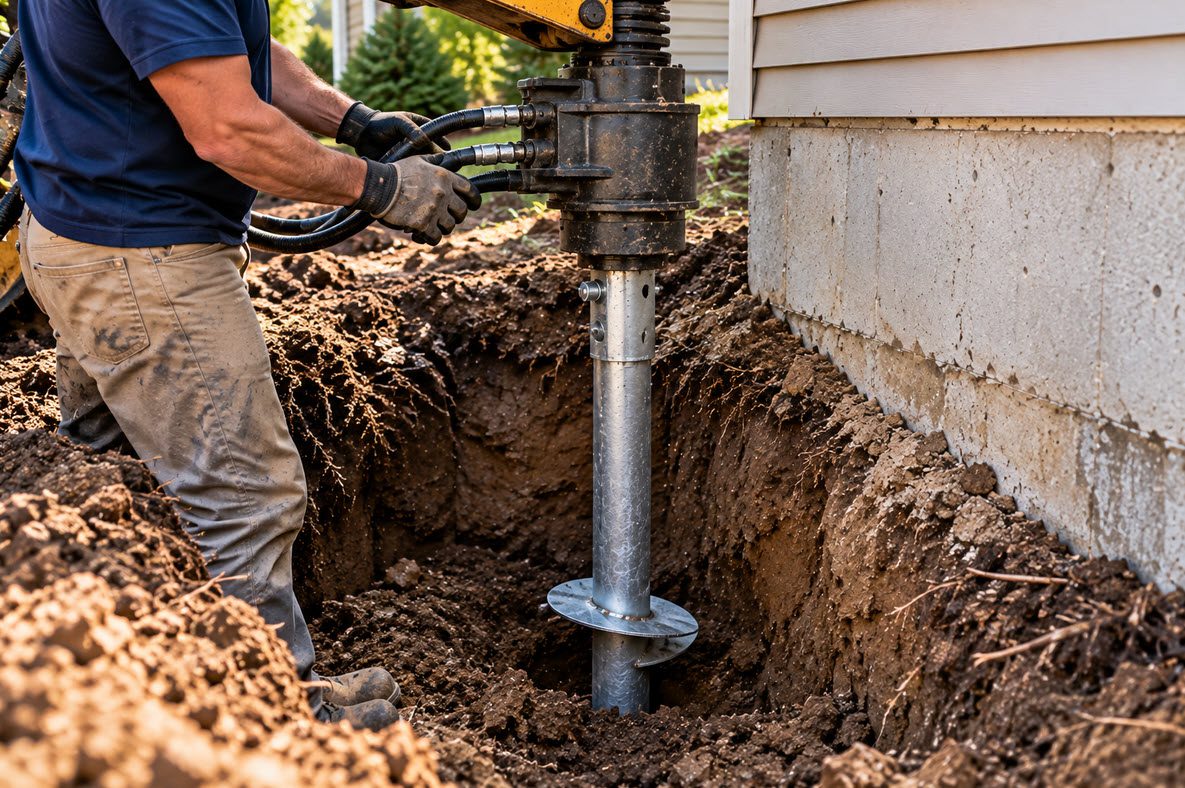
A small excavation is dug next to the footing at each pier location. The pier, a steel shaft with one or more helical plates near the tip, is then rotated into the ground with hydraulic equipment. The plates pull it downward, much like a screw going into wood, and extension sections are added as it goes deeper.
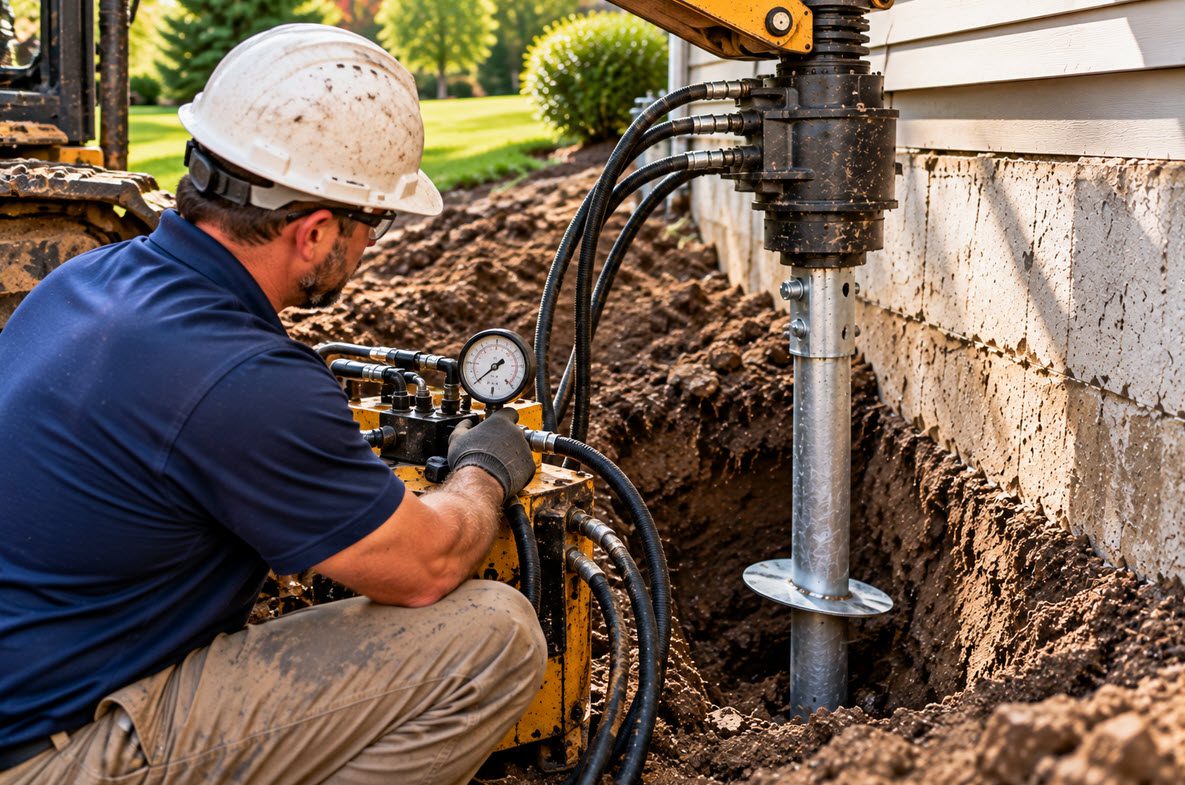
As the pier is driven, the installer monitors the torque, the resistance it takes to keep turning it. Rising torque tells us the plates have reached firmer soil. Each pier is advanced until it reaches the depth and resistance needed to support its share of the load, rather than stopping at a guessed depth.
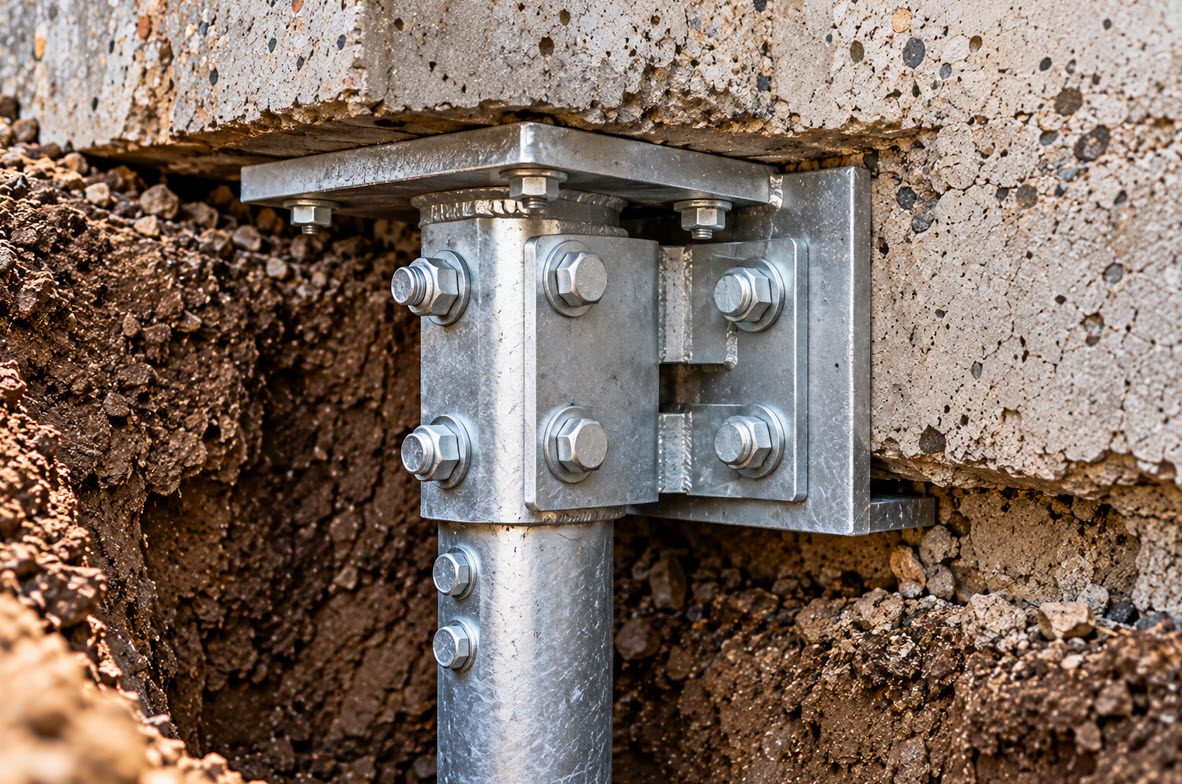
Once the pier is set, a heavy steel bracket is fastened beneath or against the footing and connected to the top of the pier. The weight of that section of the home now transfers through the bracket and down the pier to stable soil. In some cases, the foundation can also be carefully lifted back toward its original position at this stage.
Why It Happens
When Is Foundation Stabilization Needed?
- Ongoing SettlementCracks that keep growing and doors that keep getting worse mean part of the foundation is still sinking. See settling foundations.
- Weak or Filled SoilLoose fill, soft clay and organic soil near the surface can't reliably carry the weight of a home.
- Water-Softened SoilYears of downspout runoff or poor drainage can soften and wash out the soil under a footing. See drain tile.
- Additions & Heavy LoadsAdditions, porches and chimneys on shallow or separate footings often settle first.
Signs Your Foundation May Need Stabilization
- Diagonal cracks that keep getting wider
- Doors and windows getting harder to open
- Floors sloping toward one corner
- An addition or porch separating from the house
- Gaps opening at brick, siding or a chimney
- Cracks that return after every repair
Wondering If Your Home Needs Piers?
We'll evaluate the movement and the soil conditions and tell you straight.
How We Fix It
Foundation Stabilization Solutions
Helical Piers for Settling Foundations
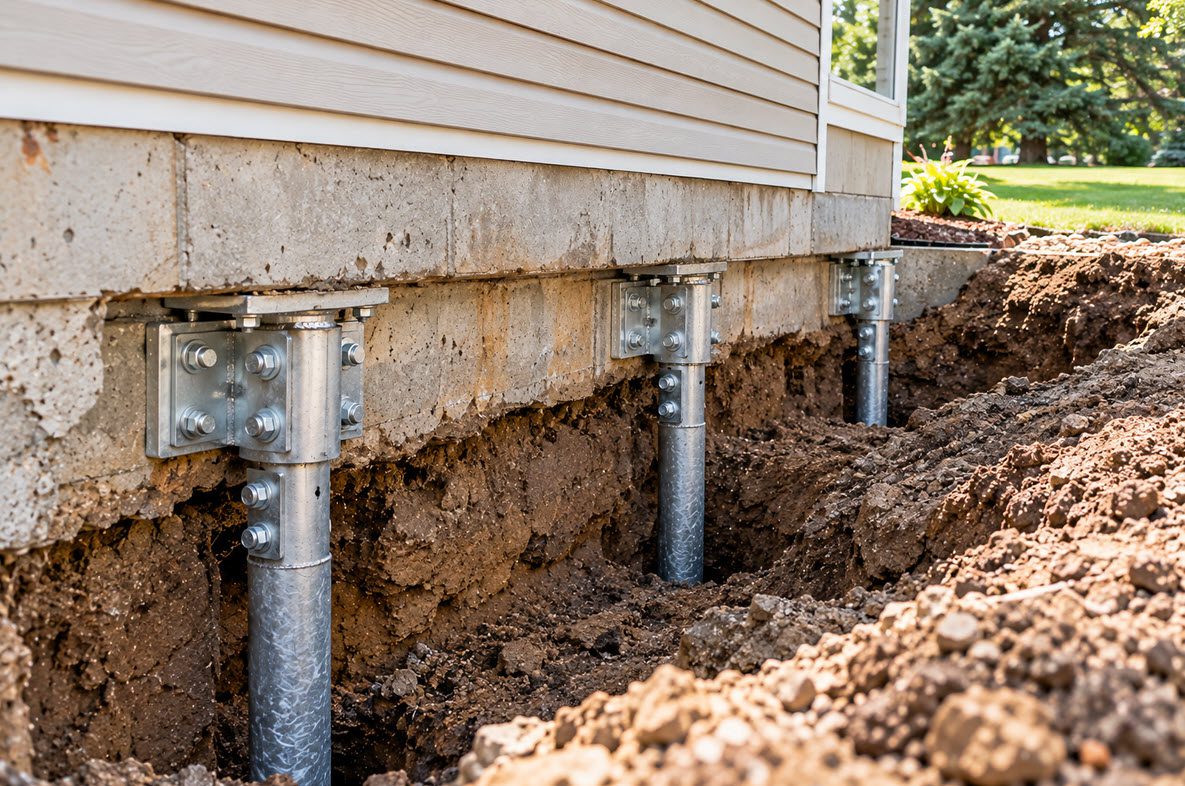
For a home that's actively settling, helical piers are installed along the affected section of the foundation, spaced to share the load. Each one is driven until it reaches the depth and resistance needed, then bracketed to the footing to stop the movement.
Depending on the home and how long it has been settling, piers may also be used to carefully lift part of the foundation back toward level. We'll tell you upfront what's realistic for your home, and we'll address the drainage or soil issue that caused the settlement so the rest of the foundation stays stable.
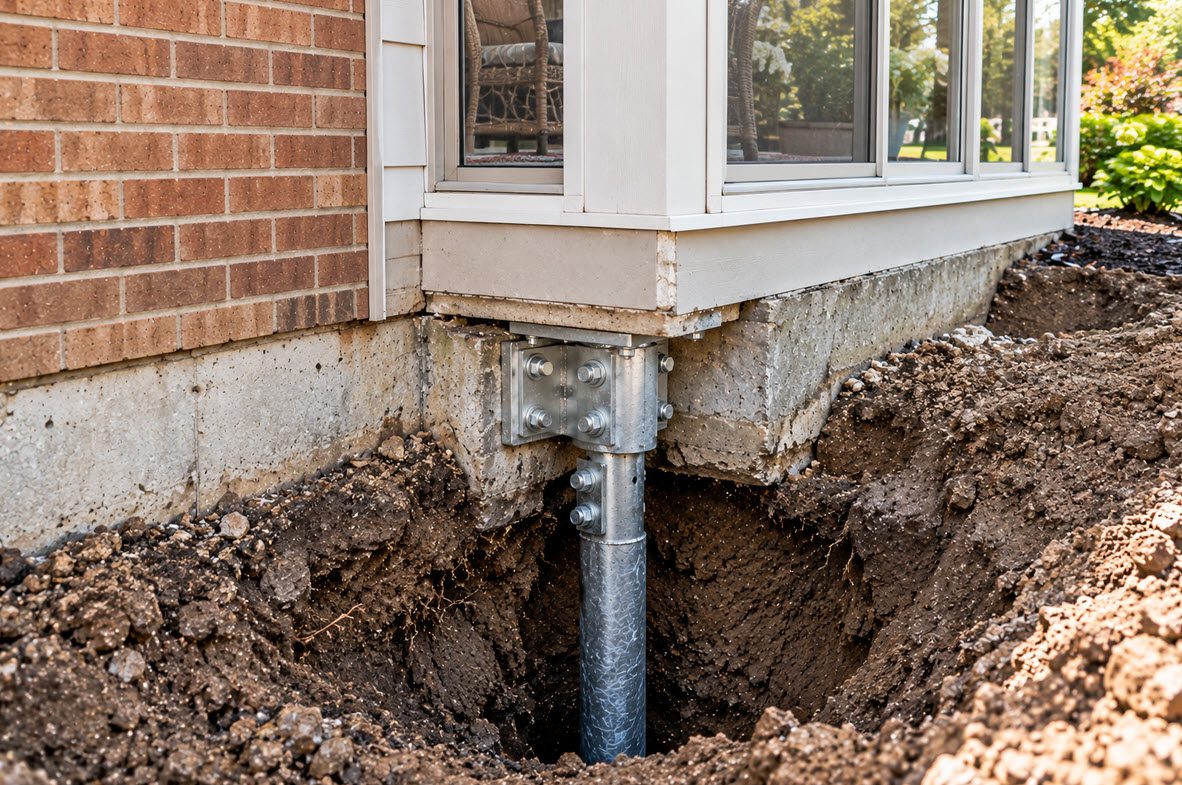
Stabilizing Additions, Porches & Chimneys
Additions, enclosed porches, sunrooms and chimneys are often built on smaller or shallower footings than the original house, and they're usually the first part of a home to settle and pull away.
Where conditions allow, helical piers can support these sections independently, stopping them from sinking further and keeping them tied to the rest of the house. It's often far less disruptive than tearing out and rebuilding a settled addition's foundation.
Piers are installed with relatively small hydraulic equipment, which limits disruption to your yard and landscaping.
Torque is monitored as each pier is installed, helping confirm it has reached soil capable of carrying the load.
There's no concrete to cure, so piers can typically carry the load as soon as they're bracketed to the footing.
What to Expect
Our Foundation Stabilization Process
- 01InspectWe examine the foundation, the movement and the drainage around your home.
- 02EvaluateWe look at the loads and soil conditions to determine whether piers are the right fix.
- 03InstallPiers are installed to the required depth and resistance, then bracketed.
- 04VerifyWe check the results, restore the work area and review everything with you.
Helical Pier Questions
Foundation Stabilization & Helical Pier FAQs
What are helical piers?
Steel shafts with screw-like helical plates near the tip. They're turned deep into the ground until they reach soil strong enough to carry the load, then connected to the foundation footing with steel brackets.
How deep do helical piers go?
As deep as needed to reach stable, load-bearing soil. That depth varies from site to site, which is why piers are installed to a target resistance rather than a fixed depth.
Can helical piers lift my foundation back to level?
Sometimes. Piers can often be used to carefully lift part of a settled foundation back toward its original position. How much can be recovered depends on the home, the amount of settlement and how long it has been settled.
How are helical piers different from other piers?
Push piers are driven straight down using the weight of the house for resistance. Helical piers are screwed in using rotation, so they don't depend on the house's weight to install. Each has its place, and the right choice depends on the conditions.
Will installing piers tear up my yard?
Some digging is needed at each pier location, but the excavations are relatively small and the equipment is compact. We'll explain exactly which areas will be affected before we start.
How many piers will my home need?
It depends on the length of the settling section, the weight it carries and the soil conditions. Your written estimate will show the number and placement of piers.
How long does pier installation take?
Many stabilization projects take a few days. Larger homes or sections that also need lifting can take longer. You'll get a timeline with your estimate.
Are helical piers permanent?
Helical piers are designed as a long-term solution. They're made of heavy steel, and they rest on soil well below the zone affected by seasonal moisture and frost.
Do I need a permit for foundation stabilization?
Structural foundation work typically requires a building permit from your city or village. We'll explain what your project requires.
Do helical piers fix the cause of settling?
Piers stabilize the foundation by bypassing weak soil. If water or drainage contributed to the settlement, we'll also recommend changes to keep the rest of the foundation stable.
Thousands of Wisconsin Homeowners Have Trusted Their Foundations to American Foundation Specialists.
“Jayme and Scott came out on an urgent call today. Although there was no foundation issue, they correctly diagnosed a plumbing issue… I highly recommend their professional and friendly service.”
“The team at American Foundation did a great job installing steel beams to brace one of our basement walls… The work looks great and they did good cleaning up afterwards.”
“We worked with Lyle. He was great to work with, explained everything that needed to be done… Fair price and excellent work.”
Related Repairs
Related Foundation Repair Services
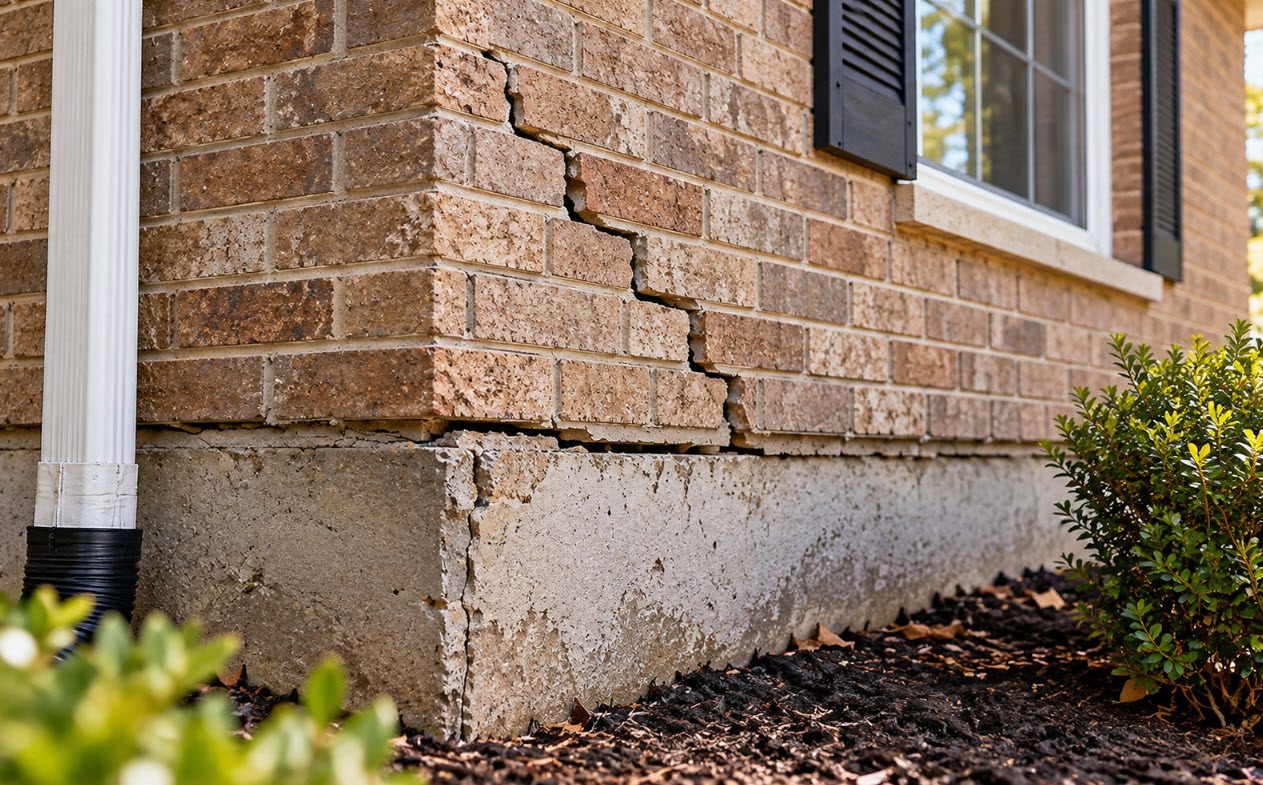 Settling Foundations
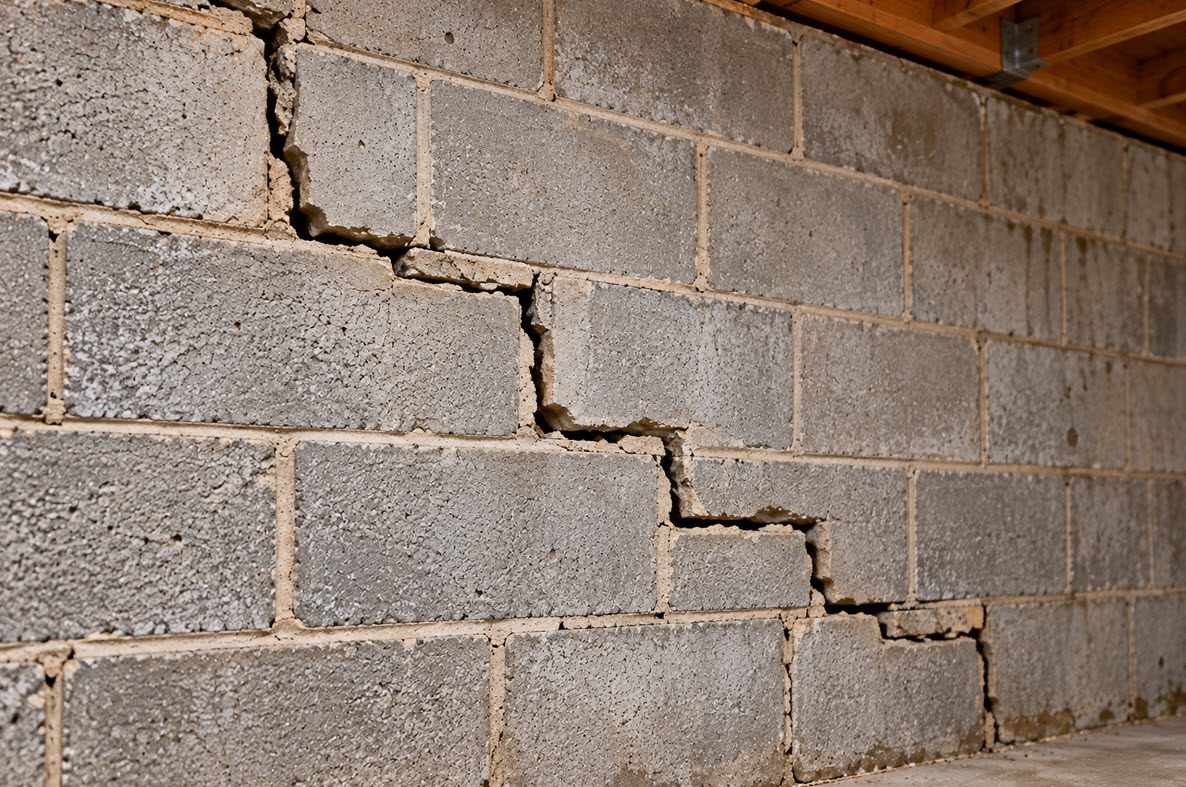 Cracked Foundation Walls
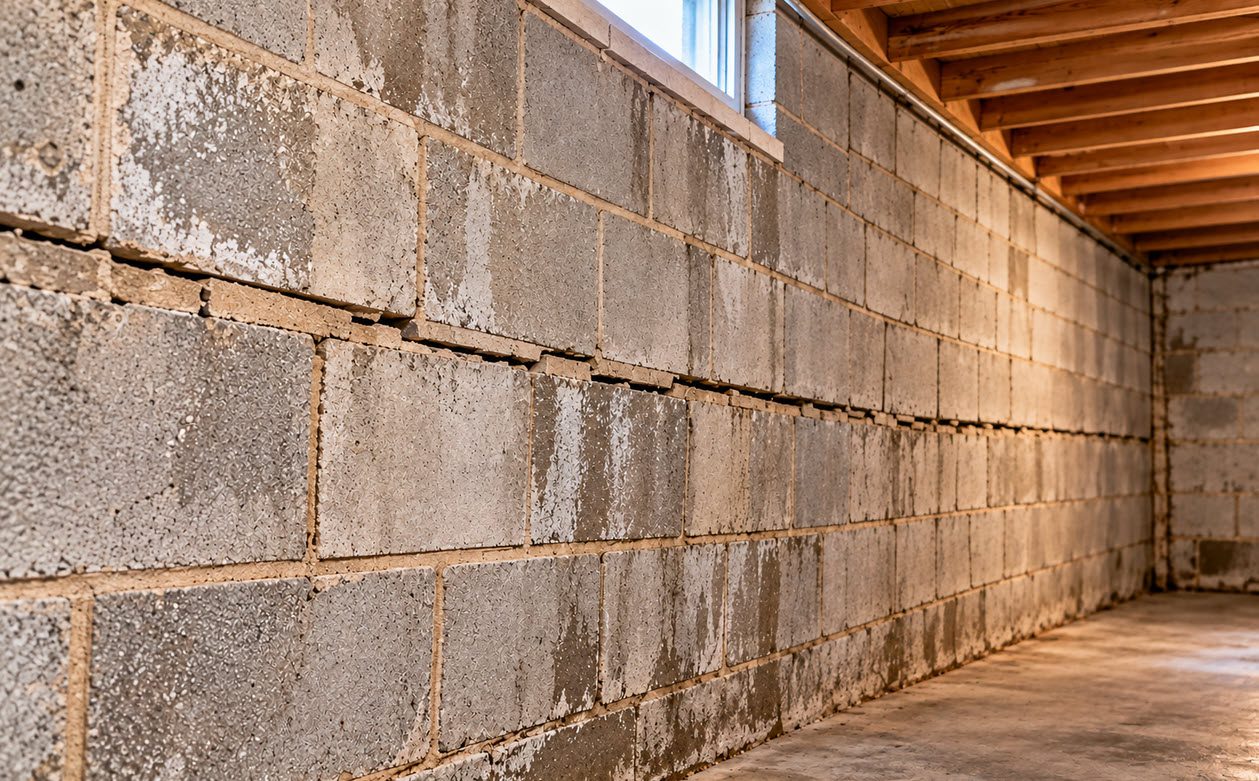 Bowing & Bulging Walls
Don't Wait for a Small Problem to Become a Bigger One.
Let's Find Out What's Happening With Your Foundation.
Tell us what you're seeing. We'll inspect the problem, explain what's causing it and help you understand your repair options.
American Foundation Specialists — Protecting Wisconsin Homes for 80 Years.