Basement Wall Straightening & Reinforcement in Southeastern Wisconsin
Hold It in Place. Or Put It Back.
When a basement wall has started to lean, bow or bulge, it needs more than patching. American Foundation Specialists reinforces moving walls with steel wall braces and, when a wall has moved too far, excavates and straightens it so your foundation is strong again.
- Free inspections
- Written estimates
- Family owned for 80 years
- Since 194780 Years of Experience
- Family Owned& Operated
- Warranty BackedUp to 20-Year Warranty
- Licensed & BondedFully Insured
- BBB A+ RatingBetter Business Bureau

Experienced Foundation Repair Specialists
Stop the Wall From Moving Any Further
A basement wall that has started to move is telling you the pressure outside is winning. Clay soil that swells when it's wet, frost that pushes every winter and water that never drains away all keep pressing against the same wall, and once it starts to lean or bow, that pressure doesn't let up on its own.
Reinforcement gives the wall the strength it no longer has. For most walls, that means steel wall braces that take the soil pressure and hold the wall where it is. For walls that have moved too far, it means excavating the soil from the outside, pushing the wall back toward plumb and then reinforcing it so it stays there.
The right choice depends on how far the wall has moved, what it's made of and how much room there is to work. We measure every wall before recommending anything, and we'll explain exactly why one approach fits your home better than another.
Walls We Reinforce
Reinforcement for Every Type of Foundation Wall
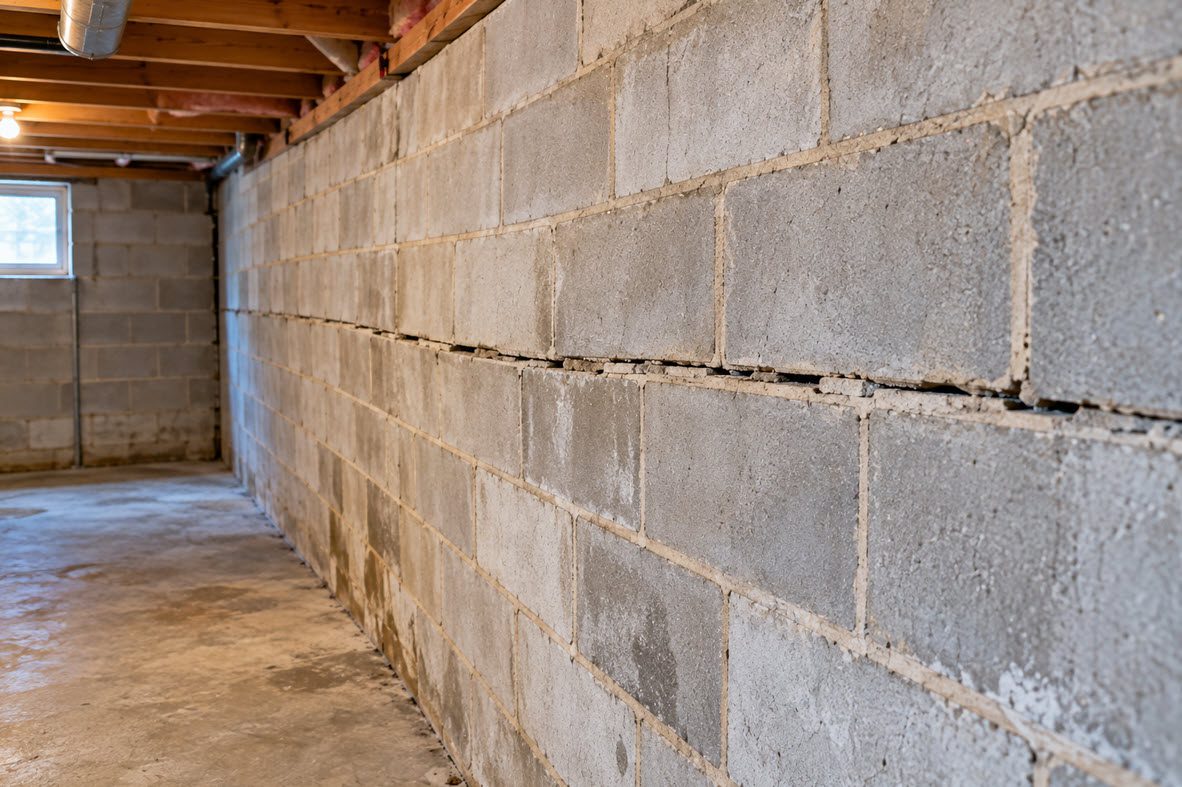
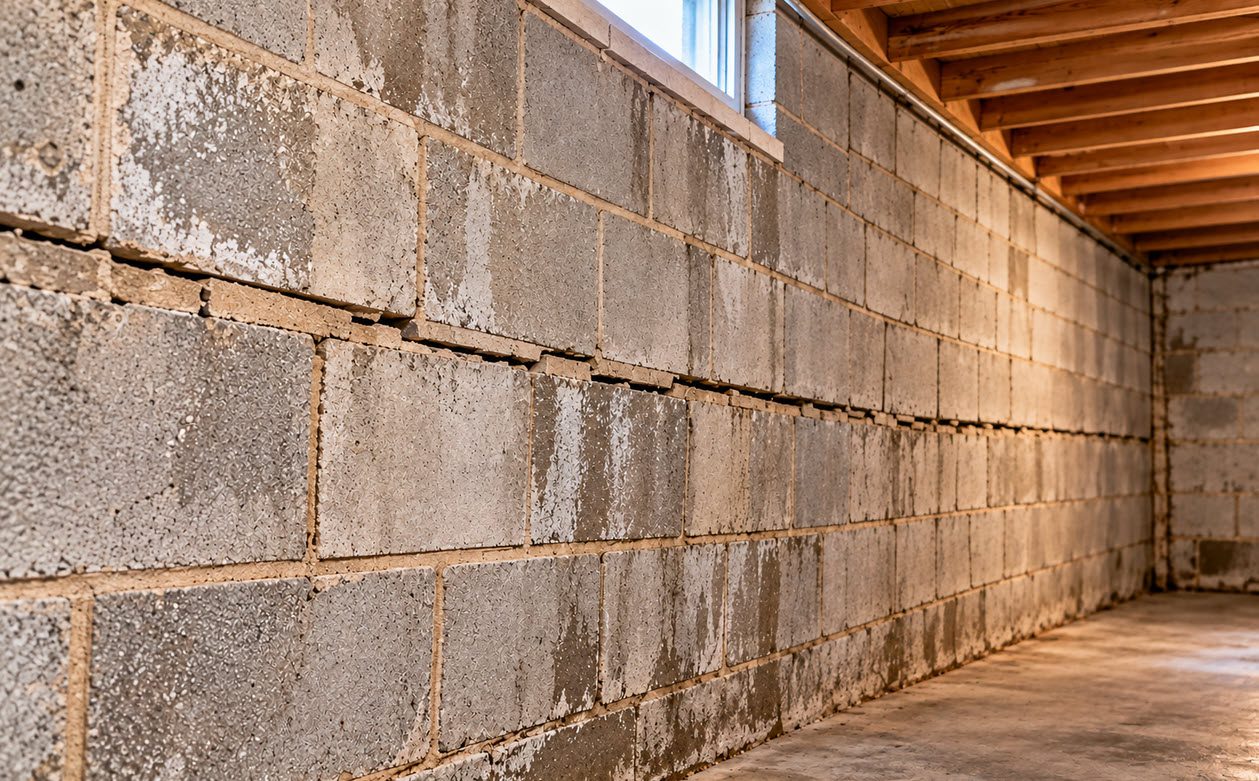
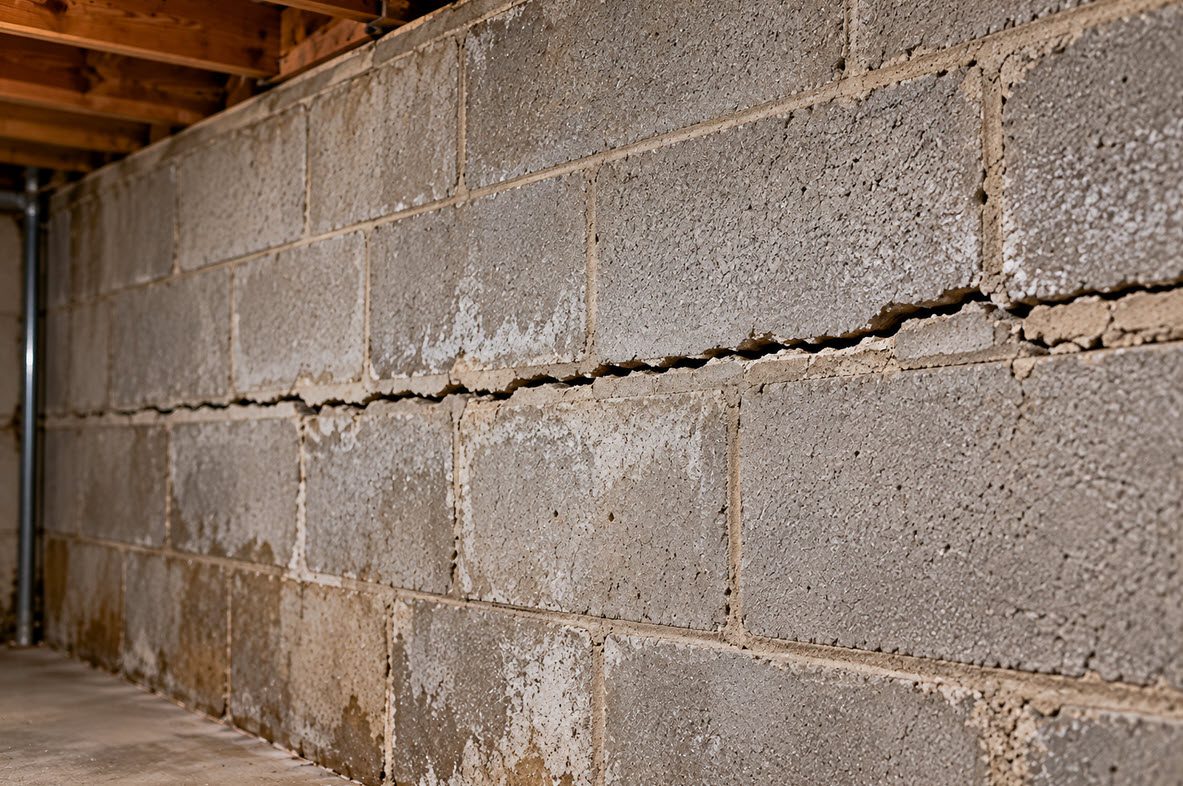
Block walls are built from individual units held together by mortar, so soil pressure tends to crack them horizontally along a mortar joint and push the middle inward. They're the walls we brace most often. Caught early, a bowing block wall can usually be stabilized right where it is with steel braces installed from inside the basement.
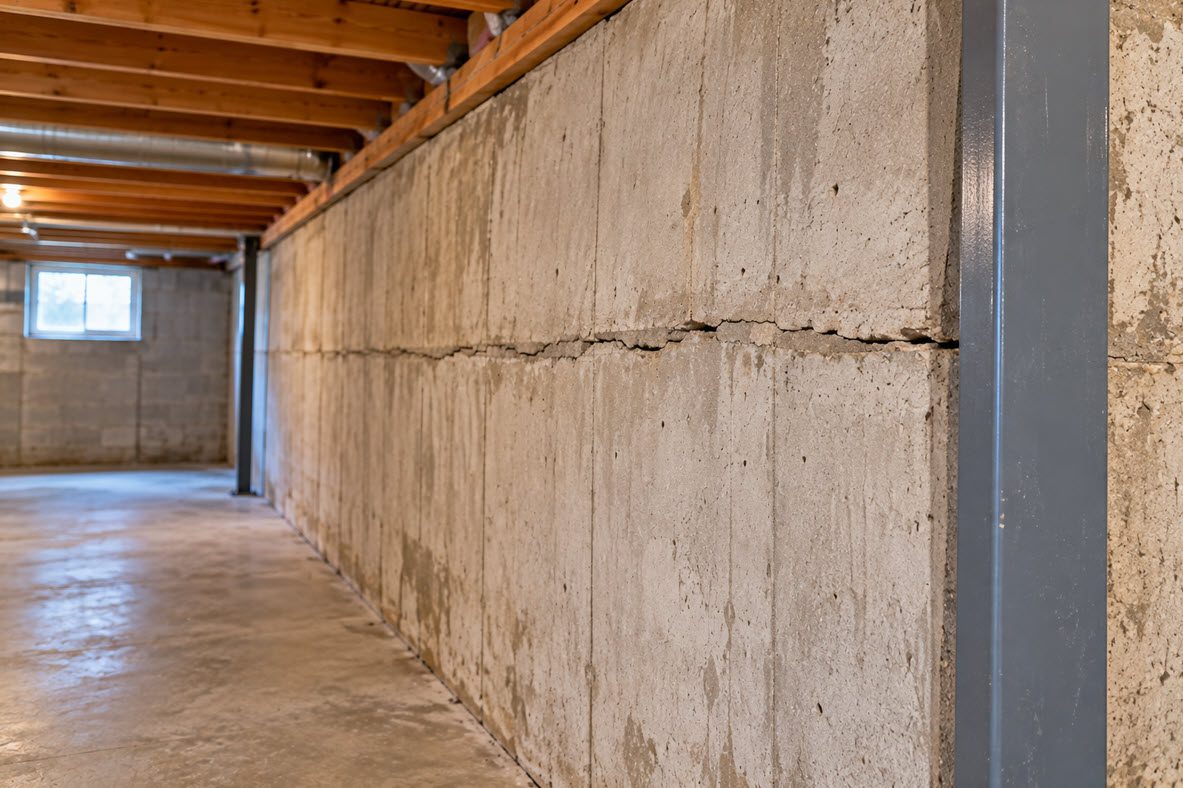
Solid poured walls resist bowing better than block, but under enough pressure they can still crack horizontally, lean in at the top or shift at the base. Because a poured wall tends to move as one piece, we look closely at where it's cracked and how it's moving before choosing between bracing and straightening.
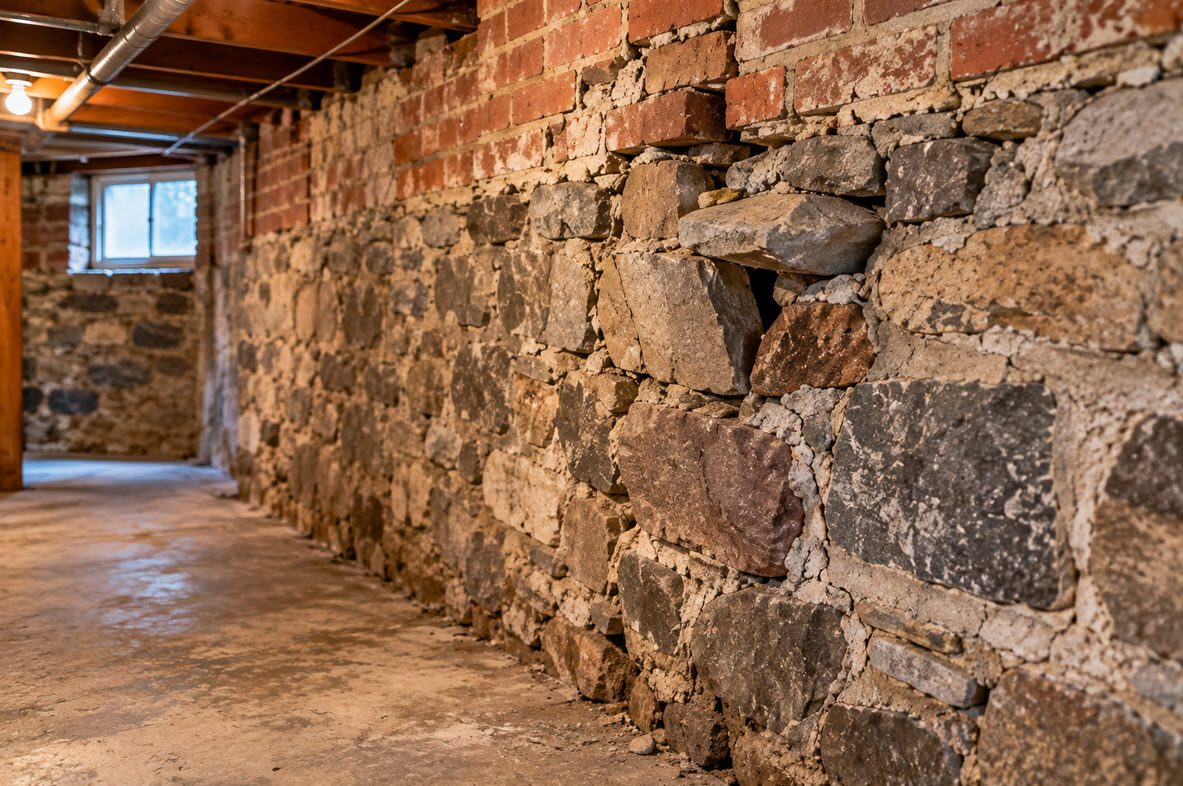
Older stone and brick foundations don't usually bow in a straight line. Instead, sections bulge inward as the mortar behind them softens. Reinforcing these walls often combines repointing, bracing and in some cases rebuilding a bulging section, so the wall can carry the house again without losing its character.
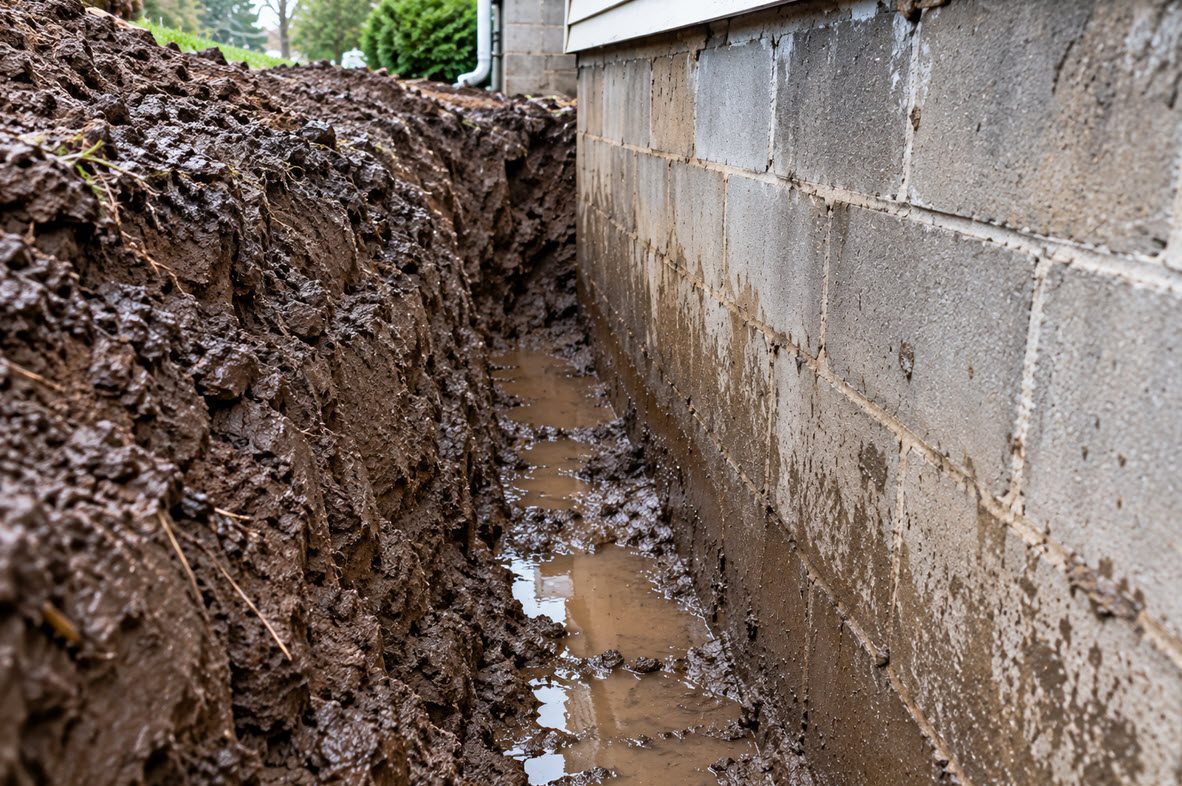
Why It Happens
Why Basement Walls Need Reinforcement
- Constant Soil PressureSaturated clay is heavy and swells, pushing against the wall from outside year-round.
- Seasonal FrostFrozen soil expands every winter, adding force to the upper part of the wall.
- Water That Won't DrainPoor drainage keeps the soil wet and heavy. See basement waterproofing.
- Aging Mortar & MaterialsDecades of moisture weaken mortar joints, especially in block and older masonry walls.
Signs a Wall Needs Reinforcement
- A wall leaning in at the top
- A bulge in the middle of the wall
- A long horizontal crack
- Blocks or stones shifting out of line
- The wall pulling away from the sill plate
- Cracks reopening after repairs
Is a Basement Wall Starting to Move?
We'll measure it and explain whether bracing or straightening is the right fix.
How We Fix It
Wall Straightening & Reinforcement Solutions
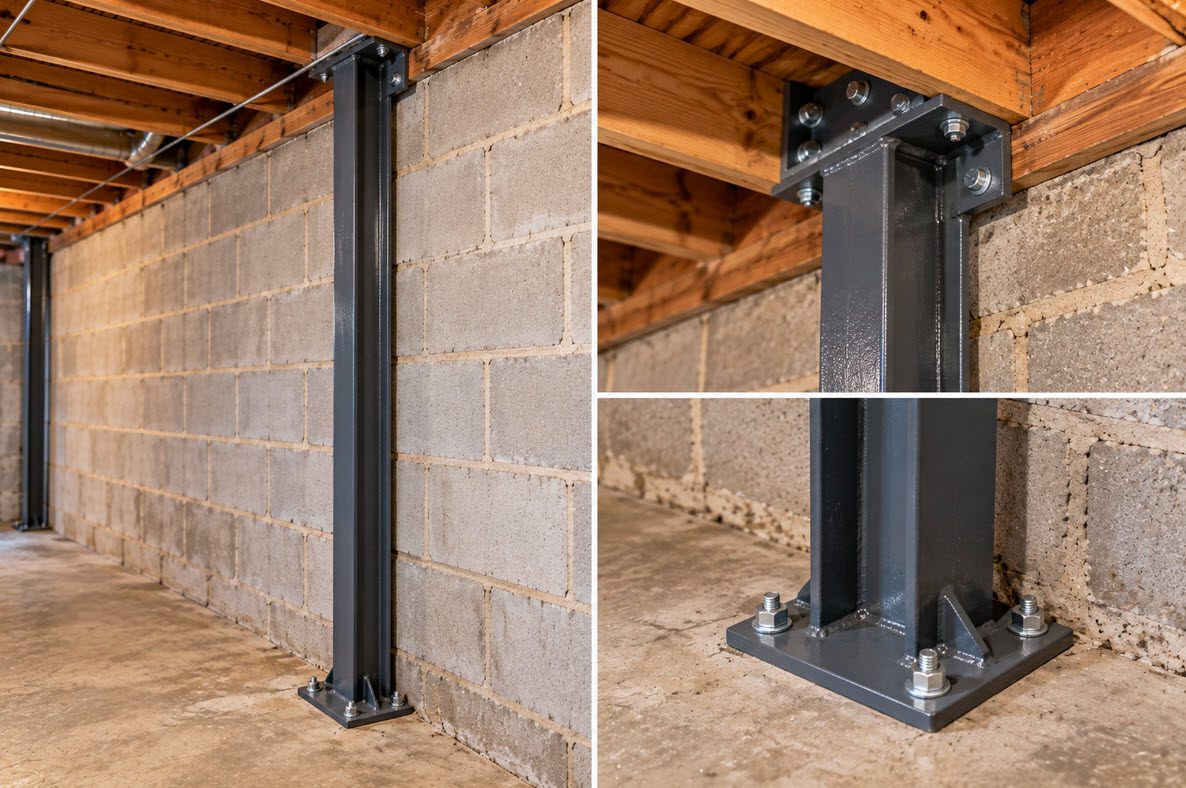
Steel Wall Braces
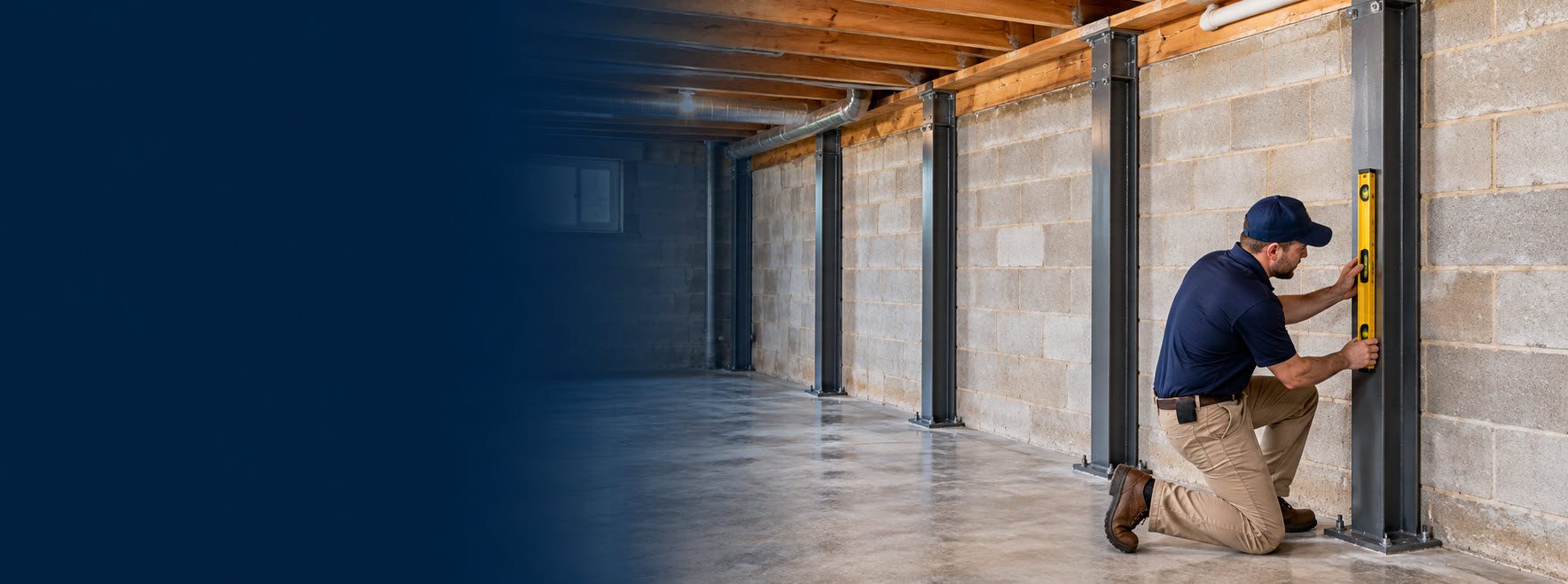
Steel wall braces are heavy steel beams installed vertically against the wall at regular intervals. Each one is anchored into the basement floor at the bottom and secured to the floor framing at the top, so the soil pressure is carried by the braces instead of the wall.
Braces are installed entirely from inside, with no digging in your yard, and they're designed to stop the wall from moving further. They sit close to the wall, so many homeowners finish their basements right around them. For walls that also need to come back toward straight, braces are often part of a straightening project.
Excavation, Straightening & Waterproofing
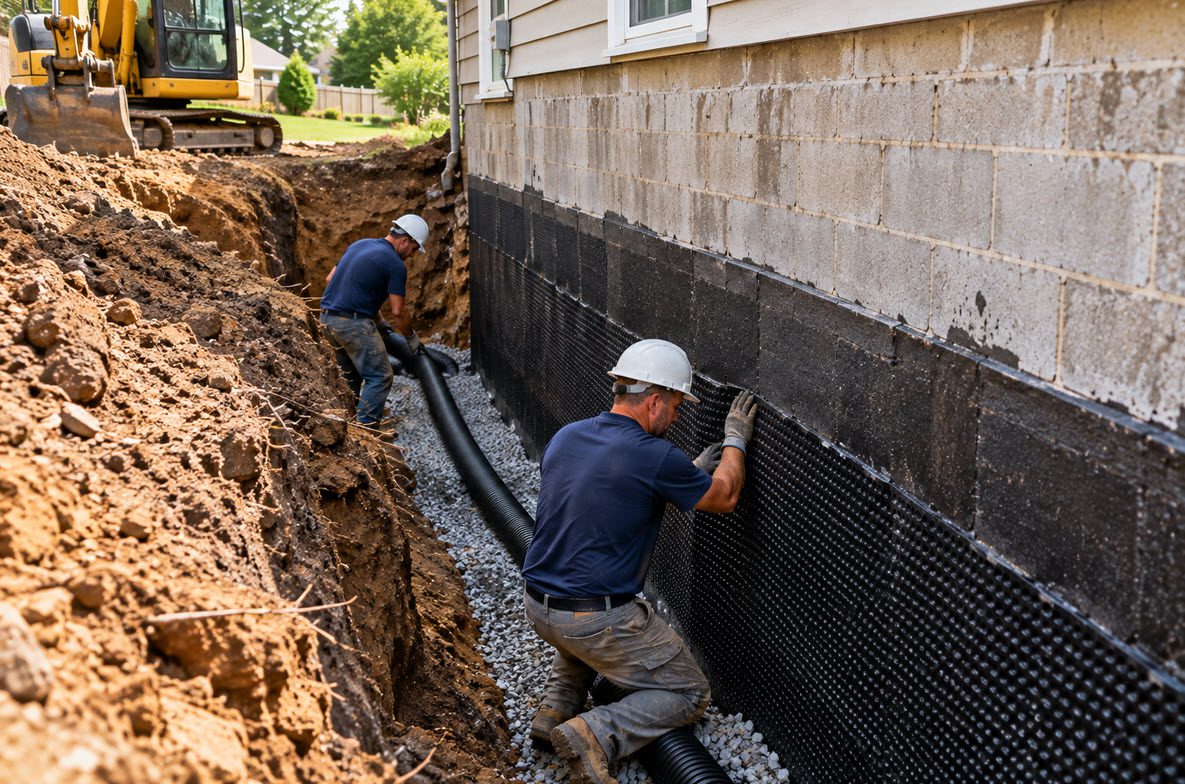
When a wall has moved too far to brace in place, we go to the source of the pressure. The soil is excavated along the outside of the wall, the wall is pushed back toward plumb and then it's reinforced to keep it there.
With the wall exposed, it's also the right time to waterproof the outside of the foundation and add new drain tile, reducing the water pressure that caused the problem. Before we backfill, we make sure the wall, the waterproofing and the drainage are all done right. Learn more about bowing and bulging walls.
Installed from inside, no excavation. Stops further movement for most bowing walls.
Wall pushed back toward plumb from outside, reinforced and waterproofed at the same time.
For older masonry or badly damaged sections that can no longer carry the load safely.
What to Expect
Our Wall Reinforcement Process
- 01InspectWe examine the wall, the cracks and the drainage around your home.
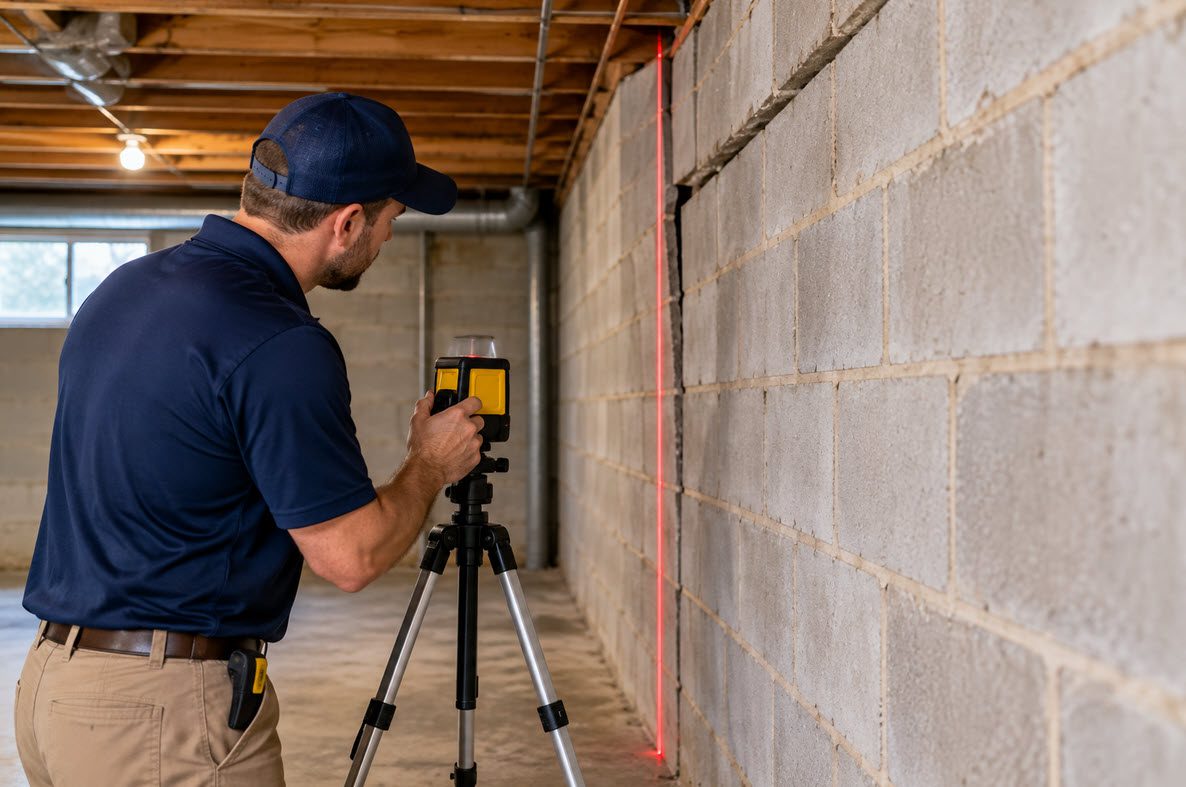
- 02MeasureWe measure how far the wall has moved and where.
- 03RecommendYou get a plain-English explanation and a written estimate.
- 04ReinforceWe brace or straighten the wall and leave the work area clean.
Wall Reinforcement Questions
Wall Straightening & Reinforcement FAQs
What's the difference between bracing and straightening a wall?
Bracing holds a wall in place so it can't move any further. Straightening pushes a wall that has already moved back toward plumb, usually by excavating the soil outside first, and then reinforcing it.
Can a bowed wall be straightened completely?
Walls can often be brought much closer to plumb, but how much depends on the wall, how long it has been moving and its condition. We'll tell you what's realistic before any work begins.
Do steel wall braces need to go into my floor joists?
Yes. Braces are typically secured at the top to the floor framing and anchored into the concrete floor at the bottom, which is what lets them carry the soil pressure.
Can I finish my basement with wall braces installed?
Yes. Braces sit close to the wall, and many homeowners frame and drywall around them. Some prefer to leave them exposed in unfinished areas.
Does straightening a wall mean digging up my yard?
Yes. Straightening is done by excavating the soil along the outside of the wall. We'll explain exactly what areas will be affected and how we restore them.
Will reinforcing the wall stop it from leaking?
Bracing alone doesn't stop leaks. When a wall is excavated for straightening, we can waterproof the outside and add drain tile at the same time, which addresses both problems.
How long does wall reinforcement take?
Many bracing jobs are completed in a day or two. Excavation and straightening typically takes several days, depending on the wall and site. You'll get a timeline with your estimate.
How long do steel wall braces last?
Wall braces are made of heavy steel and are designed as a long-term repair. Keeping drainage around the house in good shape helps any reinforcement last.
Do I need a permit for wall reinforcement?
Structural foundation work typically requires a building permit from your city or village. We'll explain what your project requires.
Will a reinforced wall hurt my home's resale value?
A wall that has been properly reinforced is generally viewed far more favorably than a wall that's still moving. Keep your written documentation of the repair to share with future buyers.
Thousands of Wisconsin Homeowners Have Trusted Their Foundations to American Foundation Specialists.
“Jayme and Scott came out on an urgent call today. Although there was no foundation issue, they correctly diagnosed a plumbing issue… I highly recommend their professional and friendly service.”
“The team at American Foundation did a great job installing steel beams to brace one of our basement walls… The work looks great and they did good cleaning up afterwards.”
“We worked with Lyle. He was great to work with, explained everything that needed to be done… Fair price and excellent work.”
Related Repairs
Related Foundation Repair Services
 Bowing & Bulging Walls
 Cracked Foundation Walls
 Stabilization & Helical Piers
Don't Wait for a Small Problem to Become a Bigger One.
Let's Find Out What's Happening With Your Foundation.
Tell us what you're seeing. We'll inspect the problem, explain what's causing it and help you understand your repair options.
American Foundation Specialists — Protecting Wisconsin Homes for 80 Years.