
Settling Foundation Repair in Southeastern Wisconsin
Stabilize the Foundation. Stop the Settlement.
Sticking doors, sloping floors and cracks running up from the corners of your foundation can all mean part of your home is sinking. American Foundation Specialists finds out why the soil gave way and recommends a repair that stabilizes your home and keeps the problem from coming back.
- Free inspections
- Written estimates
- Family owned for 80 years
- Since 194780 Years of Experience
- Family Owned& Operated
- Warranty BackedUp to 20-Year Warranty
- Licensed & BondedFully Insured
- BBB A+ RatingBetter Business Bureau

Experienced Foundation Repair Specialists
When the Ground Under Your Home Moves
Every house rests on the soil beneath its footings. When that soil compresses, shrinks, washes away or was never properly compacted in the first place, part of the house can sink lower than the rest. That's foundation settlement, and in Southeastern Wisconsin, it's one of the most common structural problems we see.
Our heavy clay soil swells when it's wet and shrinks when it dries out, so the support under a foundation can change from season to season. Homes built on filled or leveled lots, additions and garages set on shallower footings and corners where downspouts dump water against the house are all especially vulnerable. Once one section starts to drop, the stress shows up as cracks in the foundation, the walls and the floors above it.
Some settling is normal, and many older homes settled long ago and stopped. The key is knowing whether yours is still moving. We've been answering that question for homeowners across Milwaukee, Waukesha, Racine and Kenosha counties for 80 years.
Where Settlement Shows Up
Signs of Settlement, Inside and Out
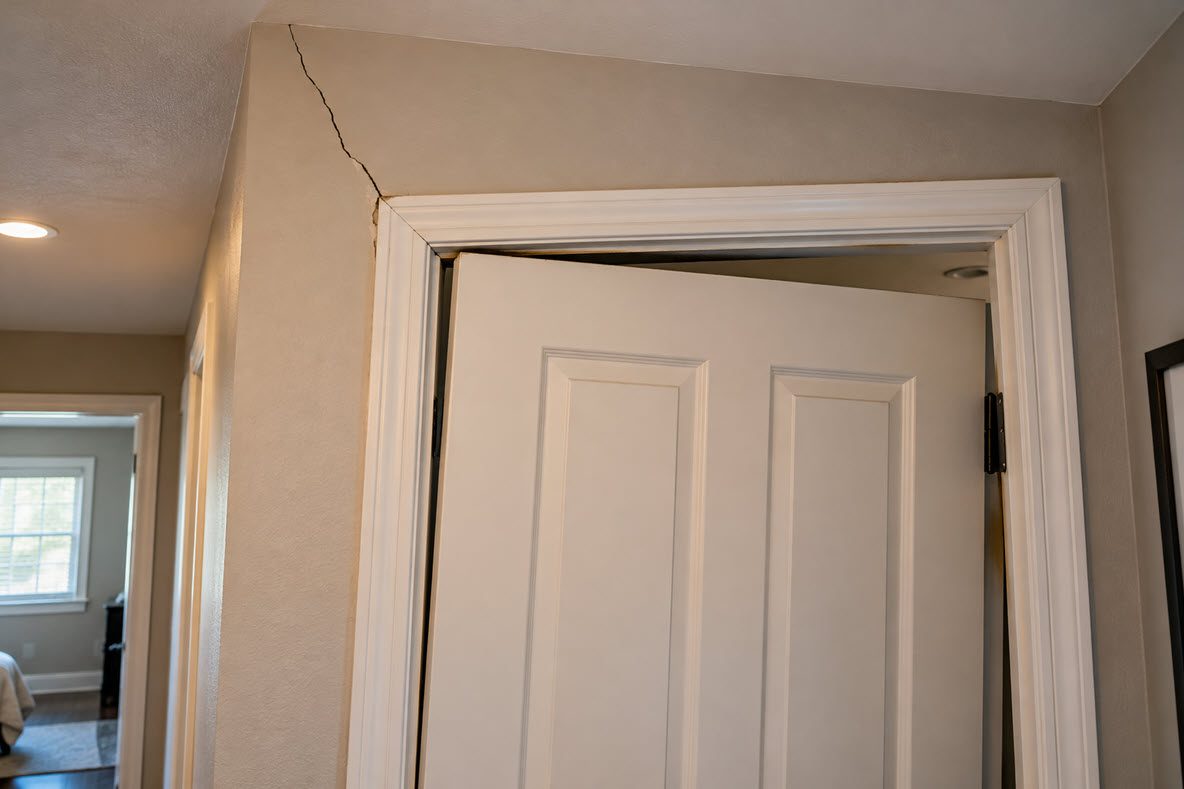
Settlement often shows up upstairs before anyone looks at the foundation. Doors start sticking or swinging open on their own, windows get hard to open, floors develop a noticeable slope and drywall cracks open at the corners of doors and windows. If the same cracks keep coming back after you patch and paint them, the house is likely still moving.
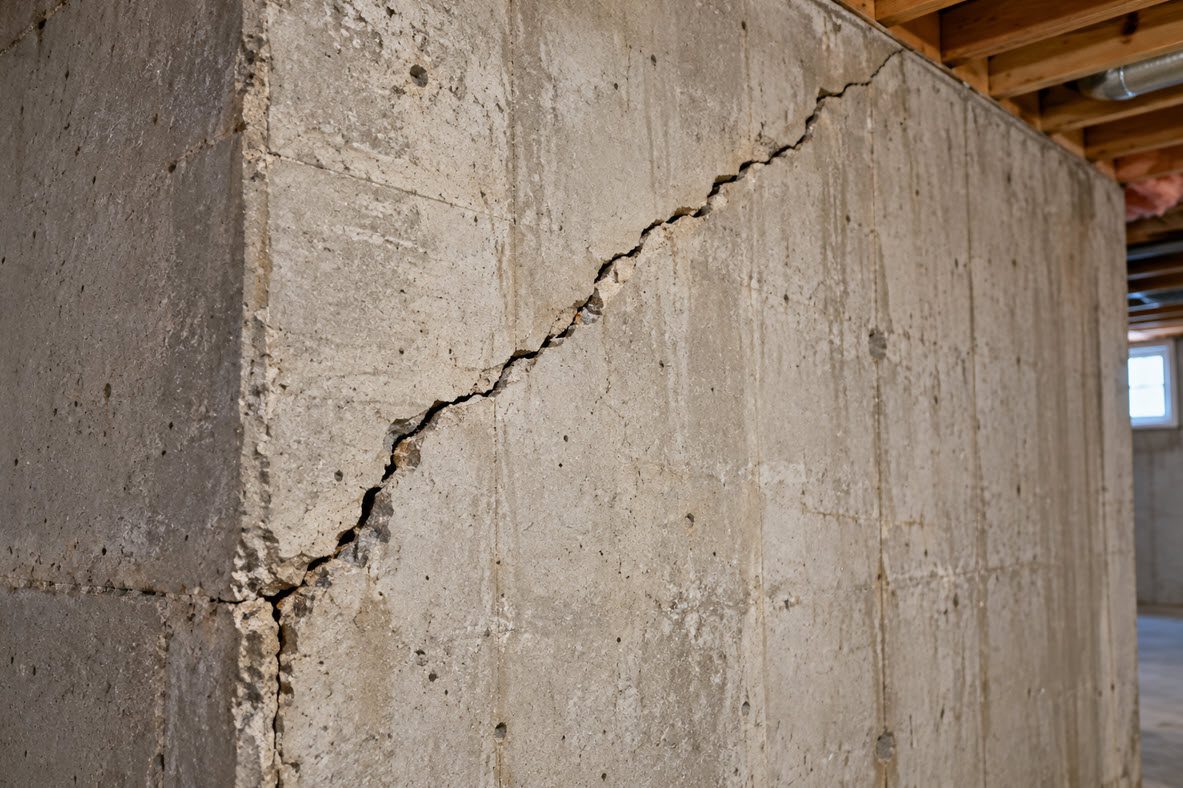
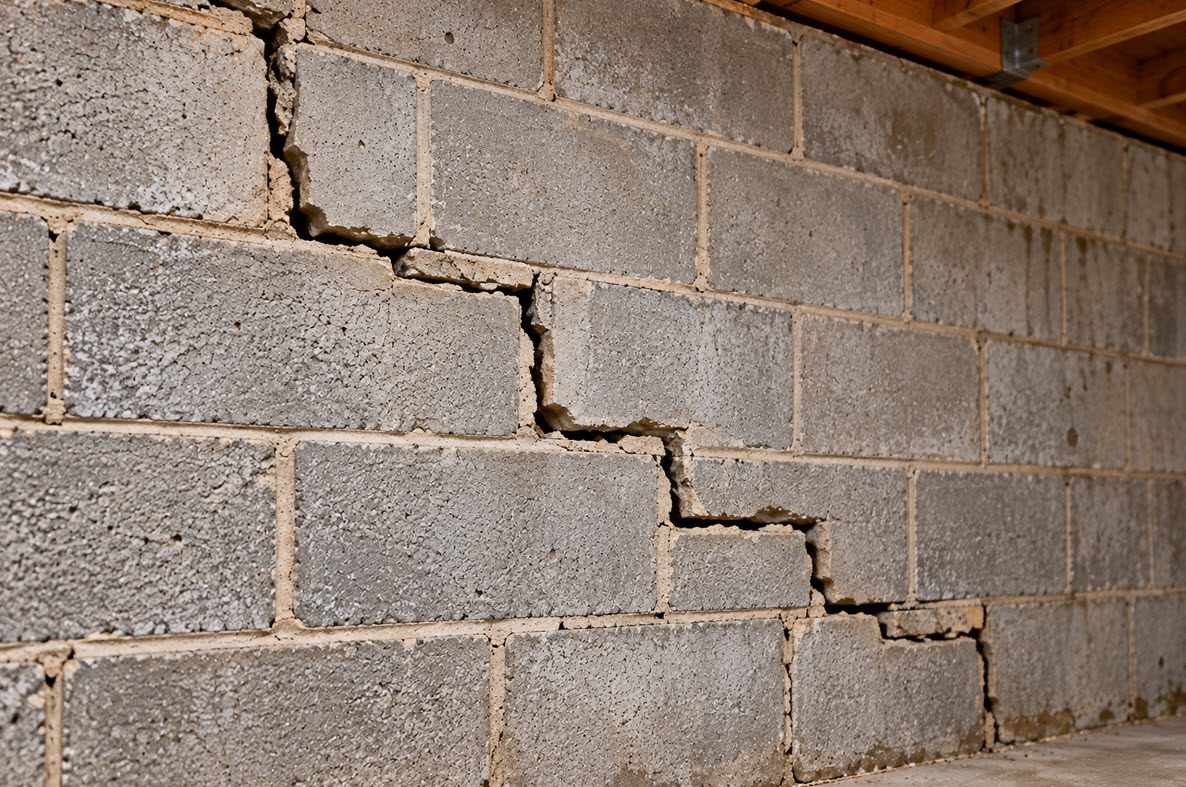
In the basement, settlement usually leaves diagonal cracks running up and away from a corner, or stair-step cracks along the mortar joints of a block wall. These cracks are often wider at one end, a sign that one side of the foundation has dropped more than the other. Floors may also crack or slope toward the settling corner.
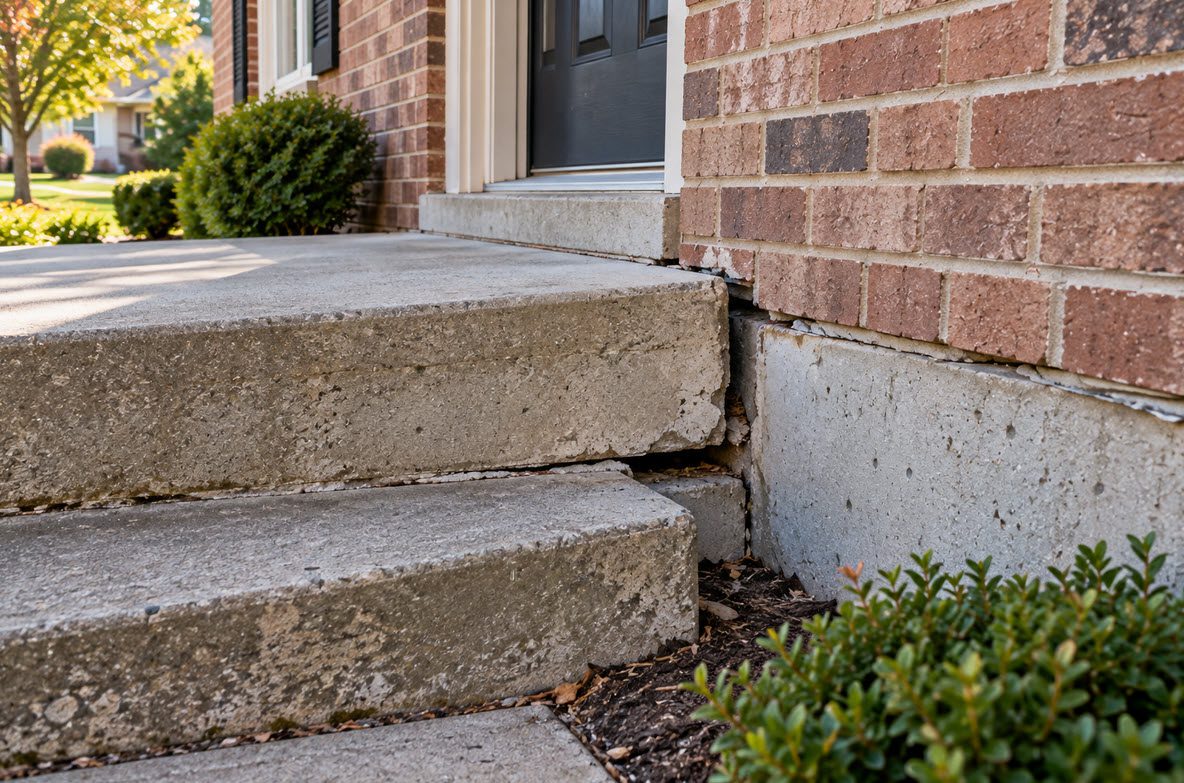
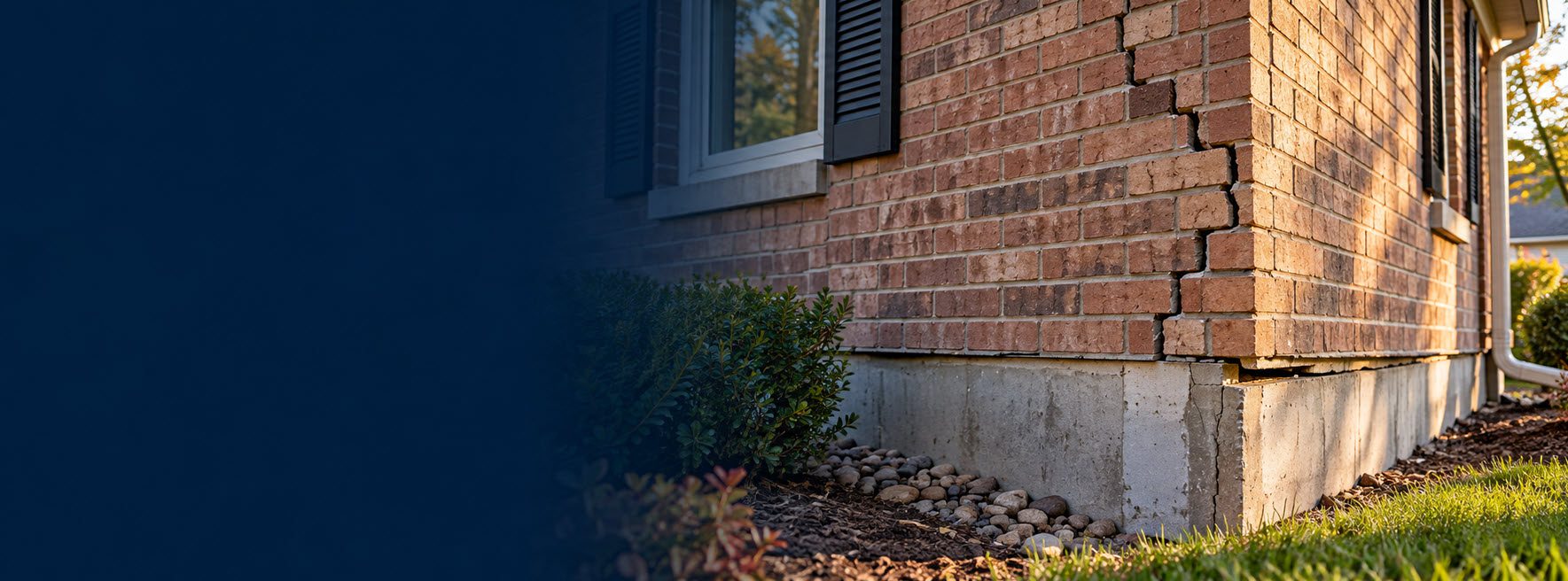
Outside, look for stair-step cracks through brick, gaps opening between the foundation and the siding, a chimney pulling away from the house or a stoop, porch or garage slab separating from the wall. Additions are a common trouble spot, because they often sit on different footings than the original home and settle at a different rate.
Why It Happens
What Causes a Foundation to Settle?
- Shrinking & Swelling ClayWisconsin clay expands when wet and shrinks when dry, so support under the footing changes from season to season.
- Poorly Compacted FillSoil brought in to level a lot or backfilled around a foundation can compress for years after construction.
- Water Washing Soil AwayDownspouts and poor grading soak one corner over and over. See basement waterproofing.
- Additions on Separate FootingsPorches, garages and additions often sit on shallower footings and settle at a different rate than the house.
Signs Your Foundation May Be Settling
- Doors and windows that stick or won't latch
- Floors that slope toward one side
- Drywall cracks that keep coming back
- Diagonal cracks from foundation corners
- Gaps between brick, siding or stoops and the house
- A chimney or addition pulling away
Is Your Home Still Settling?
We'll check for ongoing movement and explain exactly what's happening.
How We Fix It
Settling Foundation Repair Solutions
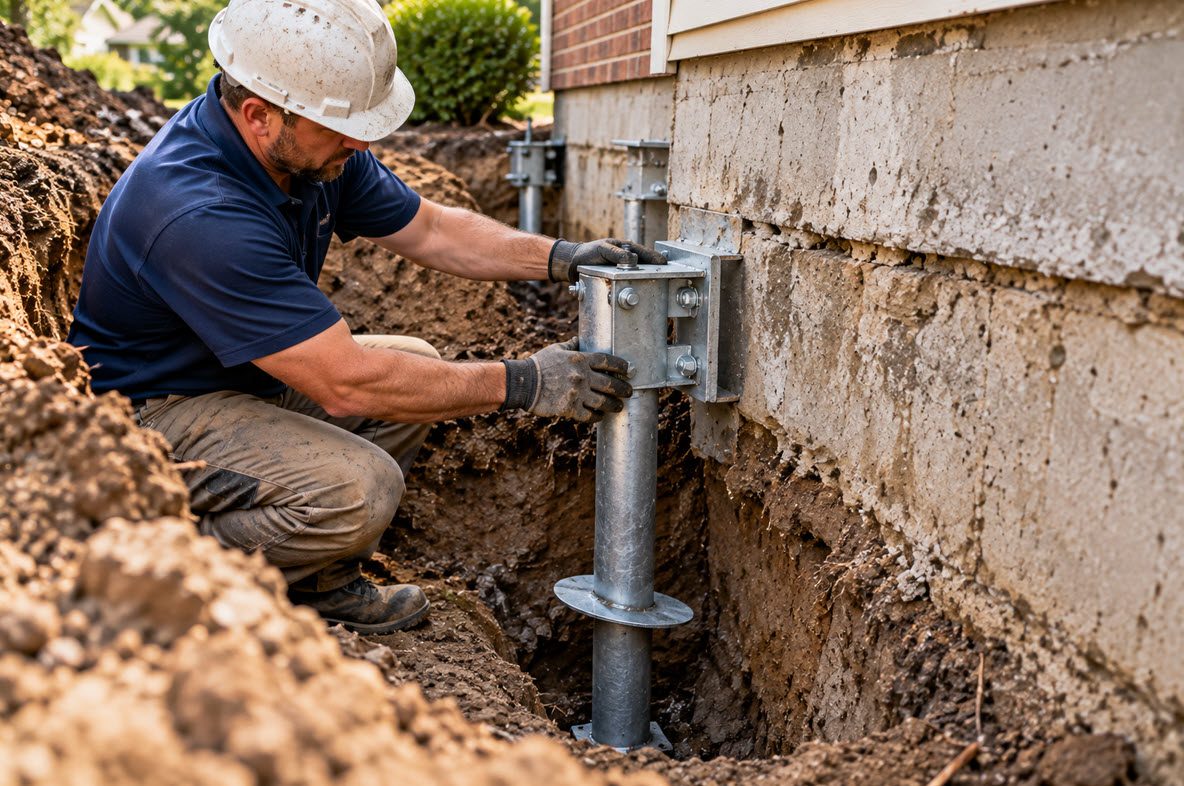
Foundation Stabilization With Helical Piers
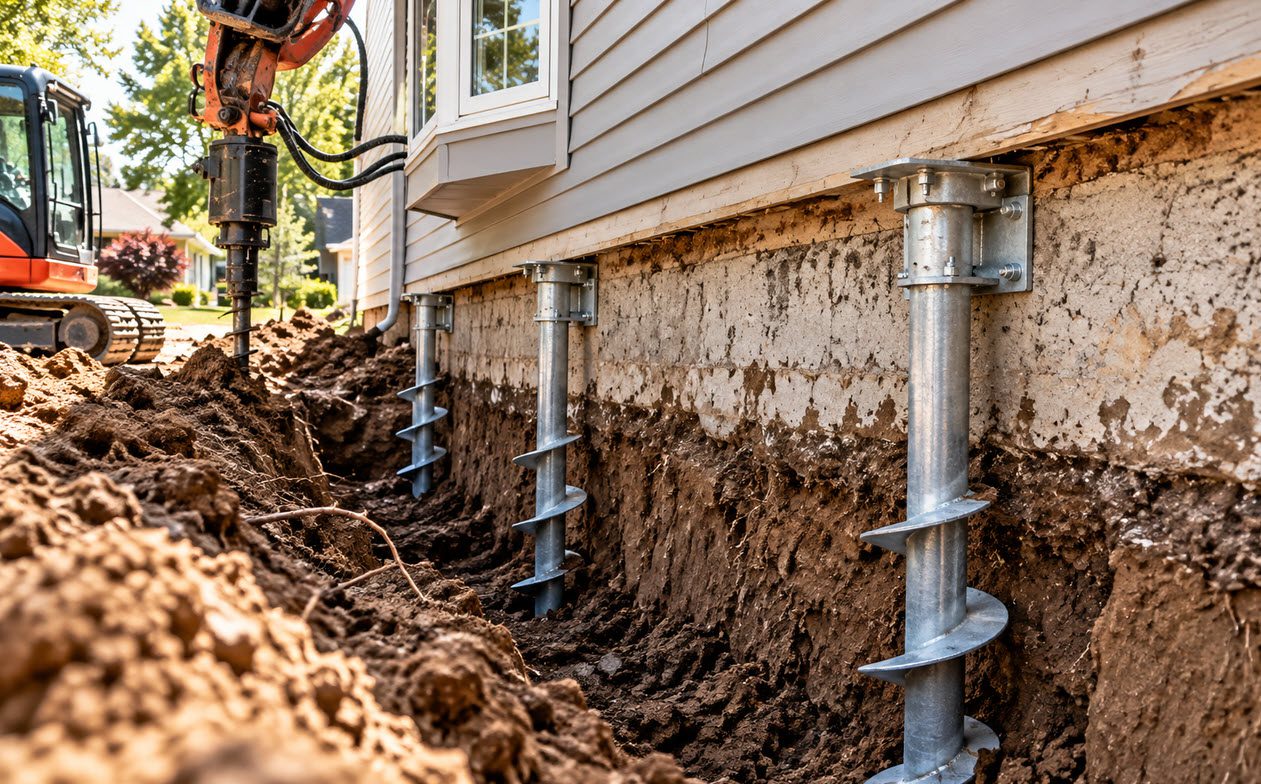
When the soil under a footing can no longer carry the weight of your home, we transfer that weight to stronger soil deeper in the ground. Helical piers are steel shafts with screw-like plates that are turned into the ground until they reach soil capable of supporting the load, then attached to the footing with steel brackets.
Piers stop ongoing settlement, and in some cases, they can help lift part of the foundation back toward its original position. They aren't the answer for every home, and we only recommend them when the conditions call for it. Learn more about foundation stabilization and helical piers.
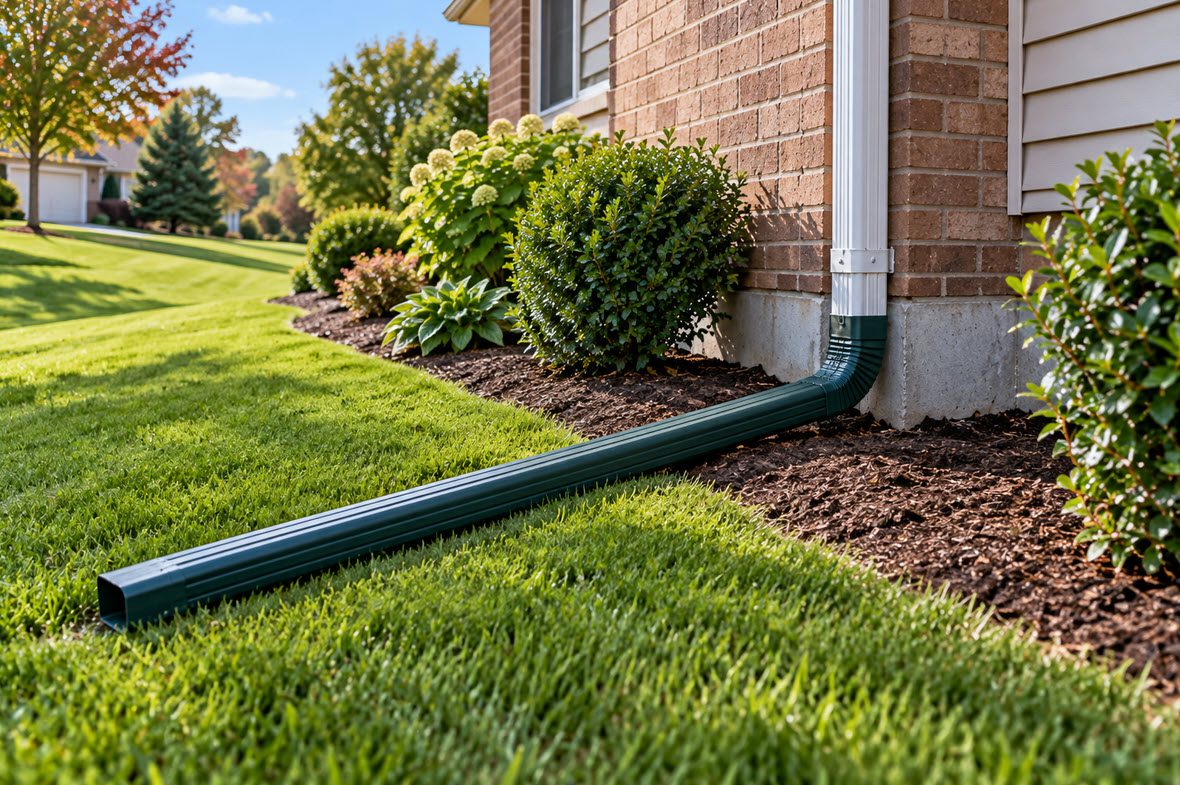
Correcting the Cause: Water & Drainage
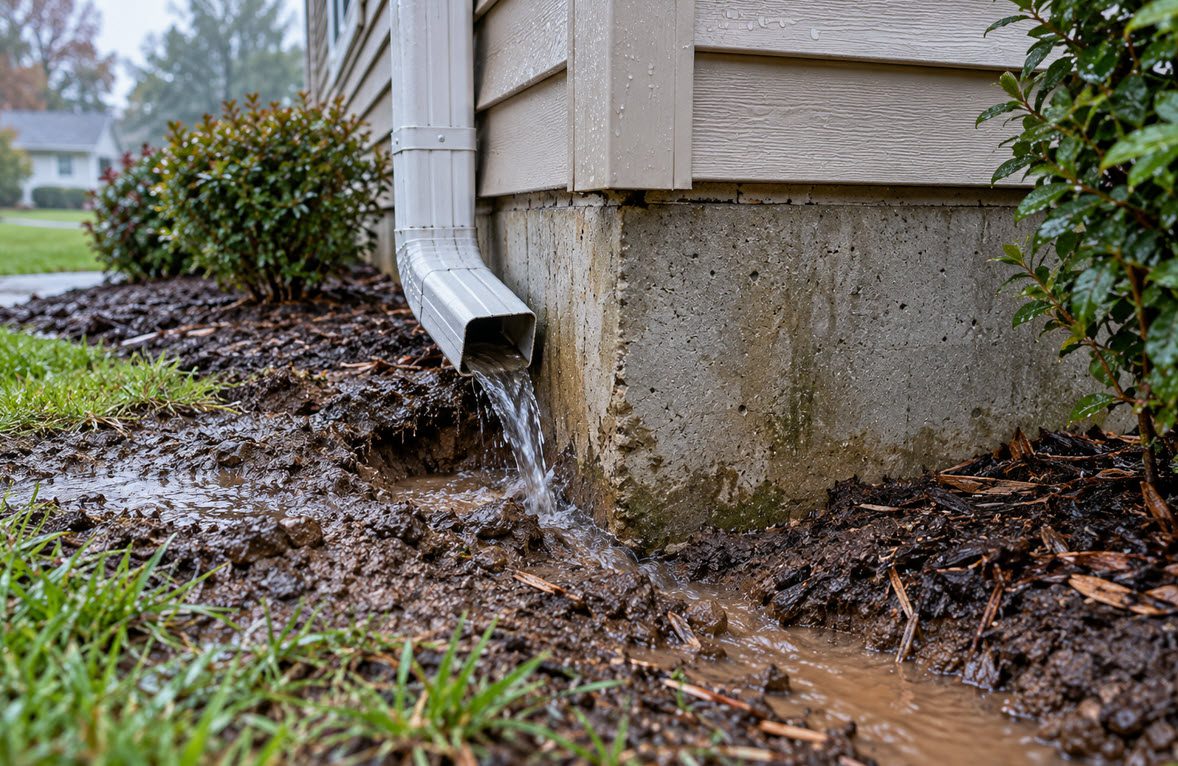
Most settlement starts with water. A downspout that empties at a corner, a yard that slopes toward the house or failed drain tile can soften or wash away the soil under part of a footing, year after year.
That's why stabilizing a foundation is only half the job. We look at how water is reaching the settling area and recommend the changes that keep the soil under your home stable, from extending downspouts and regrading to new drain tile.
Settled long ago and hasn't moved since. Often just needs monitoring and cosmetic repair.
Cracks growing or doors getting worse. The cause needs to be fixed and the foundation stabilized.
Large displacement or a section pulling away. Usually calls for pier stabilization and drainage work.
What to Expect
Our Settling Foundation Repair Process
- 01InspectWe examine the foundation, the home above it and the drainage around it.
- 02MeasureWe check floor levels and crack patterns to see how and where it's moving.
- 03RecommendYou get a plain-English explanation and a written estimate.
- 04StabilizeWe stabilize the foundation, correct the cause and clean up.
Settling Foundation Questions
Settling Foundation FAQs
Is it normal for a house to settle?
Some settling is normal, especially in the first few years after a home is built. The concern is settling that's uneven or still happening, which shows up as cracks that grow, doors that get harder to close and floors that develop a slope.
How can I tell if my foundation is still settling?
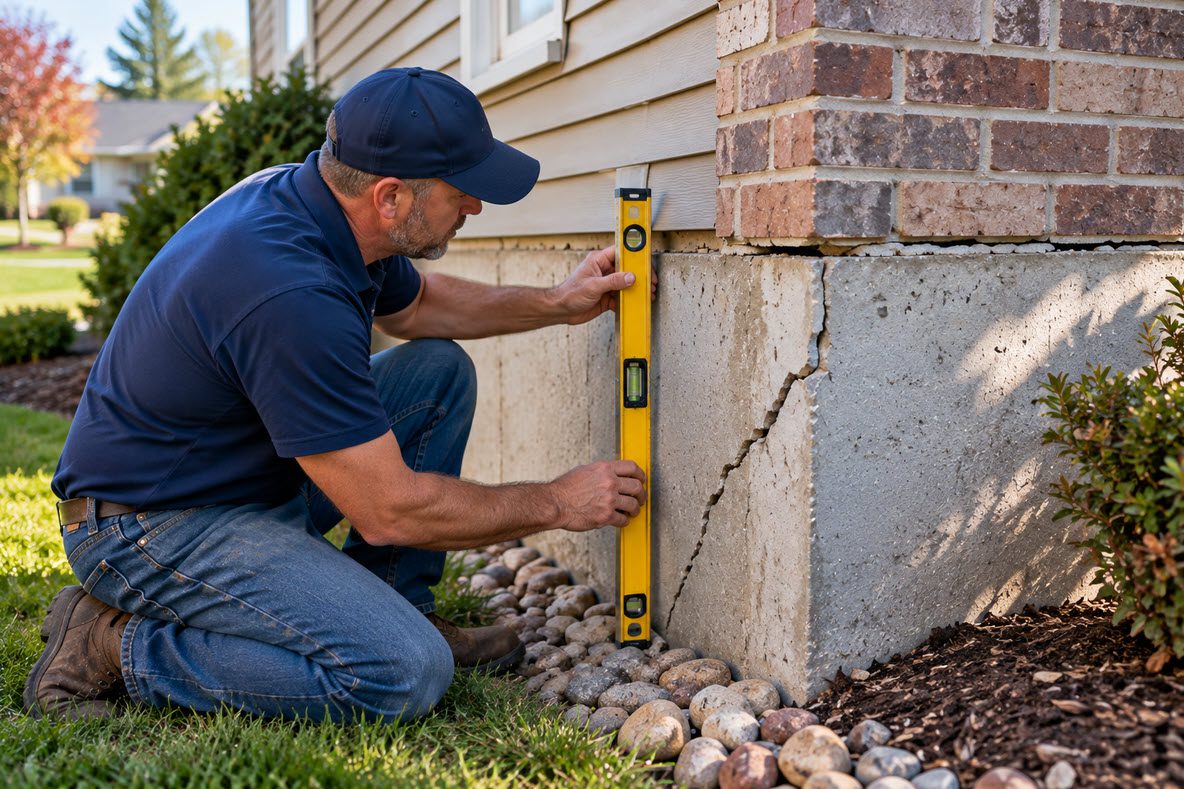
Mark the ends of cracks with a pencil and date them, take photos and watch doors that stick. If cracks grow past your marks or doors keep getting worse, the movement is likely ongoing and worth having inspected.
Can a settled foundation be lifted back to level?
Sometimes. Helical piers can stabilize a foundation and, in some cases, lift part of it back toward its original position. How much can be recovered depends on the home and how long it has been settled.
What are helical piers?
Steel shafts with screw-like plates that are turned deep into the ground until they reach soil strong enough to carry your home's weight. Brackets connect them to the footing, transferring the load off the weak soil near the surface.
Why is my addition separating from the house?
Additions are often built on separate, sometimes shallower footings. If the soil under the addition compresses or gets wetter than the soil under the house, the two settle at different rates and pull apart.
Can downspouts really cause foundation settlement?
Yes. A downspout that empties at a corner can soak and soften the soil under that part of the footing every time it rains, and over the years, that section can sink.
Do sticking doors always mean foundation problems?
Not always. Humidity can make doors stick too. But doors that suddenly stick, swing open on their own or keep getting worse, especially along with cracks above them, often point to settlement.
Will foundation settlement get worse over time?
Active settlement usually continues until the cause is corrected and the foundation is stabilized. Settlement that happened long ago and stopped may not need anything more than monitoring.
Does homeowner's insurance cover settling foundations?
Many policies exclude damage from settling or soil movement, but coverage varies. Check with your insurance agent about your specific policy.
How long does foundation stabilization take?
It depends on the size of the area and the repair. Many pier installations take a few days. You'll get a timeline with your written estimate.
Thousands of Wisconsin Homeowners Have Trusted Their Foundations to American Foundation Specialists.
“Jayme and Scott came out on an urgent call today. Although there was no foundation issue, they correctly diagnosed a plumbing issue… I highly recommend their professional and friendly service.”
“The team at American Foundation did a great job installing steel beams to brace one of our basement walls… The work looks great and they did good cleaning up afterwards.”
“We worked with Lyle. He was great to work with, explained everything that needed to be done… Fair price and excellent work.”
Related Repairs
Related Foundation Repair Services
 Cracked Foundation Walls
 Stabilization & Helical Piers
 Bowing & Bulging Walls
Don't Wait for a Small Problem to Become a Bigger One.
Let's Find Out What's Happening With Your Foundation.
Tell us what you're seeing. We'll inspect the problem, explain what's causing it and help you understand your repair options.
American Foundation Specialists — Protecting Wisconsin Homes for 80 Years.