Bowing & Bulging Basement Wall Repair in Southeastern Wisconsin
Stop the Movement. Protect Your Foundation.
A basement wall that's leaning, bowing or bulging inward is under pressure it wasn't built to handle. American Foundation Specialists measures how far your wall has moved, finds out why and recommends a repair that stops the movement before it becomes a much bigger problem.
- Free inspections
- Written estimates
- Family owned for 80 years
- Since 194780 Years of Experience
- Family Owned& Operated
- Warranty BackedUp to 20-Year Warranty
- Licensed & BondedFully Insured
- BBB A+ RatingBetter Business Bureau

Experienced Foundation Repair Specialists
A Bowing Wall Won't Fix Itself
Basement walls are built to hold back soil, but they aren't built to hold back unlimited pressure. In Southeastern Wisconsin, heavy clay soil swells when it gets wet, freezes hard every winter and drains slowly, so the pressure against a foundation wall keeps building season after season. Over time, that force can push a wall inward until it bows, leans or bulges.
Concrete block walls are the most likely to move, because the mortar joints give the soil a weak line to push against. Poured walls are stronger but can still crack and lean under enough pressure, and older stone and brick walls tend to bulge as the mortar behind them weakens. Once a wall starts moving, it rarely stops on its own, and the longer it moves, the more involved the repair becomes.
We've been stabilizing and straightening basement walls across Milwaukee, Waukesha, Racine and Kenosha counties for 80 years. Every repair starts with measuring the wall and explaining exactly what it needs.
How Bowing Walls Progress
The Three Stages of a Bowing Basement Wall
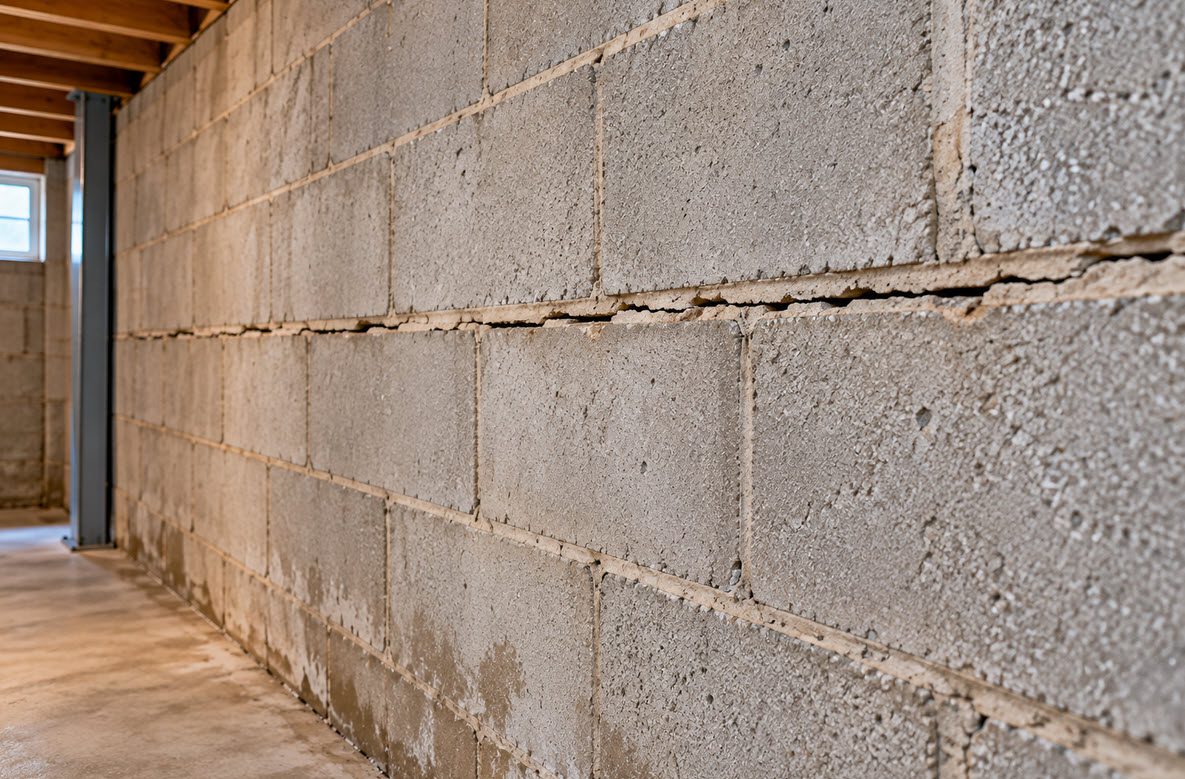
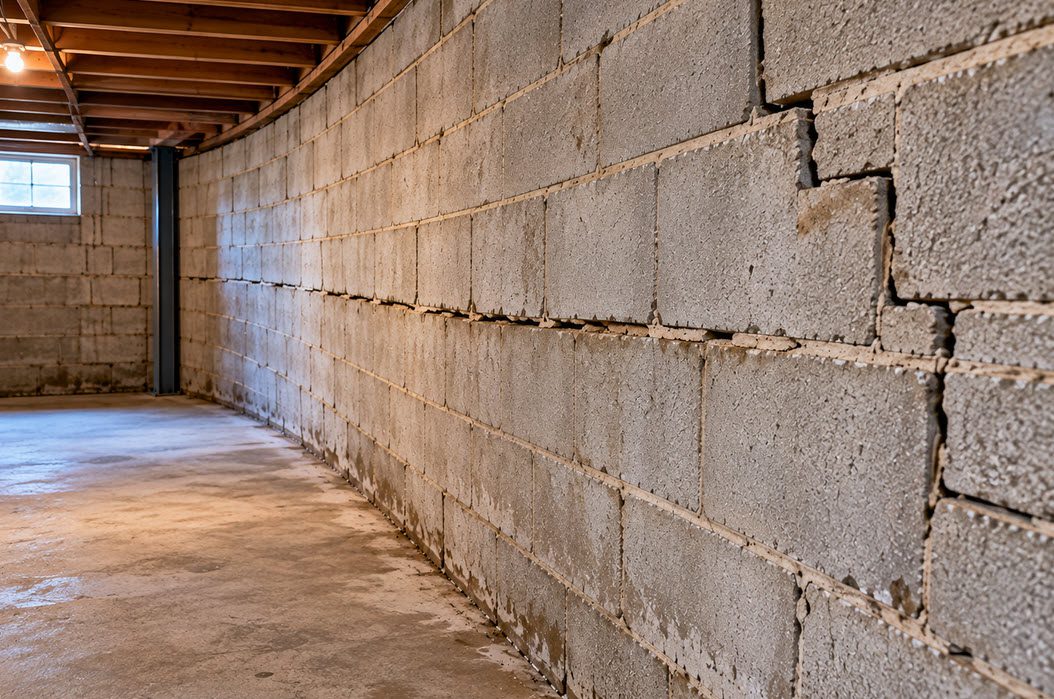
The first sign is often a long horizontal crack running partway up the wall, usually along a mortar joint in a block wall. The wall may still look straight to the eye, but that crack tells us soil pressure is starting to win. This is the best time to act, because the wall can usually be stabilized in place with minimal disruption, before it moves any further.
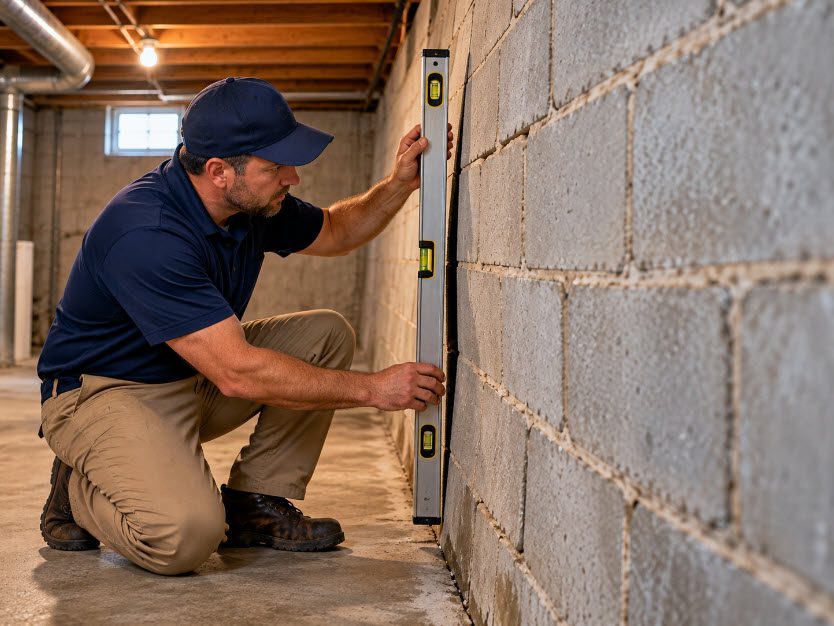
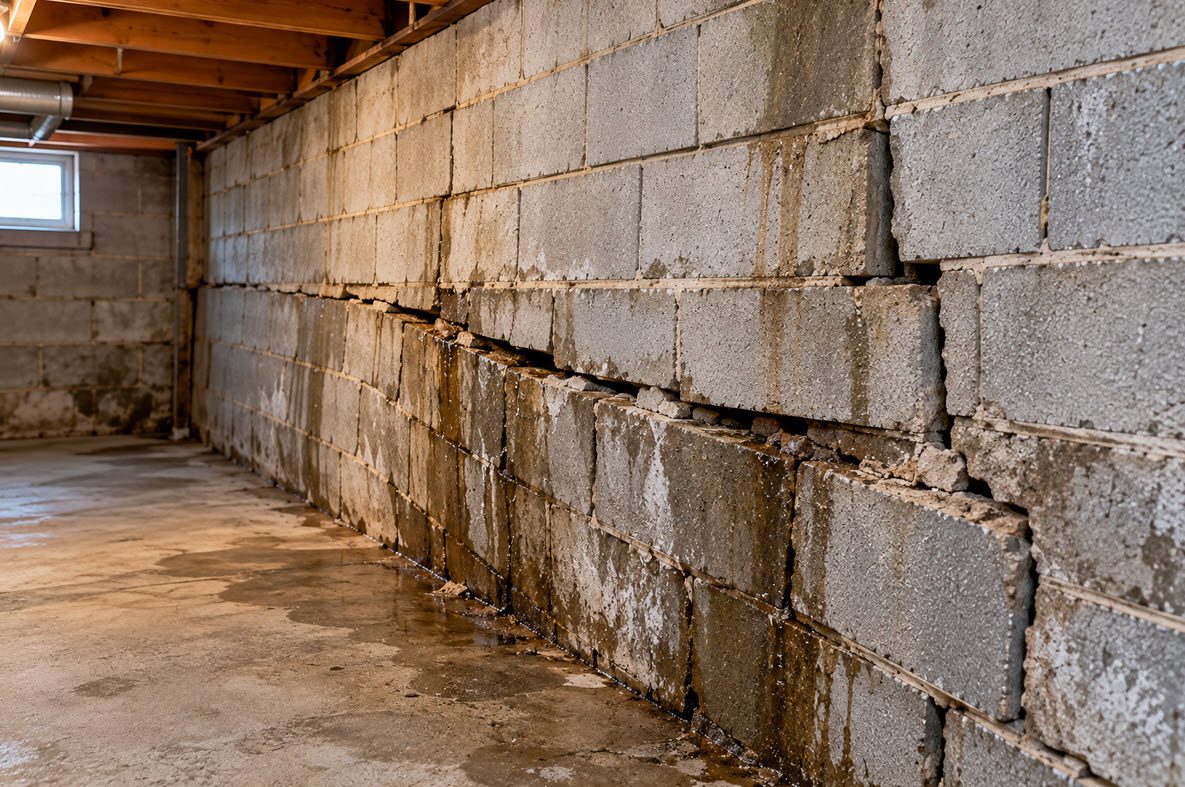
As pressure continues, the wall begins to lean in at the top or bulge in the middle. You may see stair-step cracks at the corners, blocks shifting out of line or a gap opening between the top of the wall and the wood sill above it. At this stage, steel wall braces anchored to the floor and the framing above can typically hold the wall in place.
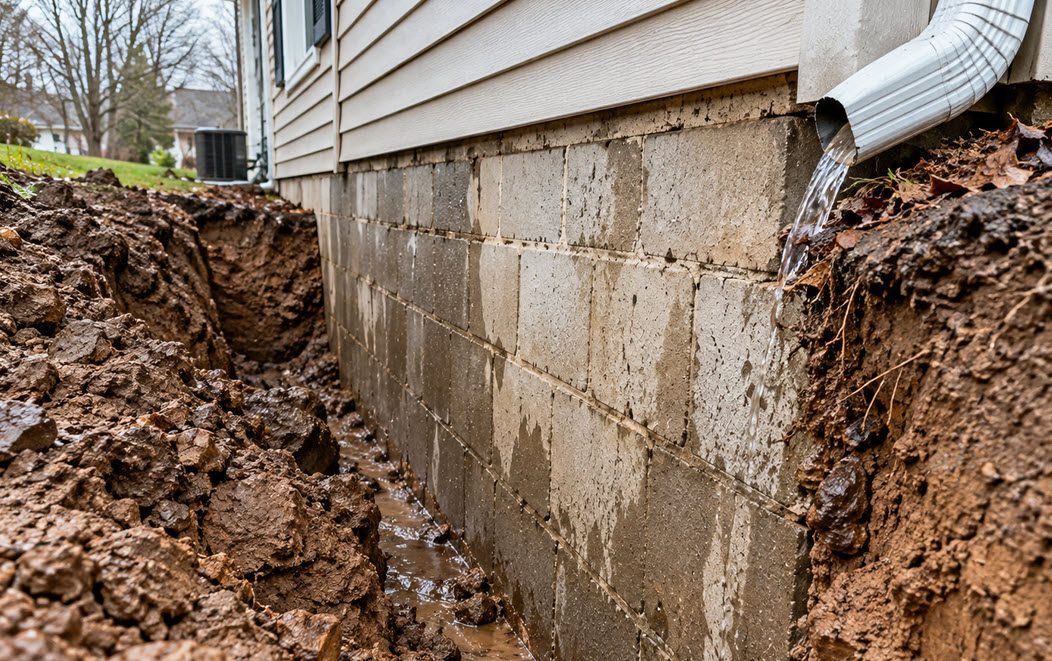
Walls that have moved several inches may show blocks sliding past each other, a wall that has sheared at the bottom or water pouring through the cracks. Bracing alone may not be enough. These walls usually need to be excavated from the outside, pushed back toward plumb and then reinforced, and in rare cases, sections may need to be rebuilt.
Why It Happens
What Pushes Basement Walls Inward?
- Expansive Clay SoilWisconsin clay swells when it absorbs water and gets heavy, pushing hard against the outside of the wall.
- Frost PressureFrozen soil expands every winter. Year after year, that pressure builds against the upper part of the wall.
- Poor DrainageShort downspouts, flat yards and failed drain tile keep the soil saturated. See basement waterproofing.
- Block Wall ConstructionMortar joints give soil a weak line to push on, which is why block walls bow more often than poured walls.
Signs Your Basement Wall May Be Bowing
- A long horizontal crack across the wall
- A wall that leans in at the top
- Bulging in the middle of the wall
- Stair-step cracks at the corners
- A gap between the wall and the sill plate
- Water coming through new cracks
Think Your Basement Wall Is Moving?
We'll measure it and tell you exactly how far it's moved and what it needs.
How We Fix It
Bowing & Bulging Wall Repair Solutions
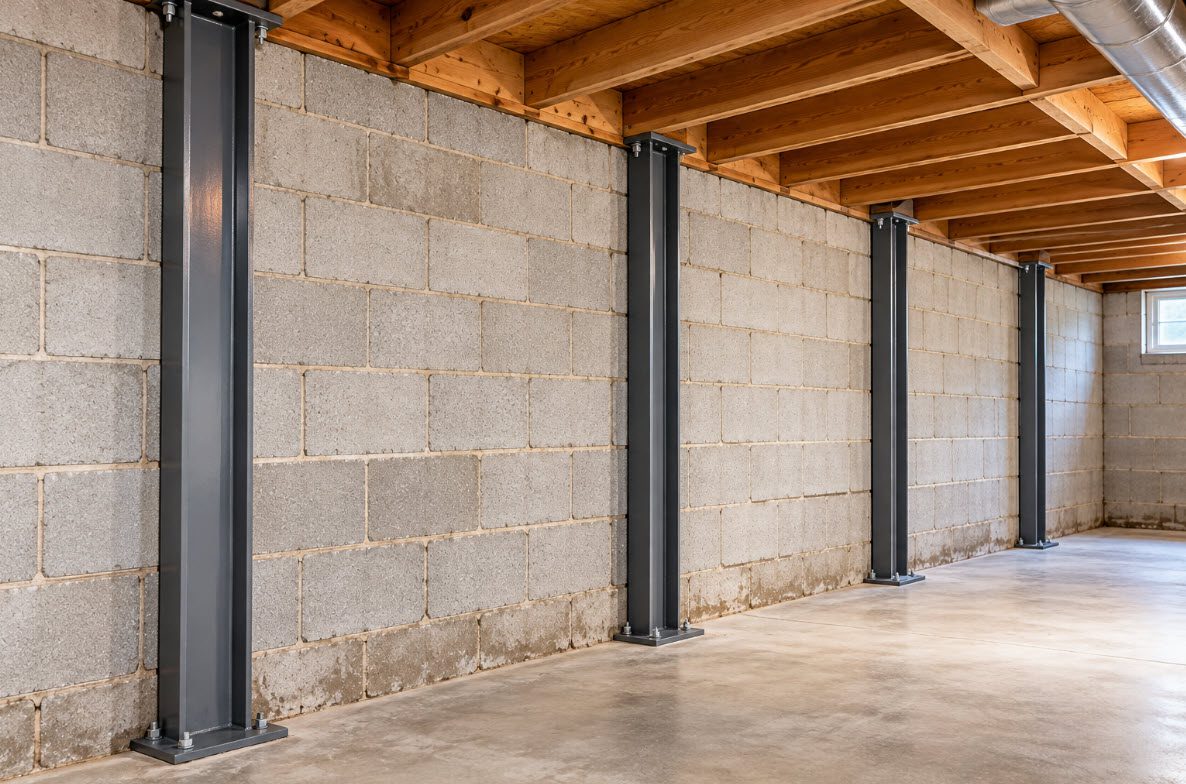
Steel Wall Braces
For most bowing walls, steel wall braces are the most practical fix. Heavy steel beams are installed vertically against the wall, anchored into the basement floor at the bottom and secured to the floor framing at the top. They take the soil pressure off the wall and stop it from moving any further.
Braces are installed entirely from inside the basement, so there's no digging in your yard. They sit close to the wall and take up very little room, and many homeowners frame and finish right around them.
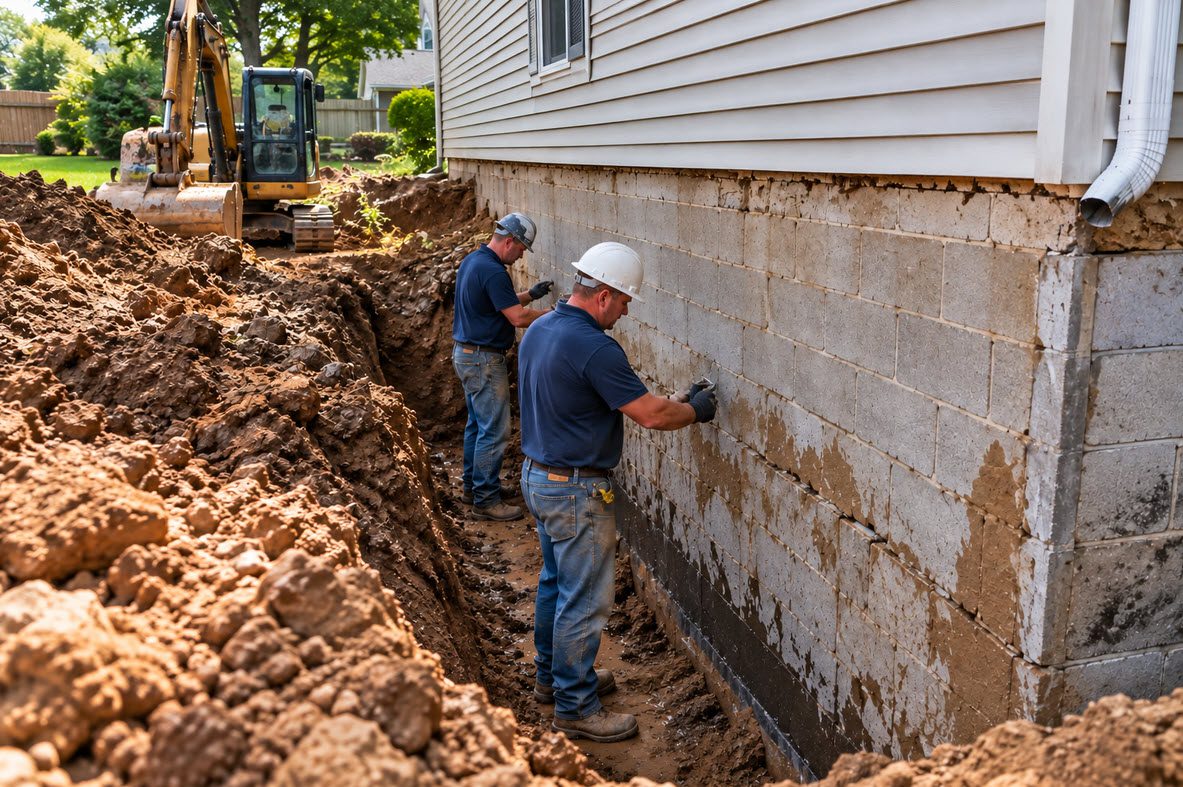
Excavation & Wall Straightening
When a wall has moved too far to brace, we work from the outside. The soil against the wall is excavated to relieve the pressure, the wall is pushed back toward plumb and then reinforced so it stays in place.
Because the wall is exposed, it's also the perfect time to waterproof the outside of the foundation and add new drain tile, which addresses the water pressure that caused the problem in the first place. Learn more about wall straightening and reinforcement.
A horizontal crack with little visible lean. Bracing now prevents the wall from moving further.
Visible lean or bulge. Steel wall braces typically stabilize the wall from inside.
Significant displacement or shearing. Excavation, straightening and reinforcement are usually needed.
What to Expect
Our Bowing Wall Repair Process
- 01InspectWe examine the wall, the cracks and the drainage around your home.
- 02MeasureWe measure exactly how far the wall has moved and where.
- 03RecommendYou get a plain-English explanation and a written estimate.
- 04RepairWe stabilize or straighten the wall and clean up when we're done.
Bowing Wall Questions
Bowing & Bulging Wall FAQs
Is a bowing basement wall dangerous?
A bowing wall should be taken seriously. Most don't fail suddenly, but they usually keep moving, and the farther a wall moves, the more involved and expensive the repair becomes. An inspection tells you how urgent yours is.
Can a bowed wall be pushed back into place?
Often, yes. Walls that have moved significantly can usually be excavated from the outside, pushed back toward plumb and reinforced. Walls with less movement are typically stabilized where they are with steel braces.
Will steel wall braces straighten my wall?
Braces are designed to stop movement and hold the wall in place. They aren't meant to push a wall back to straight. When straightening is needed, it's done through excavation.
Can I finish my basement after wall braces are installed?
Yes. Braces sit close to the wall, and many homeowners frame and drywall around them. Some leave them exposed in unfinished areas.
Why do block walls bow more than poured walls?
Block walls are built from individual units held together by mortar. Those mortar joints give soil pressure a weak line to push against, so block walls tend to crack horizontally and bow more easily than solid poured walls.
Does a bowing wall mean my whole foundation is failing?
Not usually. Bowing is typically limited to one or two walls facing the most soil and water pressure. The rest of the foundation is often in good shape.
Can a bowing wall cause water problems?
Yes. As the wall moves, cracks open up, and they become easy paths for water. Many bowing walls also leak, which is why drainage is often part of the repair.
How long does wall bracing take?
Many wall bracing jobs are completed in a day or two. Excavation and straightening usually takes several days. You'll get a timeline with your written estimate.
Should I fix my gutters and downspouts too?
Yes. Keeping roof water away from the foundation reduces the soil pressure that caused the wall to move. It's an easy step that helps any repair last.
Can I just watch the wall for a while?
If the wall has only a hairline horizontal crack, monitoring may be reasonable for a short time. Once a wall is visibly leaning or the crack is growing, waiting usually makes the repair bigger.
Thousands of Wisconsin Homeowners Have Trusted Their Foundations to American Foundation Specialists.
“Jayme and Scott came out on an urgent call today. Although there was no foundation issue, they correctly diagnosed a plumbing issue… I highly recommend their professional and friendly service.”
“The team at American Foundation did a great job installing steel beams to brace one of our basement walls… The work looks great and they did good cleaning up afterwards.”
“We worked with Lyle. He was great to work with, explained everything that needed to be done… Fair price and excellent work.”
Related Repairs
Related Foundation Repair Services
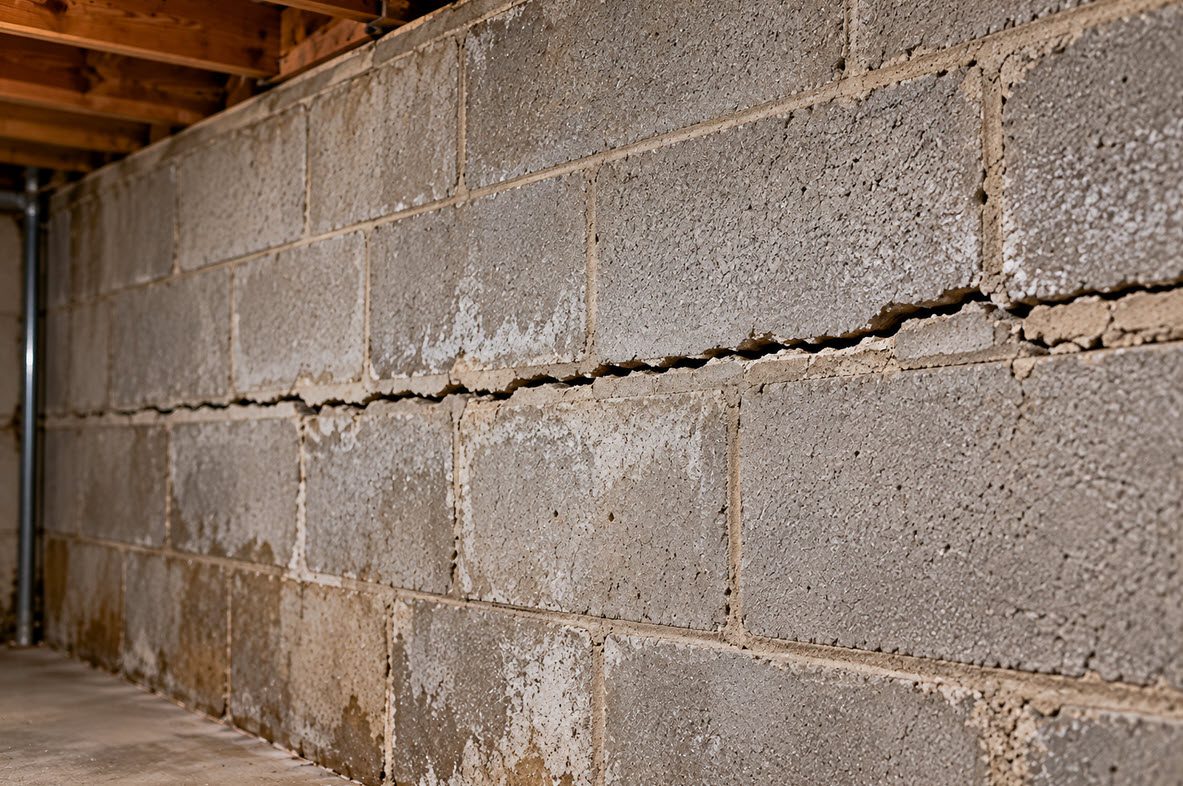 Cracked Foundation Walls
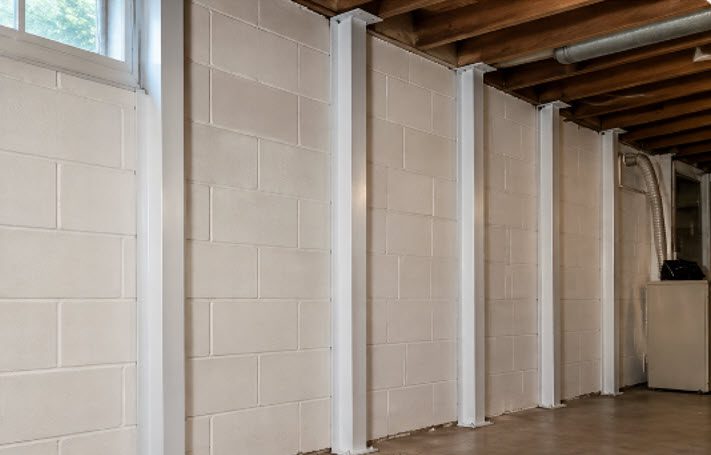 Wall Straightening & Reinforcement
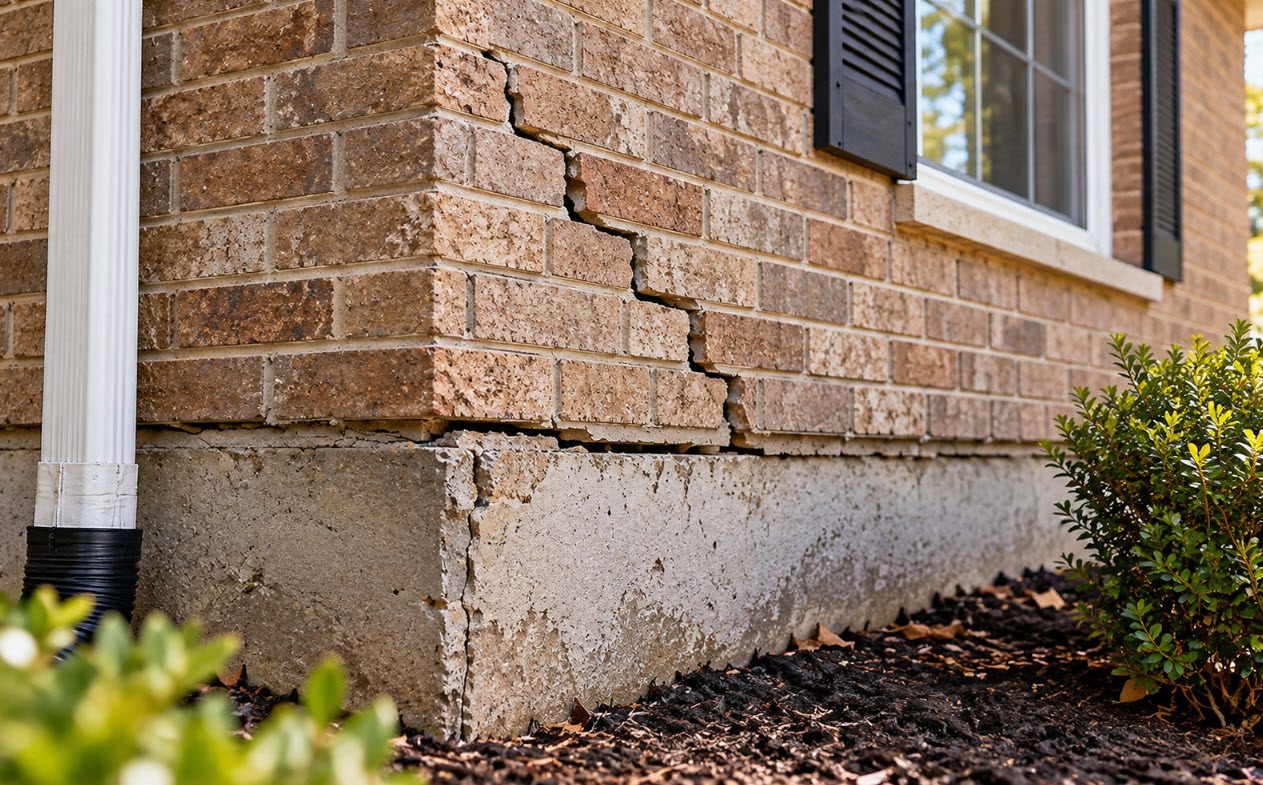 Settling Foundations
Don't Wait for a Small Problem to Become a Bigger One.
Let's Find Out What's Happening With Your Foundation.
Tell us what you're seeing. We'll inspect the problem, explain what's causing it and help you understand your repair options.
American Foundation Specialists — Protecting Wisconsin Homes for 80 Years.