
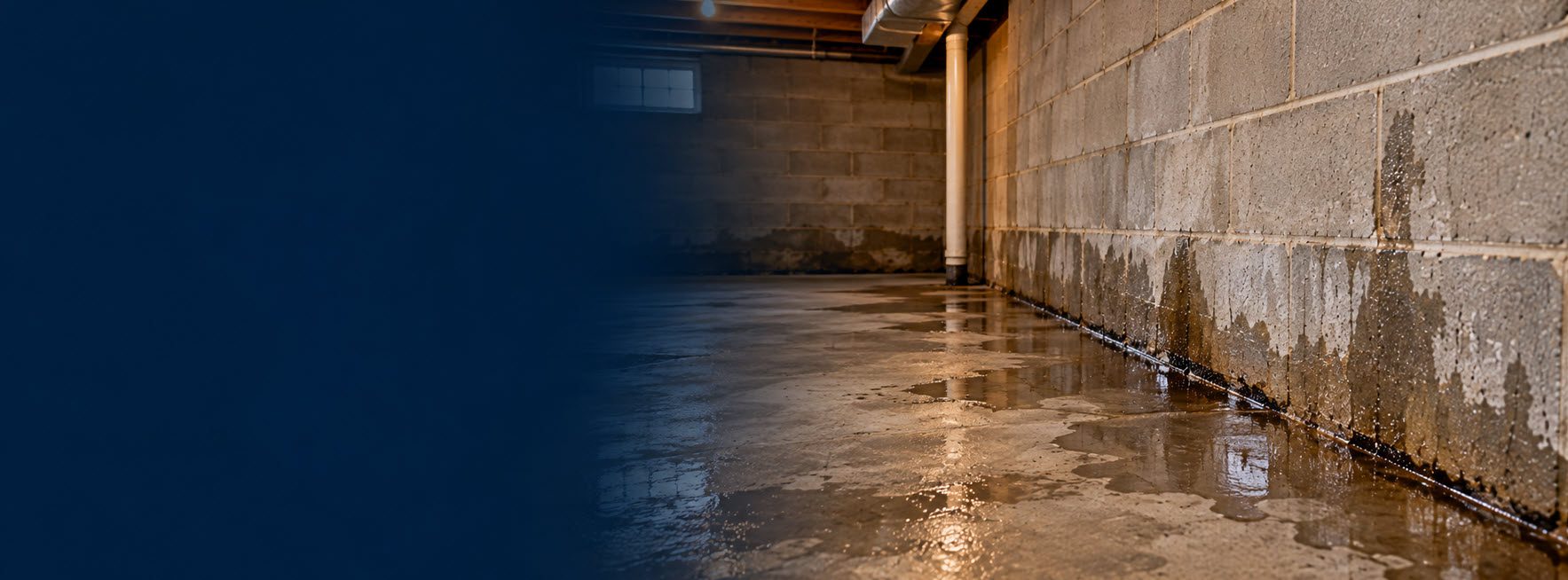
Basement Floor & Wall Seepage Repair in Southeastern Wisconsin
Relieve the Pressure. Dry the Floor.
Water creeping in where the floor meets the wall, wet spots rising through floor cracks or damp carpet along the edges of the room: that's groundwater pushing up from below. American Foundation Specialists relieves the pressure so the water stops for good.
- Free inspections
- Written estimates
- Family owned for 80 years
- Since 194780 Years of Experience
- Family Owned& Operated
- Warranty BackedUp to 20-Year Warranty
- Licensed & BondedFully Insured
- BBB A+ RatingBetter Business Bureau

Experienced Waterproofing Specialists
When Water Comes Up From Below
Most basement floors were poured after the foundation walls were built, so the seam where the floor meets the wall, called the cove joint, was never truly sealed. Normally that doesn't matter. But when heavy rain or spring thaw saturates the ground, groundwater rises under the slab and pushes up with real force, and that seam is the easiest way in.
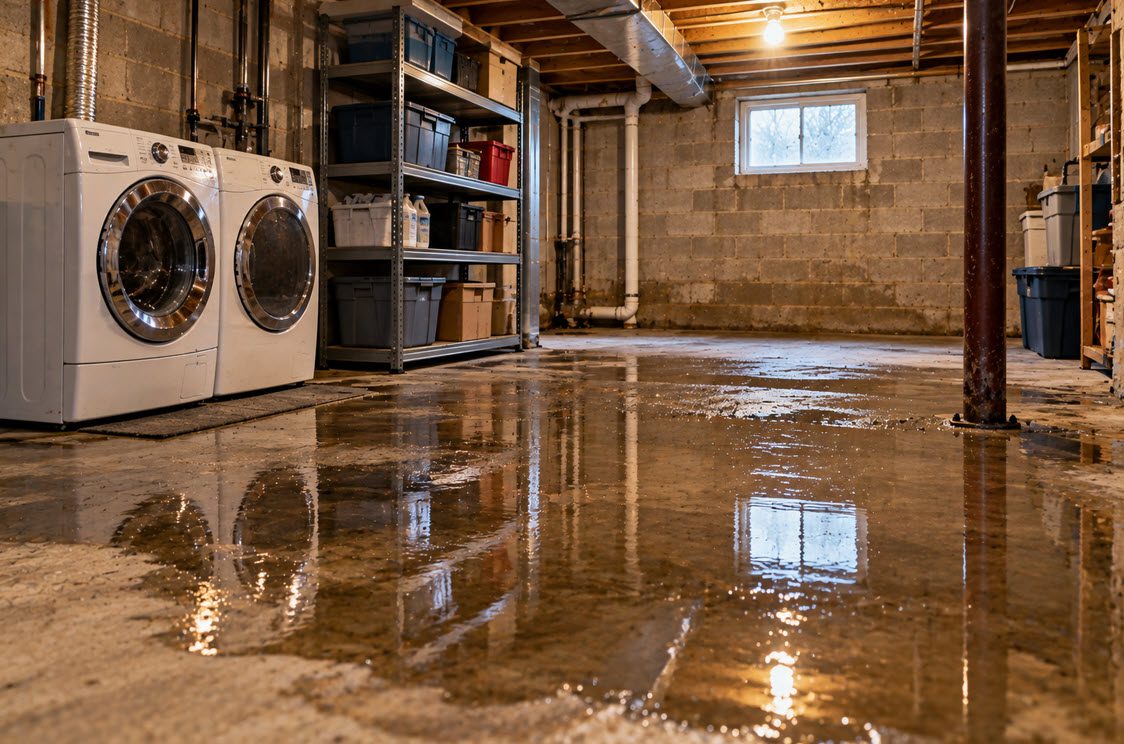
That's why seepage often shows up as a thin dark line around the edge of the room that slowly spreads across the floor, or as water rising through cracks in the slab and around floor drains. In homes near rivers, lakes and low areas, it can happen after nearly every heavy storm.
The mistake many homeowners make is trying to seal the joint or the cracks from inside. The pressure underneath doesn't go away, so the water simply finds another path. The lasting fix is to relieve that pressure and give the water a controlled way out. Seepage is one of the many problems covered by our basement waterproofing services.
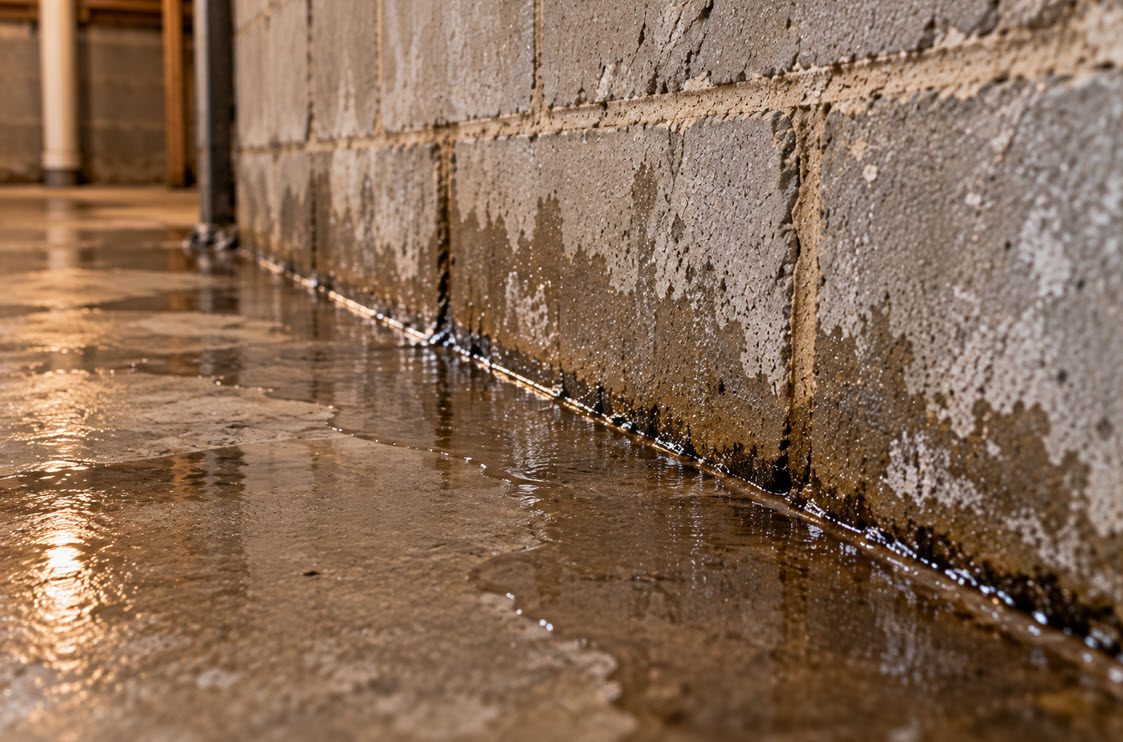
Where Seepage Shows Up
Three Ways Groundwater Comes Up Through a Basement
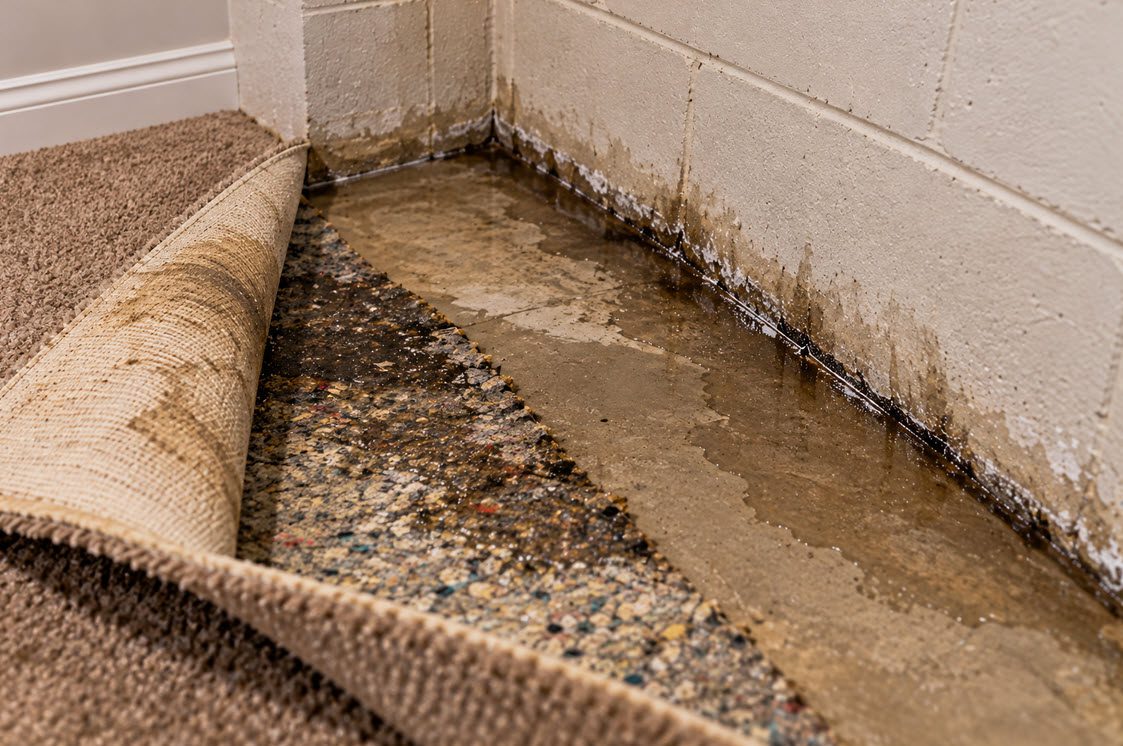
The cove joint runs around the entire perimeter of the basement, so seepage there often appears along several walls at once. It usually starts as a damp line after a storm and widens as the pressure builds. In finished basements, it shows up as wet carpet pads or swelling flooring along the outside walls.
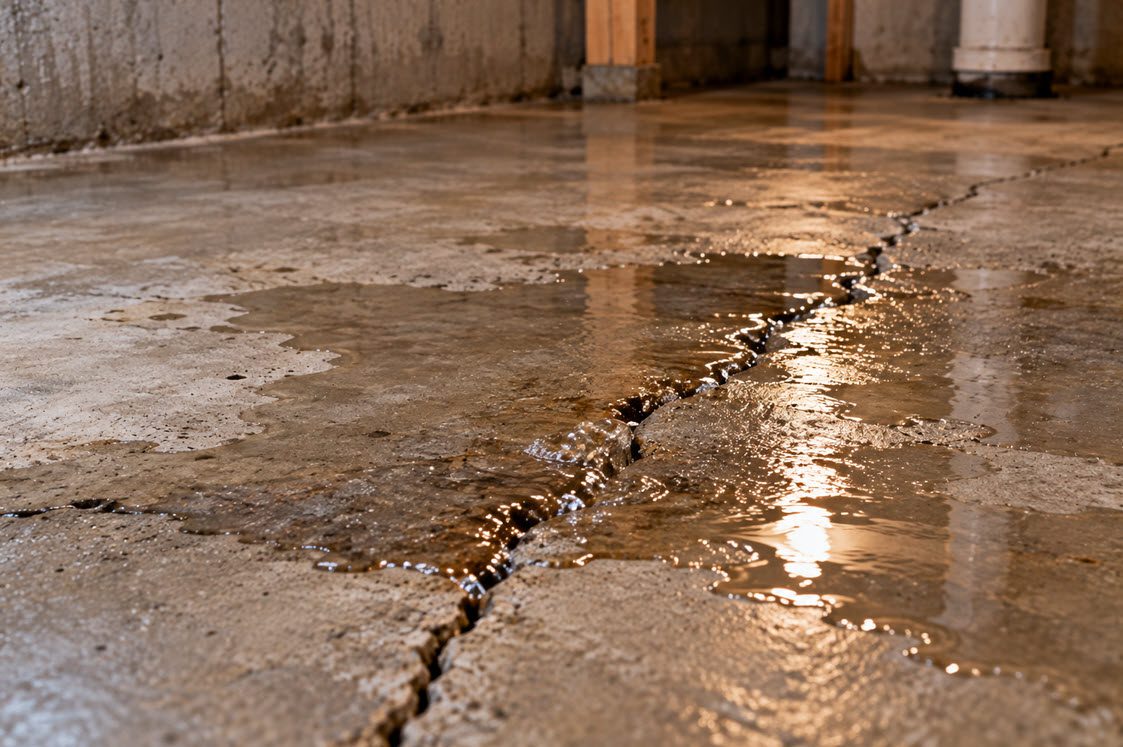
Basement floors crack as concrete shrinks and soil shifts underneath. When groundwater rises, it pushes up through those cracks, sometimes far from any wall. If you find water in the middle of the floor with no plumbing leak nearby, pressure under the slab is the likely cause.
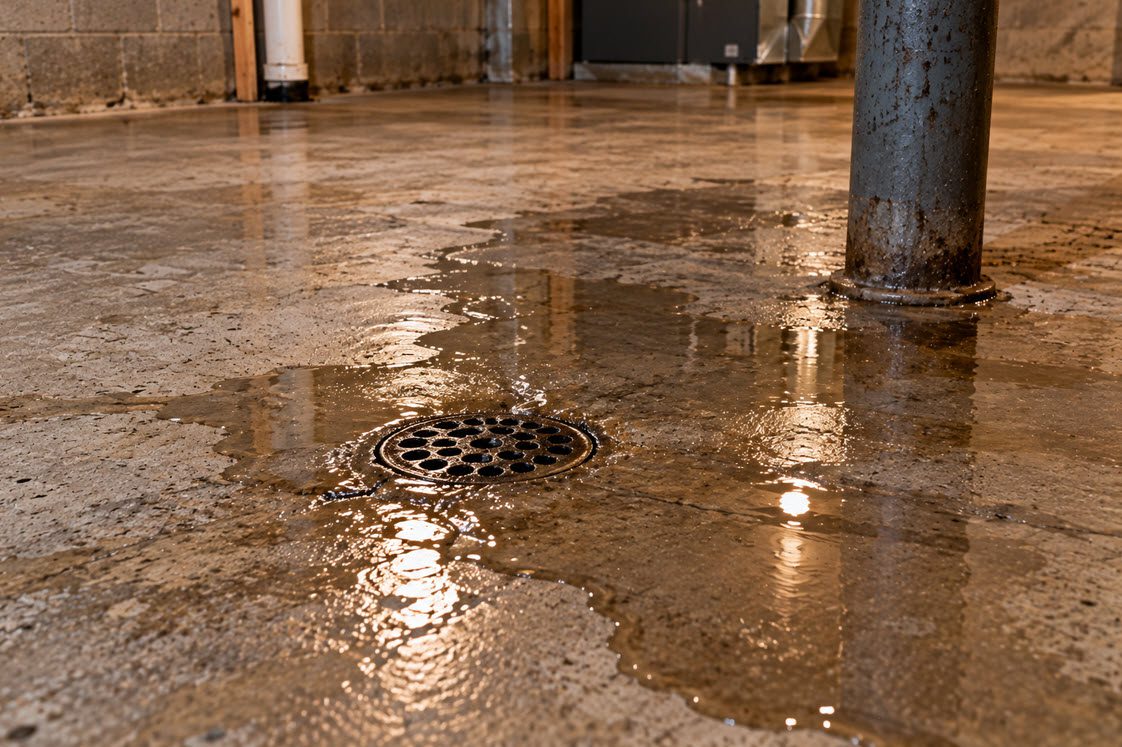
Floor drains, support posts, old sump pits and any other opening through the slab can let groundwater in. A floor drain that seems to bring water into the basement instead of carrying it away is a classic sign that water pressure under the floor is high.
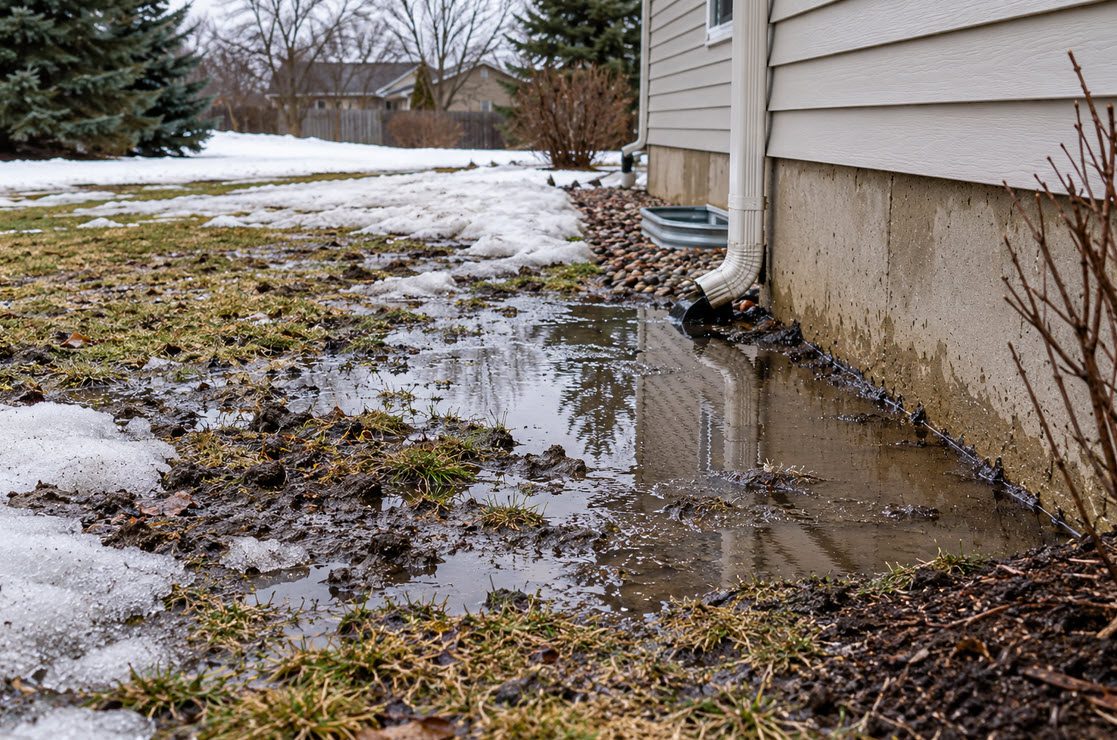
Why It Happens
What Causes Floor and Wall Seepage?
- High GroundwaterNear rivers, lakes and low areas, the water table can rise close to the basement floor.
- Water Trapped in ClayClay soil holds water under and around the slab long after a storm passes.
- Missing or Failed Drain TileWithout working drainage at the footing, water has nowhere to go but up. See drain tile.
- Spring ThawSnowmelt and spring rain saturate the ground at the same time, driving pressure to its peak.
Signs of Floor and Wall Seepage
- A dark wet line along the base of the walls
- Damp carpet or swelling flooring at the edges
- Water rising through floor cracks
- Water around a floor drain or support post
- White residue on the basement floor
- Seepage every spring or after heavy rain
Water Seeping In Along Your Basement Floor?
We'll find where the pressure is coming from and explain how to relieve it.
How We Fix It
Floor & Wall Seepage Solutions
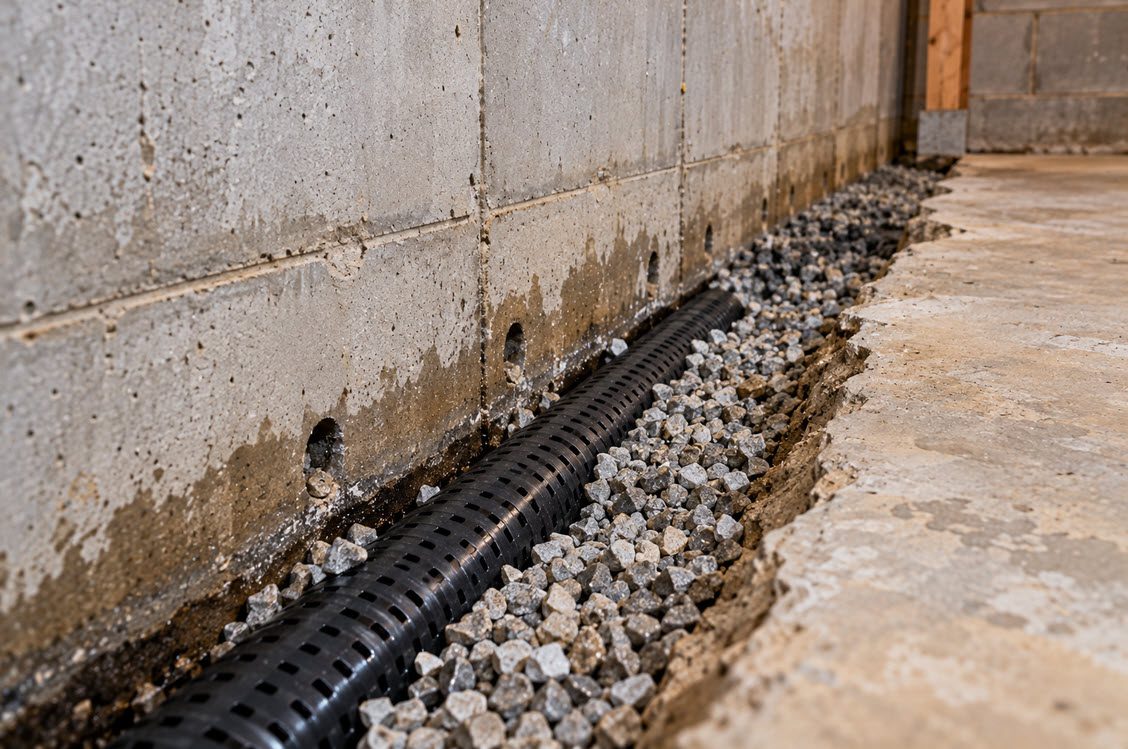
Interior Drain Tile at the Footing
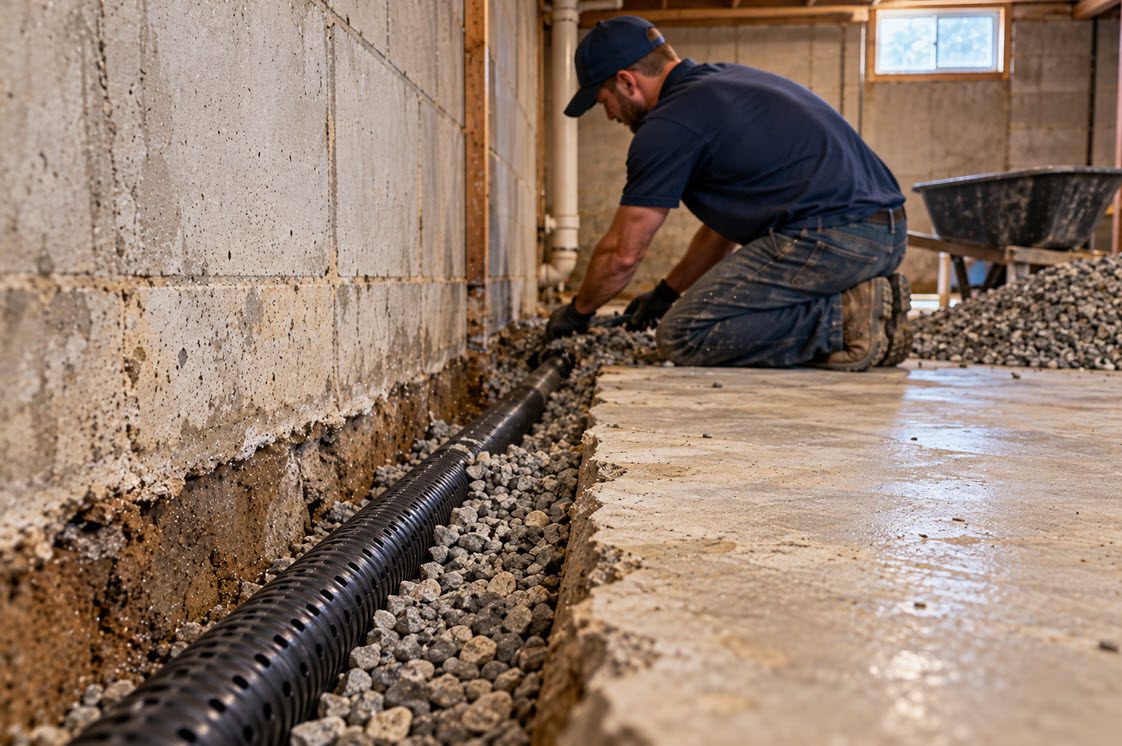
The lasting fix for seepage is relieving the pressure under the slab. A narrow trench is cut along the inside edge of the basement floor, perforated drain tile is set in clean, washed stone at the footing and the trench is patched back with new concrete.
The drain tile intercepts groundwater before it can push up through the cove joint or floor cracks and carries it to a sump pit. Once the water has an easier way out, it stops forcing its way through your floor. Learn more about drain tile repair and replacement.
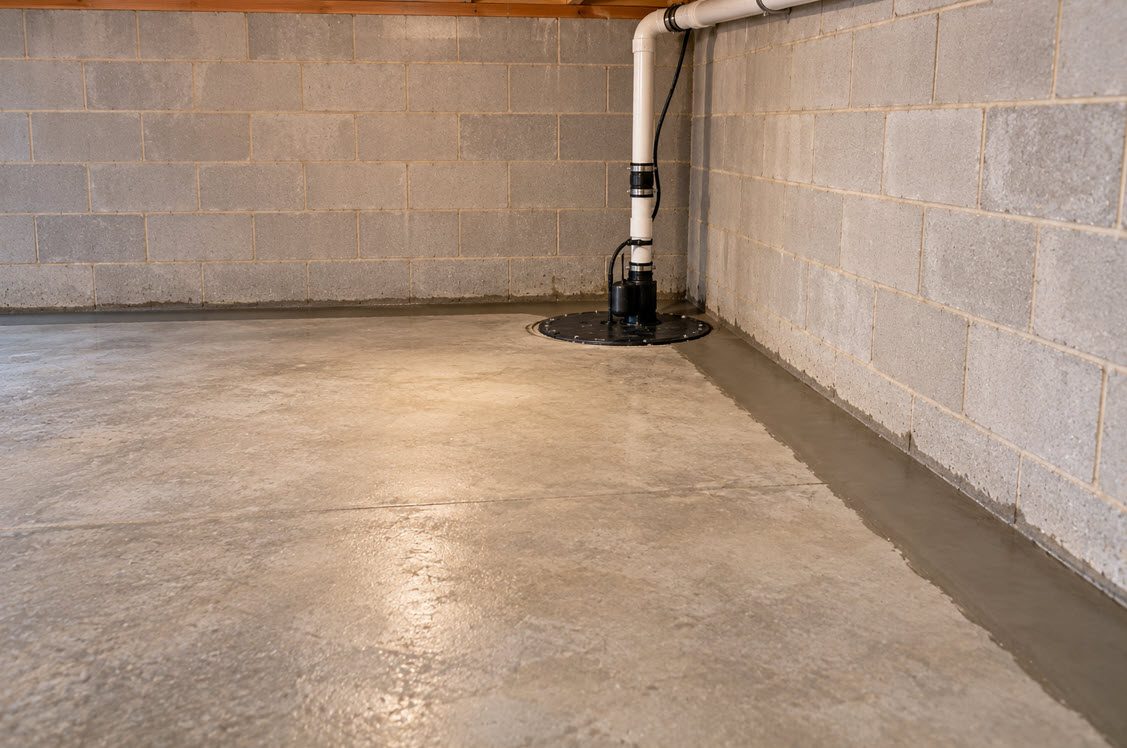
Sump Systems & Floor Repair
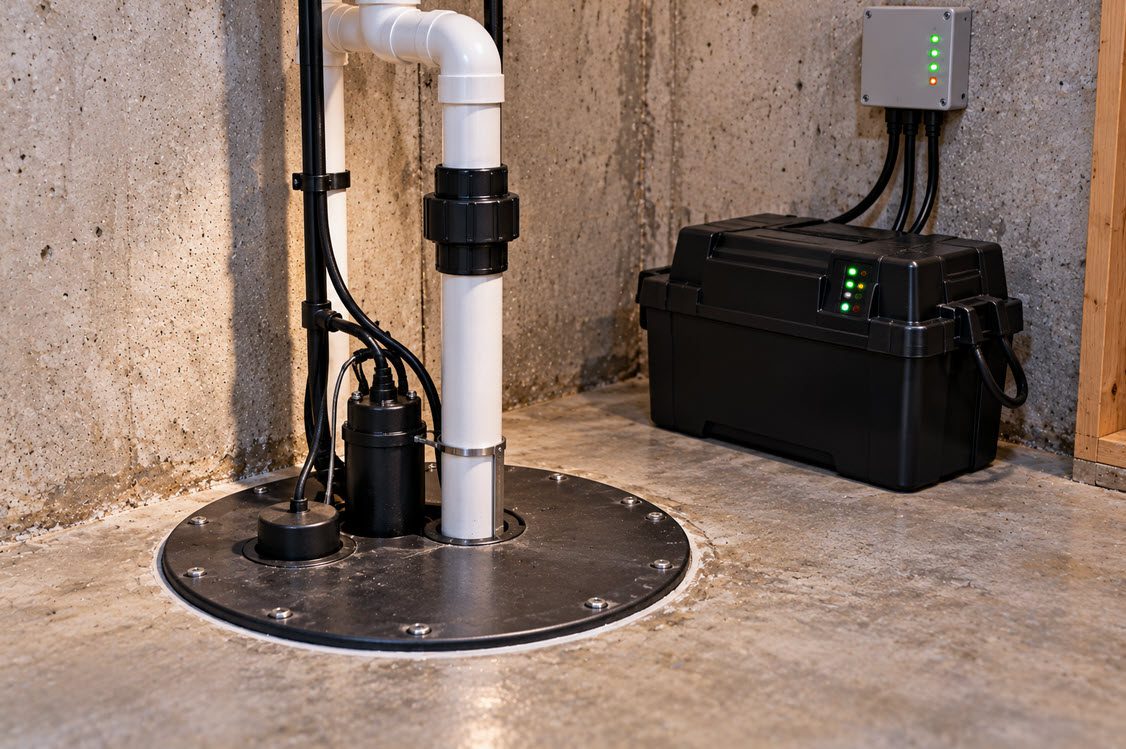
The water your drain tile collects needs a dependable way out of the house. We install a properly sized sump pit and pump and add a battery backup so the system keeps working during power outages. See sump pumps and battery backup.
In older basements with thin, cracked or uneven floors, we can also replace badly deteriorated floor sections as part of the job, leaving you with a drier, cleaner basement floor overall.
A temporary fix at best. Pressure underneath forces water through somewhere else.
Relieves pressure at the footing so water stops pushing up through the floor.
Sends collected water outside and keeps working when the power goes out.
What to Expect
Our Seepage Repair Process
- 01InspectWe examine the floor, the cove joint, drains and the drainage outside.
- 02TraceWe confirm where groundwater is coming up and why.
- 03RecommendYou get a plain-English explanation and a written estimate.
- 04InstallWe install the drainage system and restore the floor.
Seepage Questions
Basement Floor & Wall Seepage FAQs
What is the cove joint?
It's the seam where the basement floor meets the foundation wall. Because the floor and wall were poured separately, the joint isn't watertight, and groundwater pressure can push water through it.
Why does water come up through my basement floor?
Groundwater rises under the slab when the soil is saturated. That pressure pushes water up through cracks, the cove joint and openings like floor drains.
Can I just caulk or seal the floor-wall joint?
Sealing may slow minor seepage briefly, but the pressure underneath remains, so water usually finds another path. Relieving the pressure is the lasting fix.
Why does my floor drain bring water in?
When groundwater pressure under the slab is high, water can push up through and around a floor drain. It's a strong sign the area needs better drainage.
Is floor seepage a sign of foundation damage?
Not usually. Seepage is a water pressure problem rather than a structural one. But cracks in the floor or walls that are growing should be evaluated.
Will interior drain tile stop water coming through floor cracks?
In most cases, yes. By relieving pressure at the footing, drain tile reduces the force pushing water up through the slab.
Does the whole basement floor need to be torn out?
No. Interior drain tile only requires a narrow trench along the perimeter. Badly deteriorated sections can be replaced if needed, but that's the exception.
Can seepage be fixed in a finished basement?
Yes. Flooring and part of the wall along the perimeter will need to be opened for the drain tile. We'll explain exactly what's involved beforehand.
Why does my basement only seep in spring?
Spring snowmelt and rain saturate the ground at the same time, raising groundwater to its highest level of the year.
How long does seepage repair take?
Most interior drain tile installations take a few days, depending on the size of the basement. You'll get a timeline with your estimate.
Thousands of Wisconsin Homeowners Have Trusted Their Foundations to American Foundation Specialists.
“Jayme and Scott came out on an urgent call today. Although there was no foundation issue, they correctly diagnosed a plumbing issue… I highly recommend their professional and friendly service.”
“The team at American Foundation did a great job installing steel beams to brace one of our basement walls… The work looks great and they did good cleaning up afterwards.”
“We worked with Lyle. He was great to work with, explained everything that needed to be done… Fair price and excellent work.”
Related Repairs
Related Foundation Repair Services
 Drain Tile Repair & Replacement
 Sump Pumps & Battery Backup
 Wet & Leaky Basements
Don't Wait for a Small Problem to Become a Bigger One.
Let's Find Out What's Happening With Your Foundation.
Tell us what you're seeing. We'll inspect the problem, explain what's causing it and help you understand your repair options.
American Foundation Specialists — Protecting Wisconsin Homes for 80 Years.