Basement Wall Leak Repair in Southeastern Wisconsin
Seal the Leak. Protect the Wall.
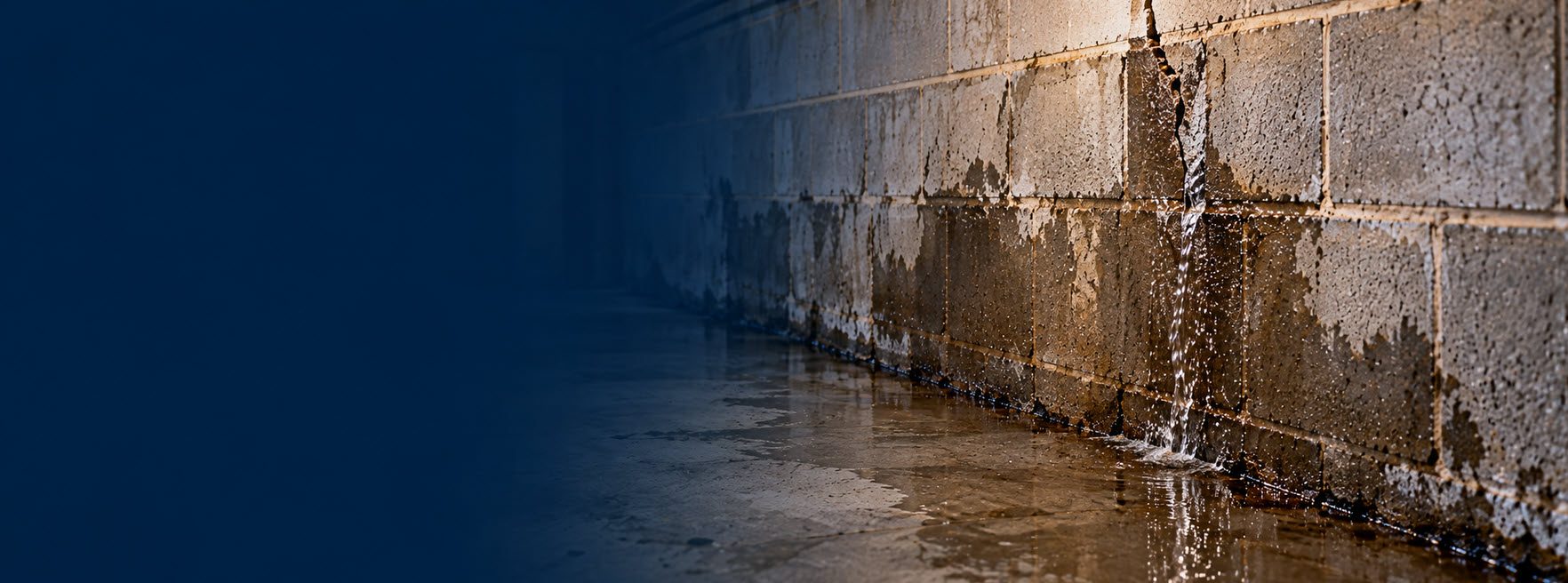
Water seeping through a crack, a damp patch that spreads every time it rains or a white crust building up on your block walls: American Foundation Specialists stops basement wall leaks with repairs matched to how your wall was built and how the water is getting through.
- Free inspections
- Written estimates
- Family owned for 80 years
- Since 194780 Years of Experience
- Family Owned& Operated
- Warranty BackedUp to 20-Year Warranty
- Licensed & BondedFully Insured
- BBB A+ RatingBetter Business Bureau

Experienced Waterproofing Specialists
Why Water Comes Through the Wall
When water comes through a basement wall, the soil outside is saturated and pushing it in. That pressure, called hydrostatic pressure, builds whenever heavy rain or snowmelt soaks the clay around your foundation, and it forces water through any weakness it can find.
Where it gets through depends on the wall. Poured concrete walls leak at cracks and at the small tie-rod holes left over from construction. Concrete block walls soak up water, fill their hollow cores and release it low on the wall. Older stone and brick foundations let water seep through softened mortar across whole sections of wall.
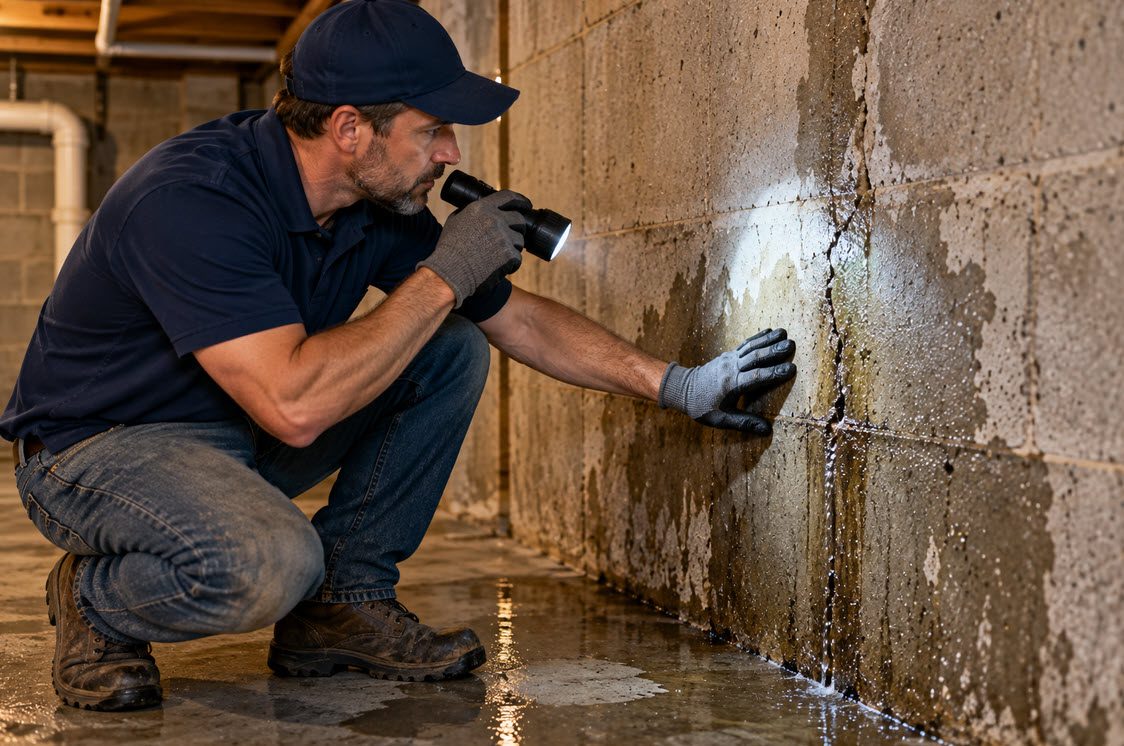
Because every wall leaks differently, there's no one-size-fits-all fix. We identify what your wall is made of and exactly where the water is entering, then recommend the repair that will actually hold. Wall leaks are one of the many problems covered by our basement waterproofing services.
Know Your Wall
How Different Foundation Walls Leak
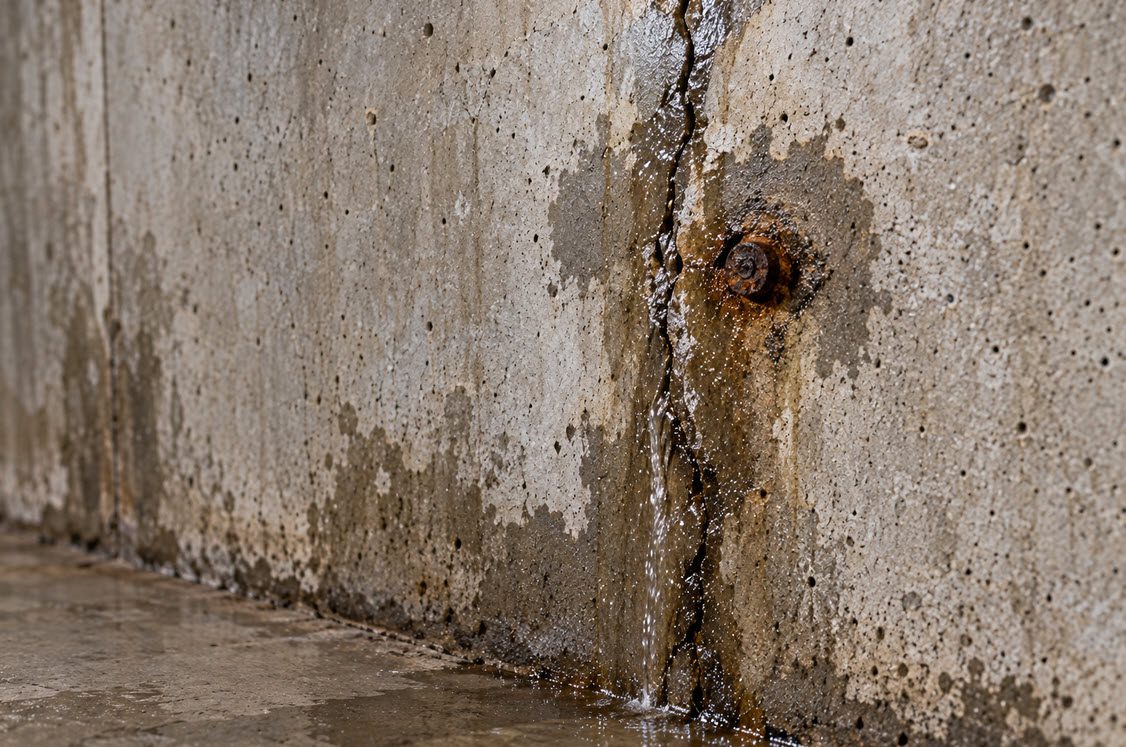
Poured walls are solid, so water has to find a specific path through them. That's usually a crack, often one that formed as the concrete cured, or one of the metal tie-rods left behind by the forms. Look for a wet streak running down from a crack or a rusty, damp circle around a tie-rod. These leaks can usually be sealed from inside.
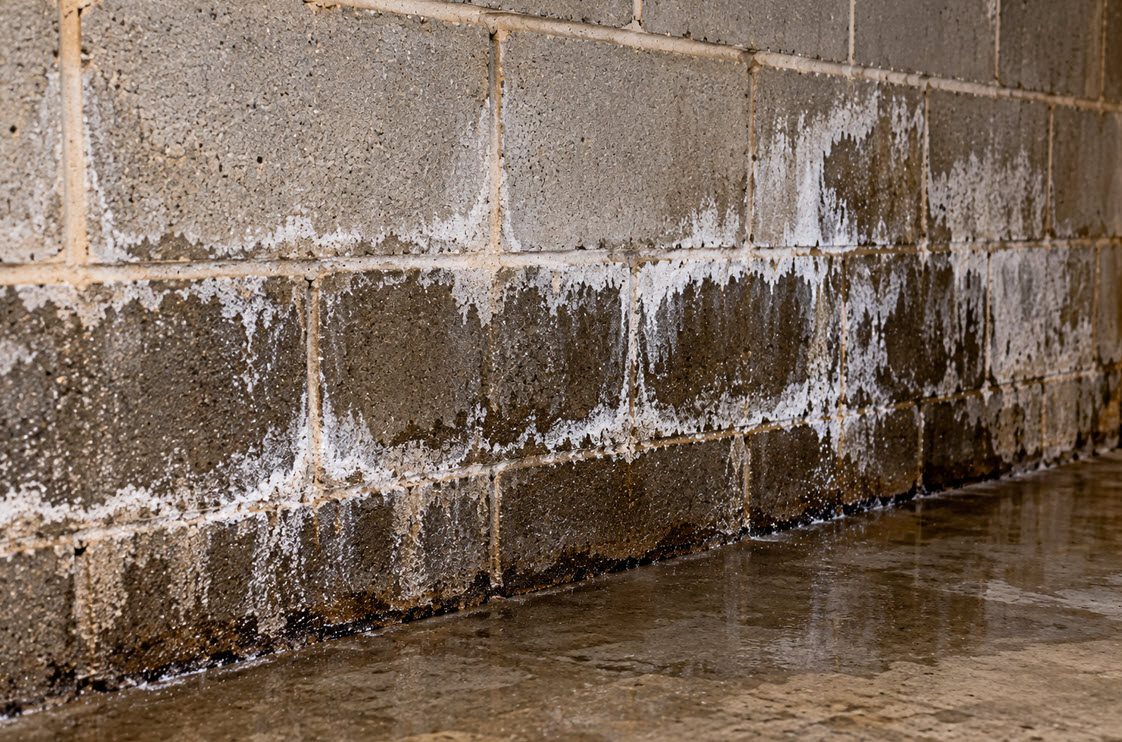
Block walls are made of hollow units held together by mortar. Water soaks through the mortar joints and the block itself, fills the cores and drains down to the bottom of the wall. That's why block walls often show a wet band along the lower courses and a white, chalky crust, sometimes far from where the water actually entered.
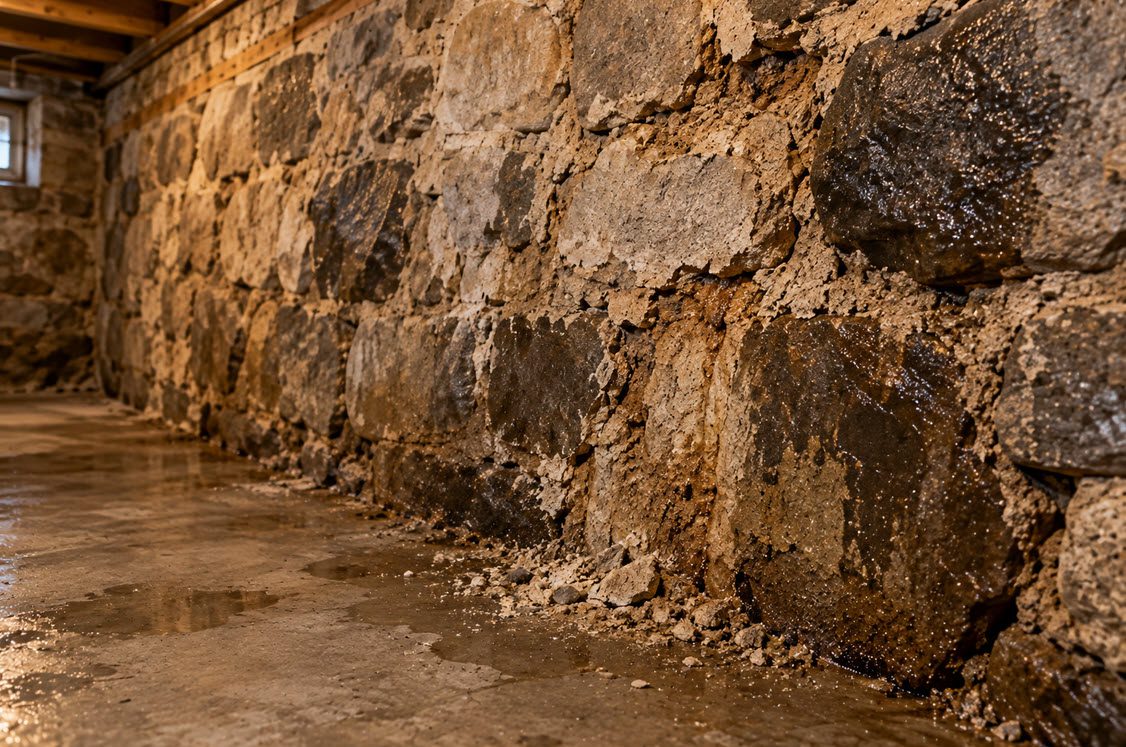
Older stone and brick foundations rarely leak at a single point. Water moves through mortar joints that have softened over decades, leaving broad damp areas, crumbling mortar and gritty residue at the base of the wall. These walls usually need a combination of mortar repair and drainage to stay dry.
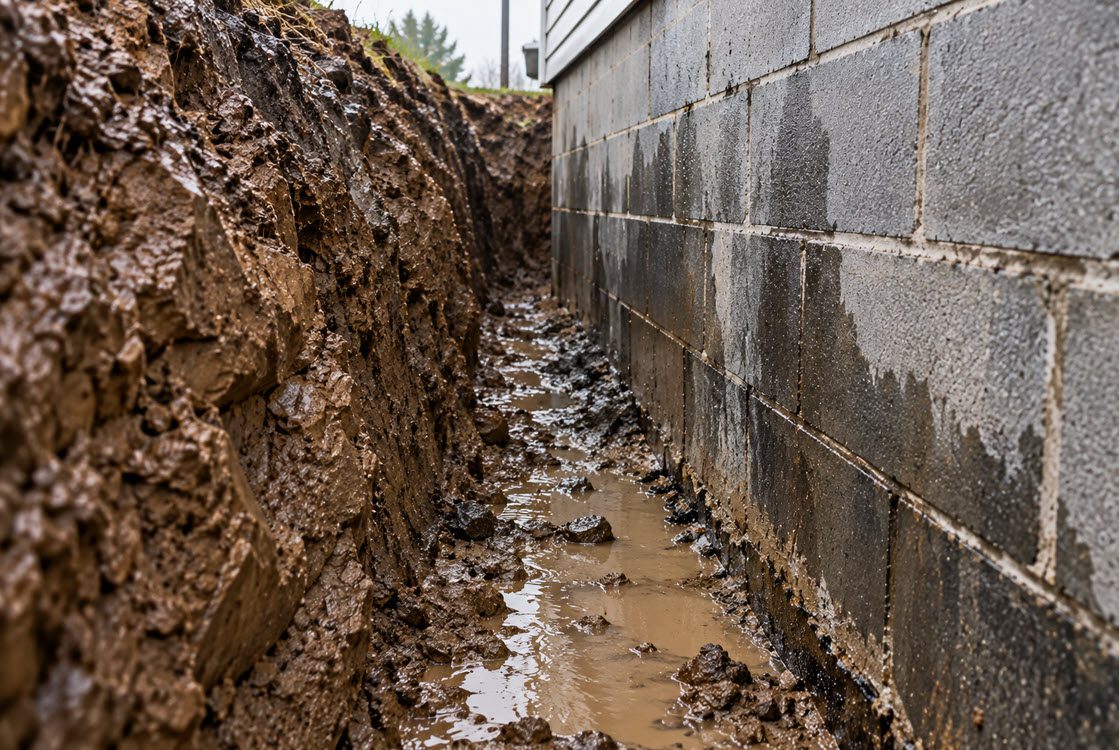
Why It Happens
What Causes Basement Wall Leaks?
- Hydrostatic PressureSaturated soil pushes water against the wall and forces it through any weak point.
- Cracks & Tie-RodsShrinkage cracks and tie-rod holes in poured walls give water a direct path inside.
- Aging MortarDecades of moisture soften mortar joints in block, stone and brick walls.
- Poor DrainageFailed drain tile and short downspouts keep the soil around the wall saturated.
Signs Your Basement Walls Are Leaking
- Wet streaks running down from cracks
- Damp patches that grow after rain
- Rusty or damp spots around tie-rods
- White, chalky efflorescence on walls
- Peeling or bubbling paint
- Crumbling or sandy mortar at the base
Water Coming Through Your Basement Wall?
We'll find exactly where it's getting in and recommend the right fix.
How We Fix It
Basement Wall Leak Repair Solutions
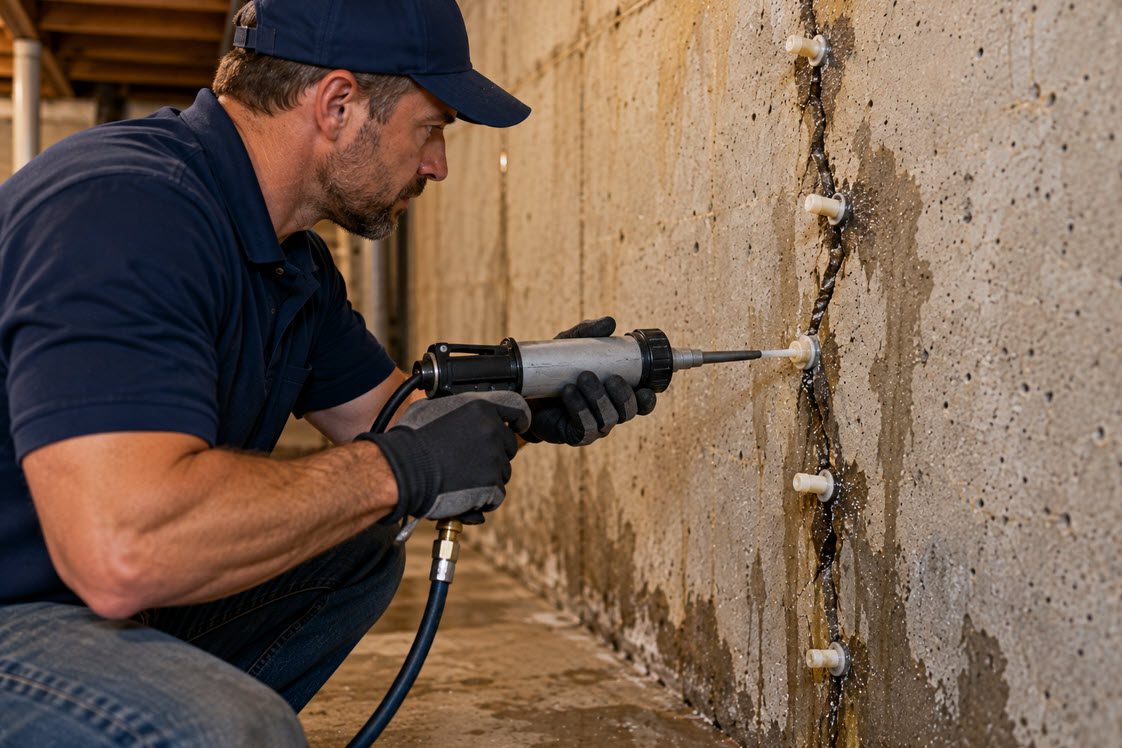
Crack & Tie-Rod Injection
For leaking cracks and tie-rods in poured concrete walls, injection is the most direct fix. Ports are set along the crack, the surface is sealed and material is injected under pressure until it fills the crack through the full thickness of the wall, closing the path the water was using.
Injection is done entirely from inside, usually in a few hours. If a crack is part of a wall that's moving, we'll address the movement too. See cracked foundation walls.
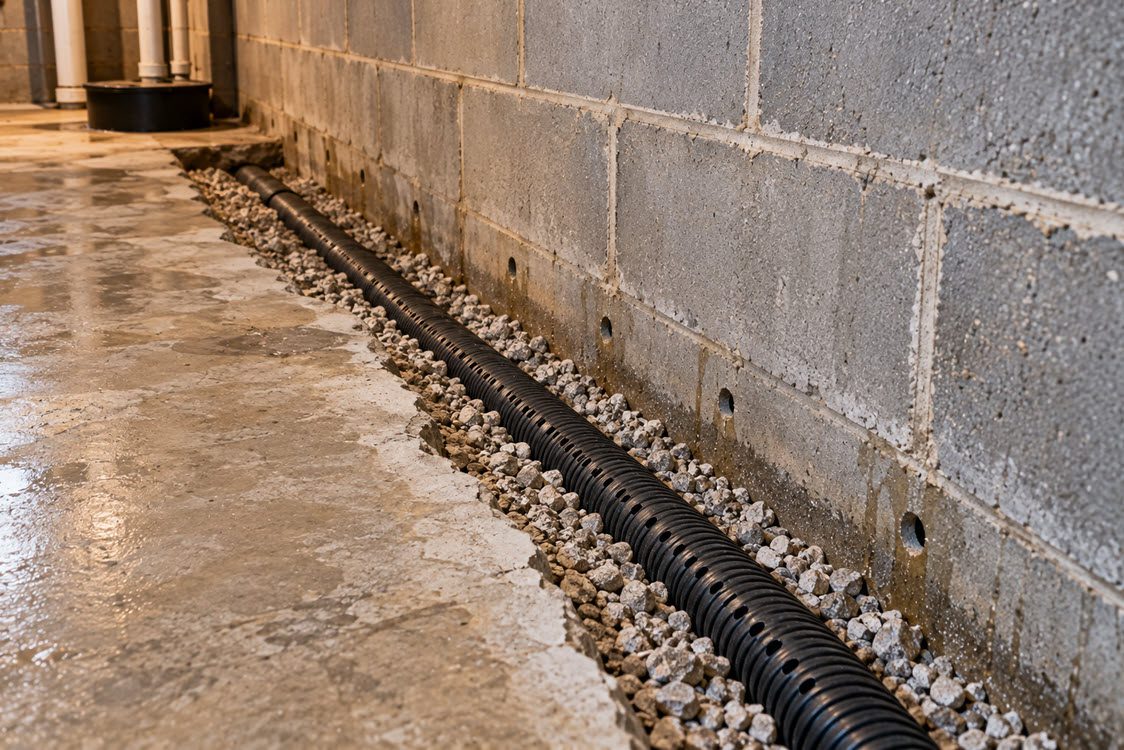
Interior Wall Drainage
Block walls can't be injected the way poured walls can, because water is moving through the whole wall. Instead, we give it a controlled way out. Drain tile is installed along the footing, small weep holes let water drain out of the block cores and the water is carried to a sump pump.
For older stone and brick walls, drainage is combined with repointing the worst mortar joints. When leaks are widespread on any wall type, exterior waterproofing stops water before it reaches the wall.
Seals individual cracks and tie-rods through the full thickness of the wall.
Drain tile and weep holes capture water inside the cores and send it to a sump.
A membrane on the outside of the wall for widespread or recurring leaks.
What to Expect
Our Wall Leak Repair Process
- 01InspectWe examine the wall, the leak and the drainage around your home.
- 02IdentifyWe confirm the wall type and exactly where water is entering.
- 03RecommendYou get a plain-English explanation and a written estimate.
- 04SealWe complete the repair and leave the basement clean.
Wall Leak Questions
Basement Wall Leak FAQs
What are the metal pieces sticking out of my poured basement wall?
They're tie-rods left from the concrete forms used to pour the wall. Over time, the seal around them can fail, and they become small leak points. Leaking tie-rods can be sealed with injection.
Why does water show up at the bottom of my block wall?
Water that gets into a block wall fills the hollow cores and drains down, so it often appears along the lower courses, sometimes far from where it entered.
What is the white powder on my basement walls?
It's efflorescence, minerals left behind as water evaporates out of the wall. It isn't harmful, but it means water is moving through the foundation.
Can I seal a leaking wall with waterproof paint?
Waterproof paints can reduce minor dampness, but they won't stop water under pressure. Leaks usually return and the paint begins to bubble and peel.
Can a leaking crack be fixed from inside?
Yes. Leaking cracks in poured concrete walls are usually sealed with injection from inside the basement, without any digging.
Why can't block walls be injected like poured walls?
Water moves through the whole block wall, not just one crack. Sealing one spot just moves the leak. Drainage that captures the water is more effective.
Is a leaking wall a structural problem?
Not always. Many leaks are just water finding a path through a crack. But if the wall is also bowing or the crack is growing, it needs a structural evaluation.
Why is my old stone foundation always damp?
Older stone and brick foundations let moisture through softened mortar across large areas. Mortar repair combined with drainage usually makes a big difference.
Will fixing my gutters stop my wall leaks?
It can help by reducing how much water reaches the wall, but it usually won't stop an existing leak on its own.
How long does a wall leak repair take?
Crack injection usually takes a few hours. Interior drainage systems typically take a few days. You'll get a timeline with your estimate.
Thousands of Wisconsin Homeowners Have Trusted Their Foundations to American Foundation Specialists.
“Jayme and Scott came out on an urgent call today. Although there was no foundation issue, they correctly diagnosed a plumbing issue… I highly recommend their professional and friendly service.”
“The team at American Foundation did a great job installing steel beams to brace one of our basement walls… The work looks great and they did good cleaning up afterwards.”
“We worked with Lyle. He was great to work with, explained everything that needed to be done… Fair price and excellent work.”
Related Repairs
Related Foundation Repair Services
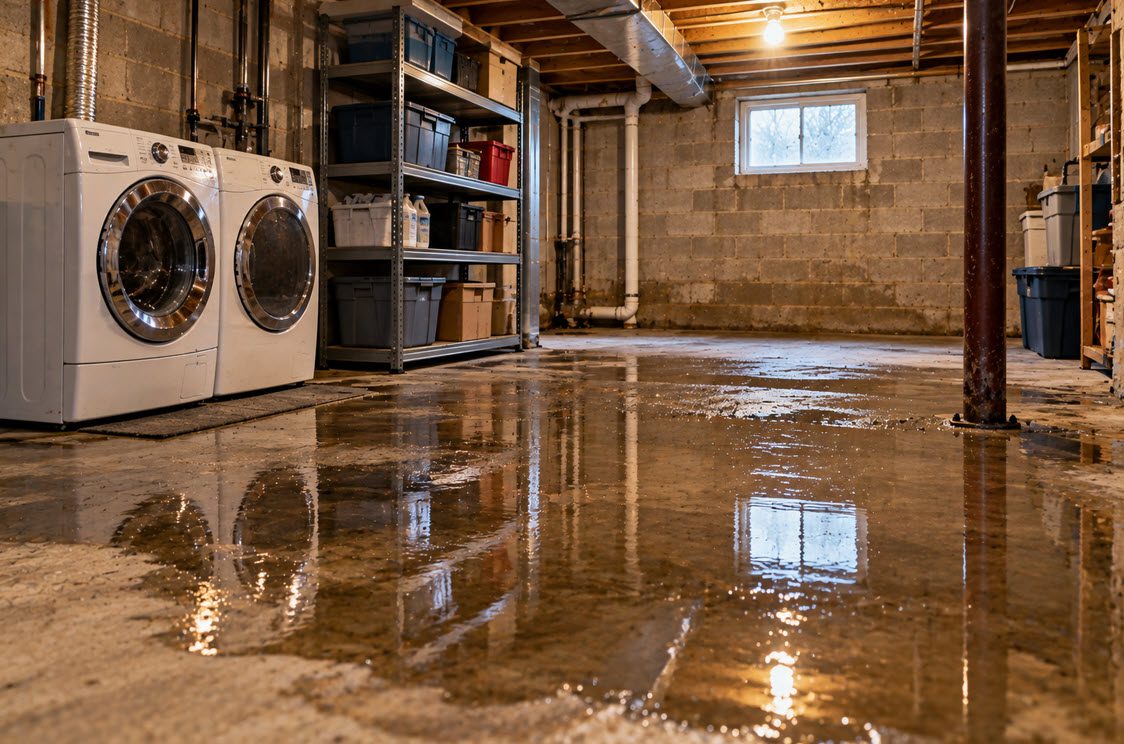 Wet & Leaky Basements
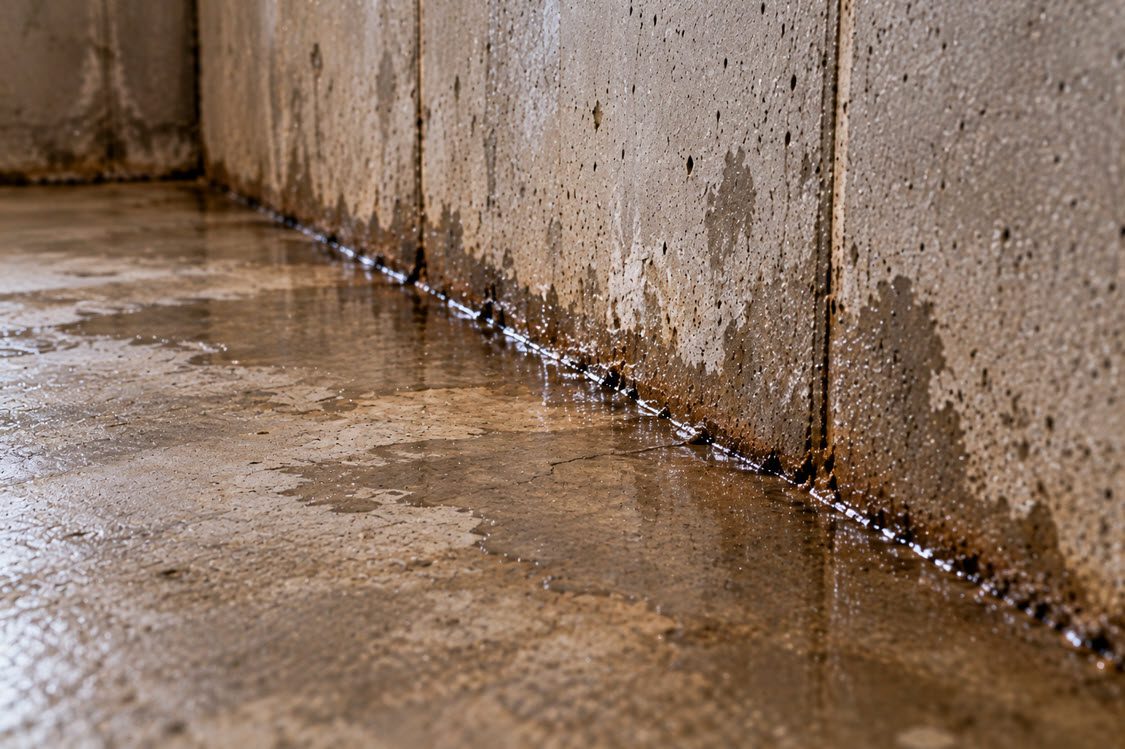 Floor & Wall Seepage
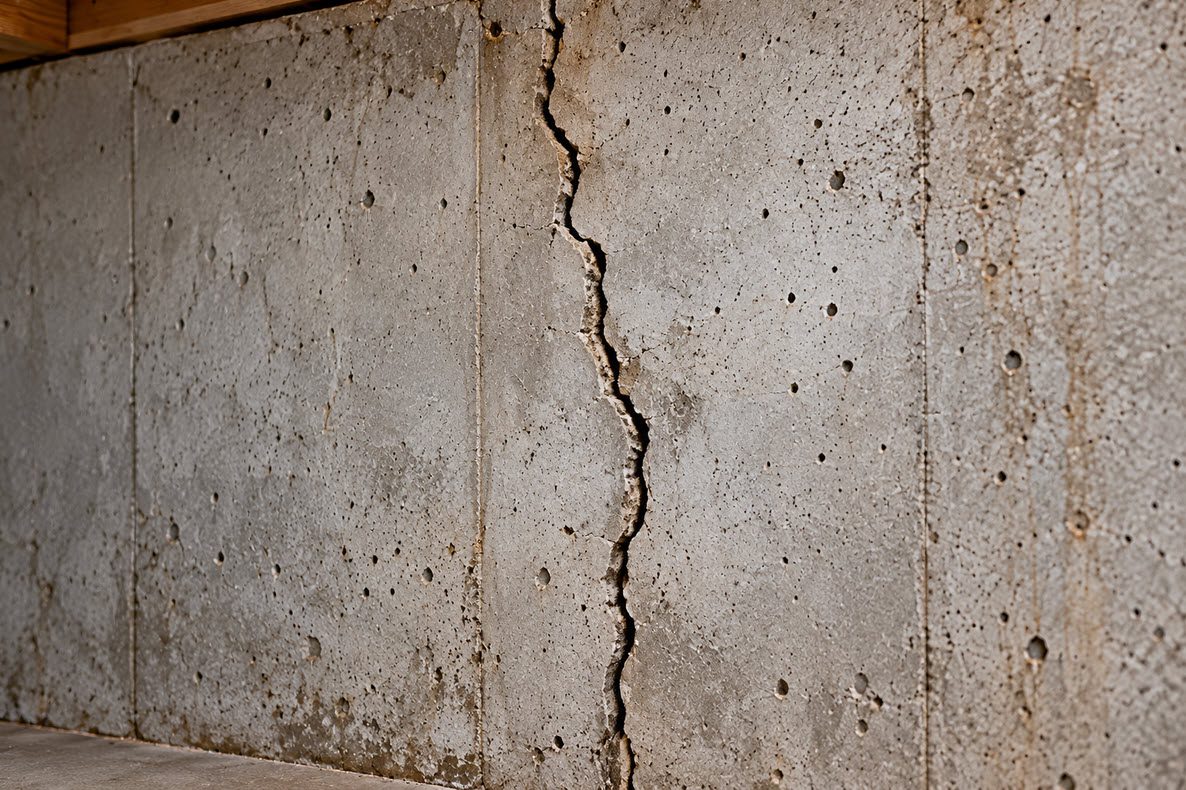 Cracked Foundation Walls
Don't Wait for a Small Problem to Become a Bigger One.
Let's Find Out What's Happening With Your Foundation.
Tell us what you're seeing. We'll inspect the problem, explain what's causing it and help you understand your repair options.
American Foundation Specialists — Protecting Wisconsin Homes for 80 Years.